





A re-refining project is usually delayed by documents, not equipment. The waste classification and permit sequence decide the site layout, the emission controls and sometimes the process route itself.
جدول المحتويات ▴
Start With Waste Classification
Used oil is regulated as a hazardous waste in most jurisdictions. In China it falls under HW08, with maintenance-generated engine oil coded 900-214-08. The EU and the US classify used oil under different rules, and the transport, storage and treatment requirements follow from that classification.
Two questions set the rest of the project: is the incoming material a hazardous waste here, and under which code? The answer decides the permits, the storage design, the manifest system and often the site itself.
Permits a Project Usually Needs
| Document | Typical authority | When it starts | Common gap |
|---|---|---|---|
| Environmental impact assessment | Environmental authority | Before site commitment | Mass and water balance incomplete |
| Hazardous waste operating permit | Environmental authority | Before construction or trial operation | Collection, storage and utilisation scope not separated |
| Pollution discharge permit | Environmental authority | Before commissioning | Outfall and limits do not match the design |
| Air emission approval | Environmental authority | Design stage | Heater flue gas and vacuum tail gas underestimated |
| Fire and safety approval | Emergency management authority | Design stage | Tank spacing and fire water capacity |
| Land use and planning | Planning authority | Site selection | Zoning does not allow the use |
The order matters. A site signed before the EIA is scoped can fail on buffer distance, and a process chosen before the emission limits are known can require a different tail-gas route.
What the EIA Actually Asks For
An environmental consultant cannot write the assessment without engineering data. The inputs that decide the timeline are:
- feed sources, composition and representative laboratory results;
- mass balance and water balance for the full process;
- energy consumption and fuel type for the heater;
- air emission sources: heater flue gas, vacuum tail gas, tank breathing and loading;
- wastewater streams: oily water, cooling blowdown and initial rainwater;
- solid waste: distillation residue, spent clay or adsorbent, sludge;
- noise sources and the nearest sensitive receptors;
- risk assessment, emergency plan and monitoring plan.
Missing feed data is the most common cause of delay. Without it the emission factors are estimates, and reviewers ask for the calculation to be redone.
Where Projects Get Stuck
- feed composition is described in words instead of test data;
- the disposal route for residue is not secured before the assessment is submitted;
- the proposed emission control does not meet the local standard;
- the site is inside the required buffer distance;
- public consultation is left until the end of the process.
Each of these can be resolved, but each one adds a review cycle. Securing the residue route early is usually the cheapest way to protect the schedule.
What to Prepare First
Before the consultant starts, assemble the following:
- a representative feed sample and laboratory report;
- capacity, operating hours and annual throughput;
- process description and flow diagram;
- plot plan, site area and neighbouring land use;
- utility data: fuel, power, water, steam and cooling;
- product specifications and expected yields;
- waste streams and the intended disposal route for each.
This package also supports the equipment inquiry. A supplier who receives it can size the plant against the real feed instead of a nominal tonnage; the same data feeds the assessment.
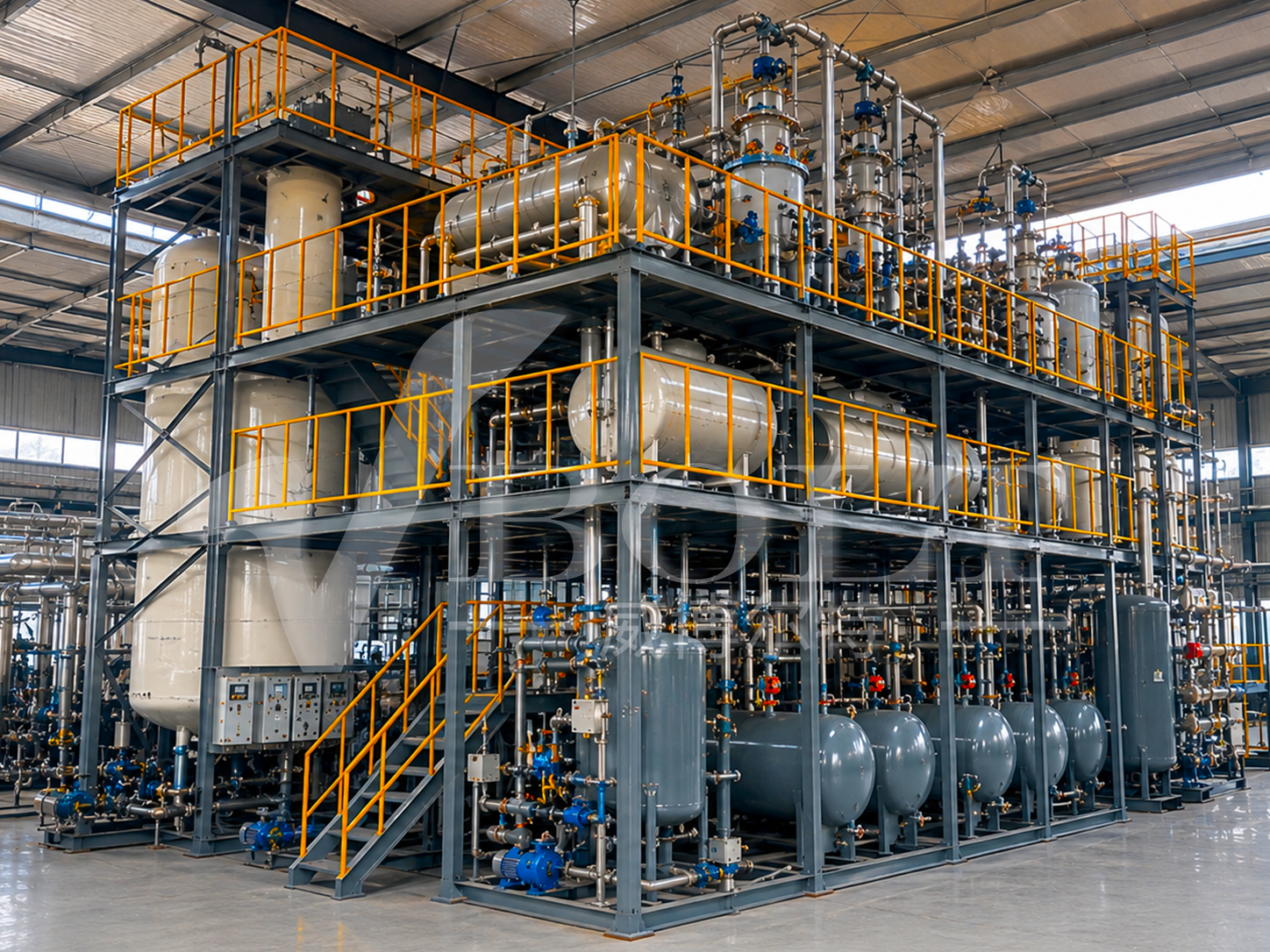
The process scope behind those numbers is described in معدات إعادة تكرير الزيت المستعمل لإنتاج زيت الأساس and in the محطة إعادة تكرير الزيوت المستعملة جاهزة للتشغيل. Product requirements are covered in re-refined base oil standards, and supplier comparison in مورد محطات إعادة تدوير الزيوت المستعملة.
This is a planning checklist, not legal advice. Requirements differ by country and province; confirm the scope with a licensed local consultant before submitting.
Preparing a Re-Refining Project?
Send the feed data, planned capacity and site conditions. We will prepare the process description, mass balance and utility data that your environmental consultant needs.
دعم الطلبات والمشاريع
الأسئلة المتداولة
How long does the environmental assessment take?
It depends on the project category, the local review process and how many corrections are requested. Plan in months, and start the data package before the site is fixed.
Can construction start before approval?
No. Starting construction before approval creates stop-work and reinstatement risk, and can affect the permit for the operating plant.
What can the equipment supplier provide?
Process description, flow diagram, mass and energy balance, equipment list, utility consumption and the emission sources from the plant. The assessment itself is prepared by a licensed consultant.