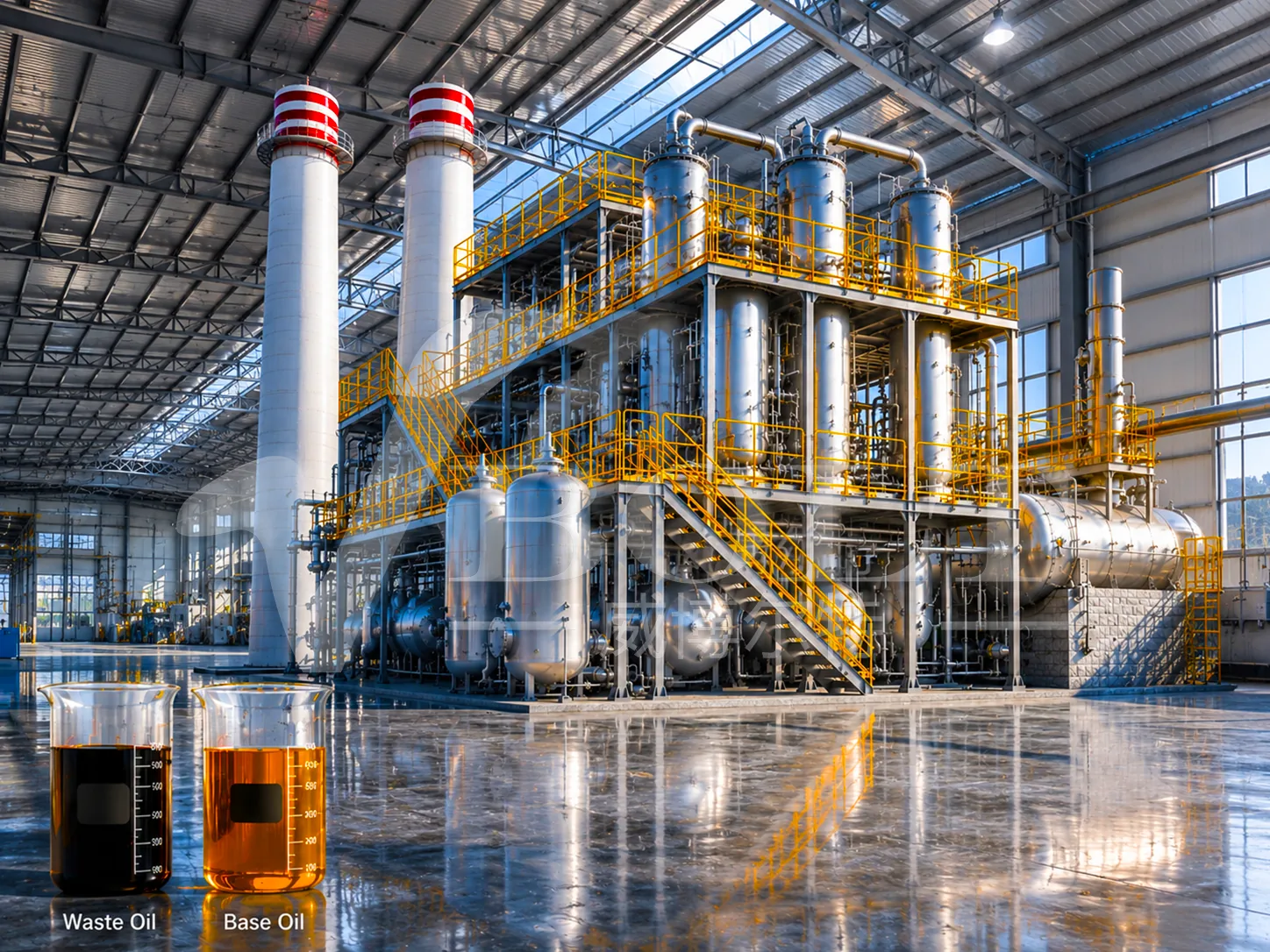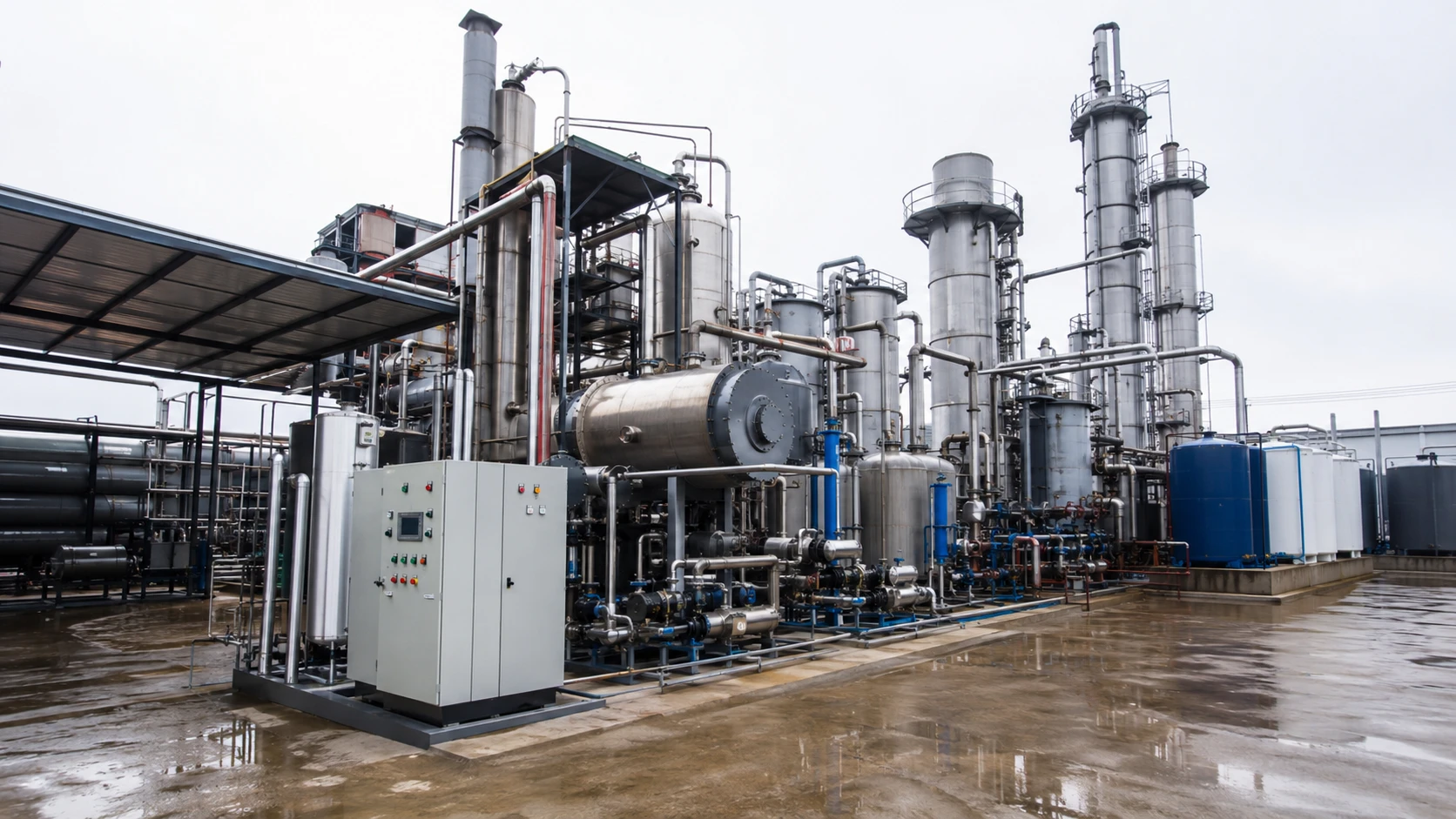


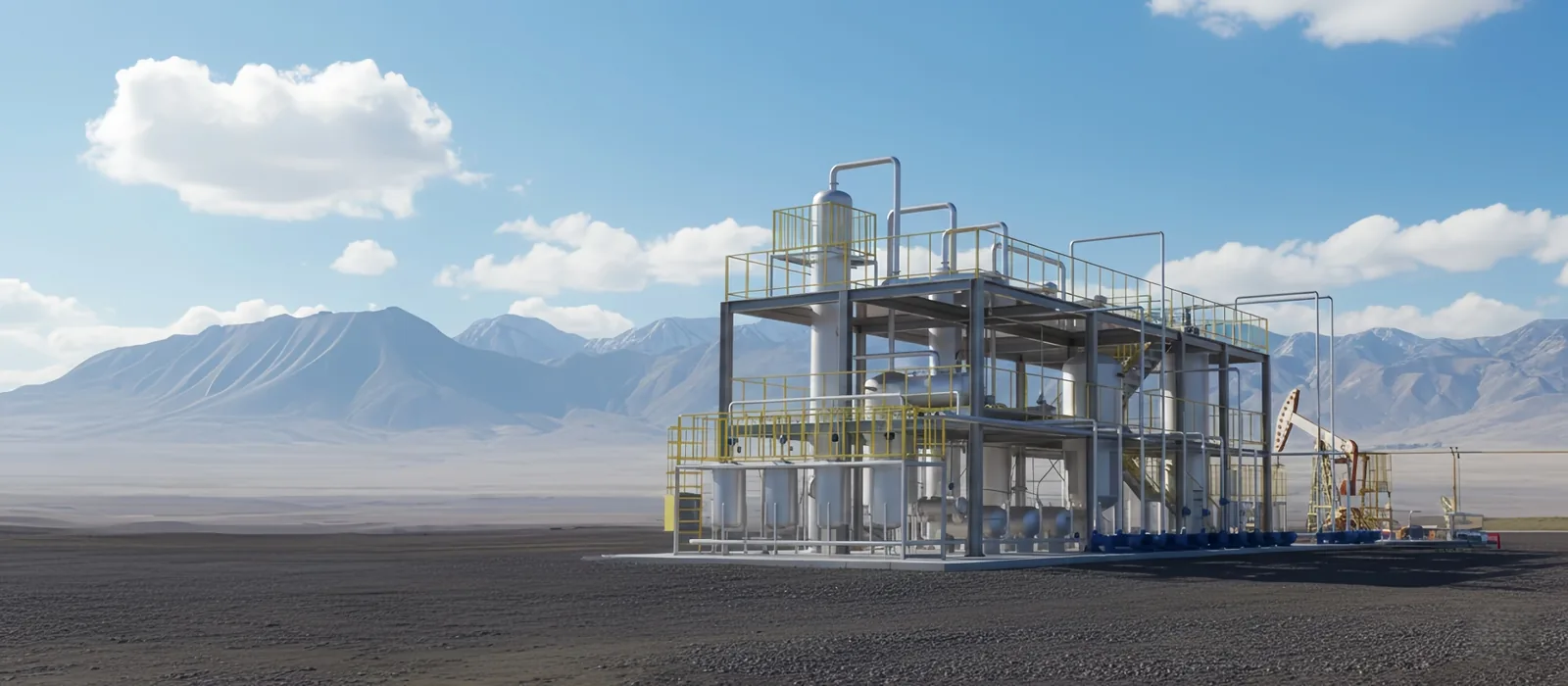
A re-refining plant loses vacuum and fouls its hot surfaces for a small number of reasons. Most of them are visible in the design before startup, and in the trend data afterwards.
جدول المحتويات ▴
Where Coking Forms
| Location | Why it forms there |
|---|---|
| Fired heater tubes | Wall film runs above the bulk temperature; low flow leaves oil in the tube longer |
| Column bottoms and reboiler | Heavy residue stays hot for hours |
| Thin-film evaporator wall | Hot spots where the film thins or the wiper loses contact |
| Hot vapor lines | Low gas velocity and cold spots let heavy vapor condense and bake |
| Residue cooler and discharge | Heavy fraction cools below its pour point and sets in the line |
Coking is a time-at-temperature problem. The same oil at the same bulk temperature will coke faster wherever it sits longer or touches a hotter wall.
Three Conditions That Drive It
Film temperature. Cracking begins below the nominal boiling point of the residue. A heater outlet reading can look normal while the wall film is already above the cracking threshold, so tube skin temperature and heat flux matter more than the control-room number.
Residence time. A batch column holds heavy material at temperature for hours. A thin-film or short-path evaporator holds it for seconds. This difference shapes the fouling rate more than the set point does.
Catalytic factors. Dissolved metals, air ingress, water and reactive asphaltenes accelerate deposition. Feed that looks acceptable in a colour test can still carry the metals and oxygen that shorten a cleaning cycle.
Why Vacuum Drops
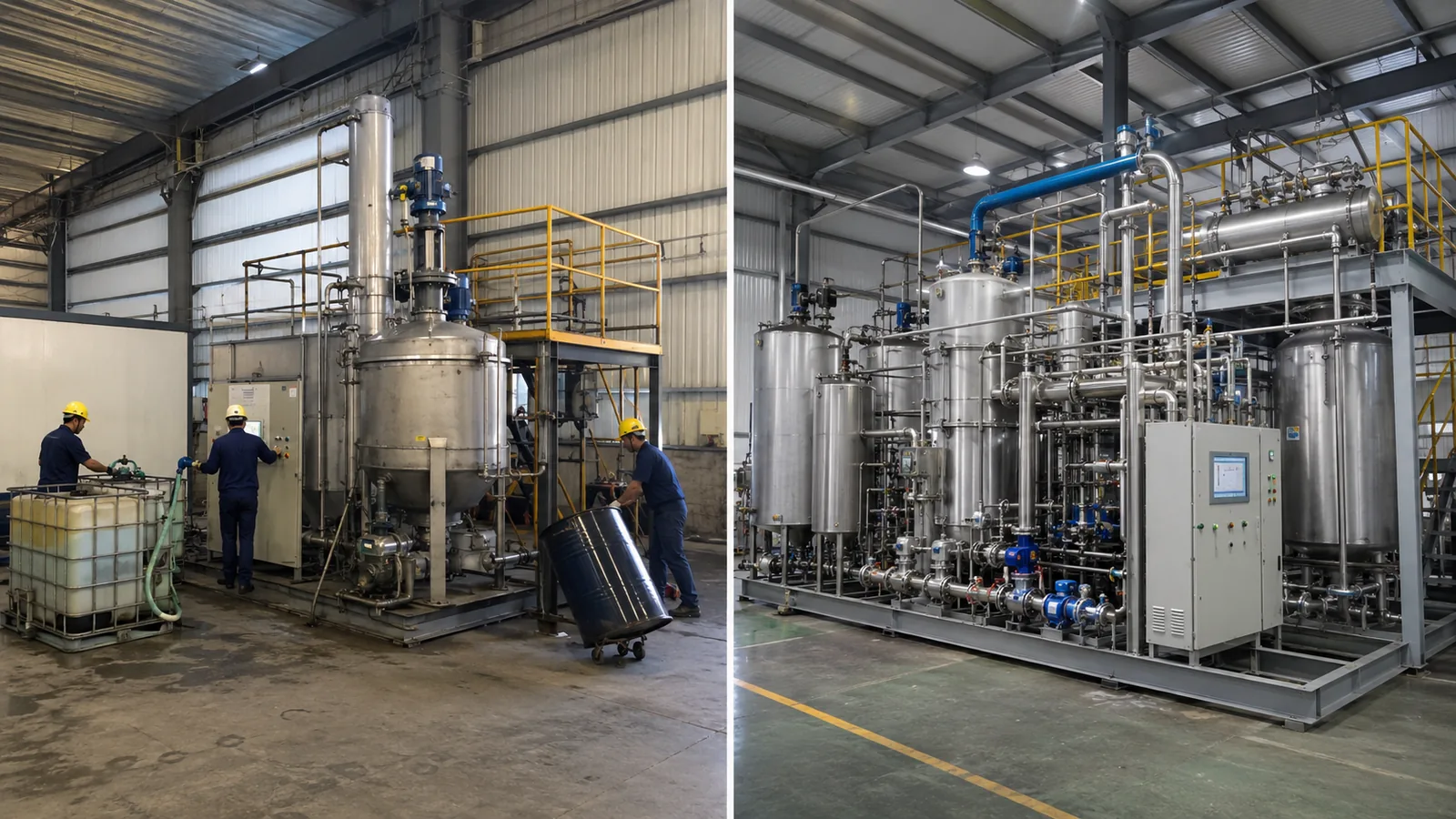
Vacuum loss usually comes from one of five places:
- air leaking through flanges, mechanical seals, sampling points and instrument connections;
- condenser capacity reduced by warm cooling water, fouling or undersizing;
- non-condensable gas accumulating because the ejector or liquid-ring pump is not removing it;
- pressure drop through long or undersized vapor lines and a fouled demister;
- a feed surge in water or light ends, which raises vapor load and drops vacuum without any equipment fault.
The last case is the one operators misdiagnose. Vacuum recovers when the feed settles, so the pump gets blamed and replaced while the real cause sits upstream.
Design Measures That Work
- use thin-film or short-path evaporation for the hot separation step, to cut residence time from hours to seconds;
- size condenser area for the hottest cooling-water month, not the annual average;
- use multi-stage vacuum with a steam ejector and a liquid-ring pump, and check seal-water temperature;
- keep vapor lines short and large enough that pressure drop stays low at design load;
- specify vacuum-grade flanges and seals, and keep leak-prone joints accessible;
- put dehydration and filtration before the hot section, where they protect every downstream surface;
- purge residue continuously rather than letting it accumulate in the bottom;
- provide removable exchangers and cleaning access on the surfaces that will foul;
- interlock vacuum, film temperature and feed rate so a feed upset cannot run the plant hot at low vacuum.
These measures belong in the equipment scope, not in an operating manual added later. The separation route and the vacuum system are described in معدات إعادة تكرير الزيت المستعمل لإنتاج زيت الأساس and in the project scope for a محطة إعادة تكرير الزيوت المستعملة جاهزة للتشغيل.
Batch and continuous plants behave differently here. A batch column can hold residue at temperature for a full cycle; a continuous train exposes it once. The trade-off is covered in محطة تقطير الزيوت المستعملة ذات التشغيل الدفعي مقابل محطة التقطير المستمر.

Early Signals
| Signal | Likely cause | First check |
|---|---|---|
| Vacuum drifts over hours | Leak or condenser fouling | Leak survey, cooling-water temperature rise |
| Heater ΔT rises at constant duty | Internal tube fouling | Tube skin temperature, flow rate |
| Throughput falls and colour darkens | Coking or thermal cracking | Film temperature, residence time |
| Residue viscosity rises | Heavy end accumulating in the bottom | Purge rate, bottom level |
| Vacuum unstable after a feed change | Water or light ends in the feed | Feed water content, light-end fraction |
Trend data catches these weeks before a shutdown does. A single reading rarely shows the problem; a two-week trend of vacuum against feed rate and heater ΔT does.
Feed data is the other half of the picture. The properties that drive fouling and vacuum stability are covered in فحص الزيوت المستعملة قبل إعادة تكريرها.
Designing Around Coking and Vacuum Loss?
Send the feed analysis, the target product and the proposed separation route. We will review where the design puts film temperature and residence time, and where the vacuum system has margin for summer conditions and feed upsets.
دعم الطلبات والمشاريع
الأسئلة المتداولة
Can additives stop coking?
Antifoulants can slow deposition. They do not correct a design that puts the wall film above the cracking temperature or holds residue at temperature for too long.
Is vacuum loss always a pump problem?
No. Leaks, condenser capacity and non-condensable removal account for most cases. Check those before replacing the pump.
Does a thin-film evaporator eliminate coking?
It shortens residence time and reduces thermal exposure. It does not remove the need for feed preparation, cleaning access and vacuum control.