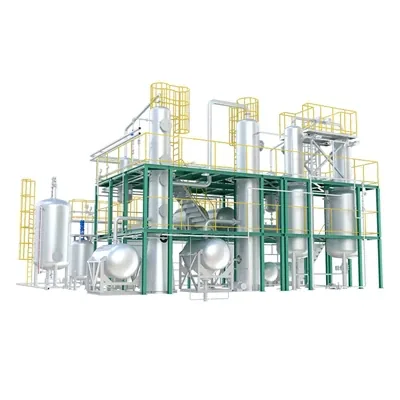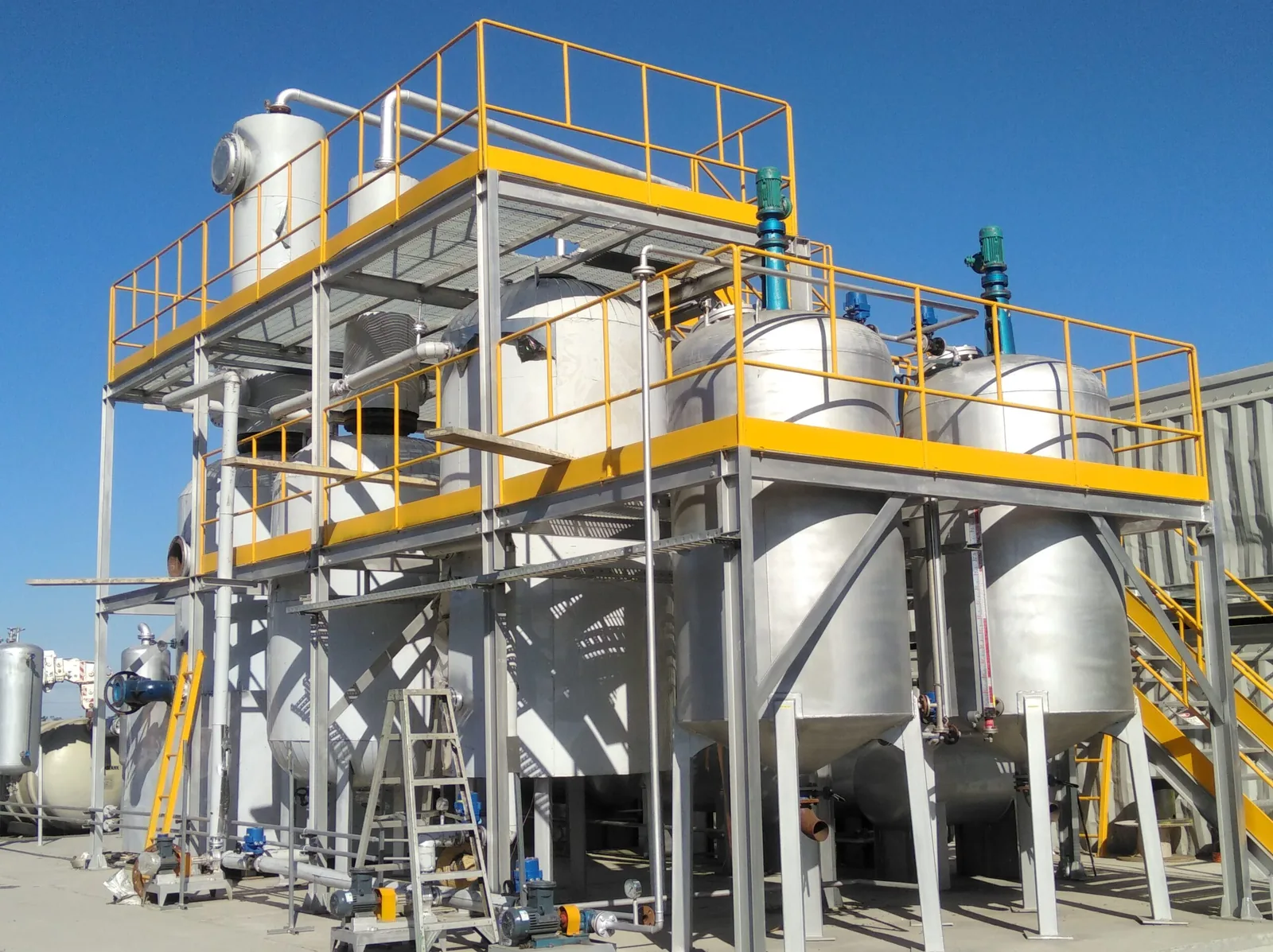





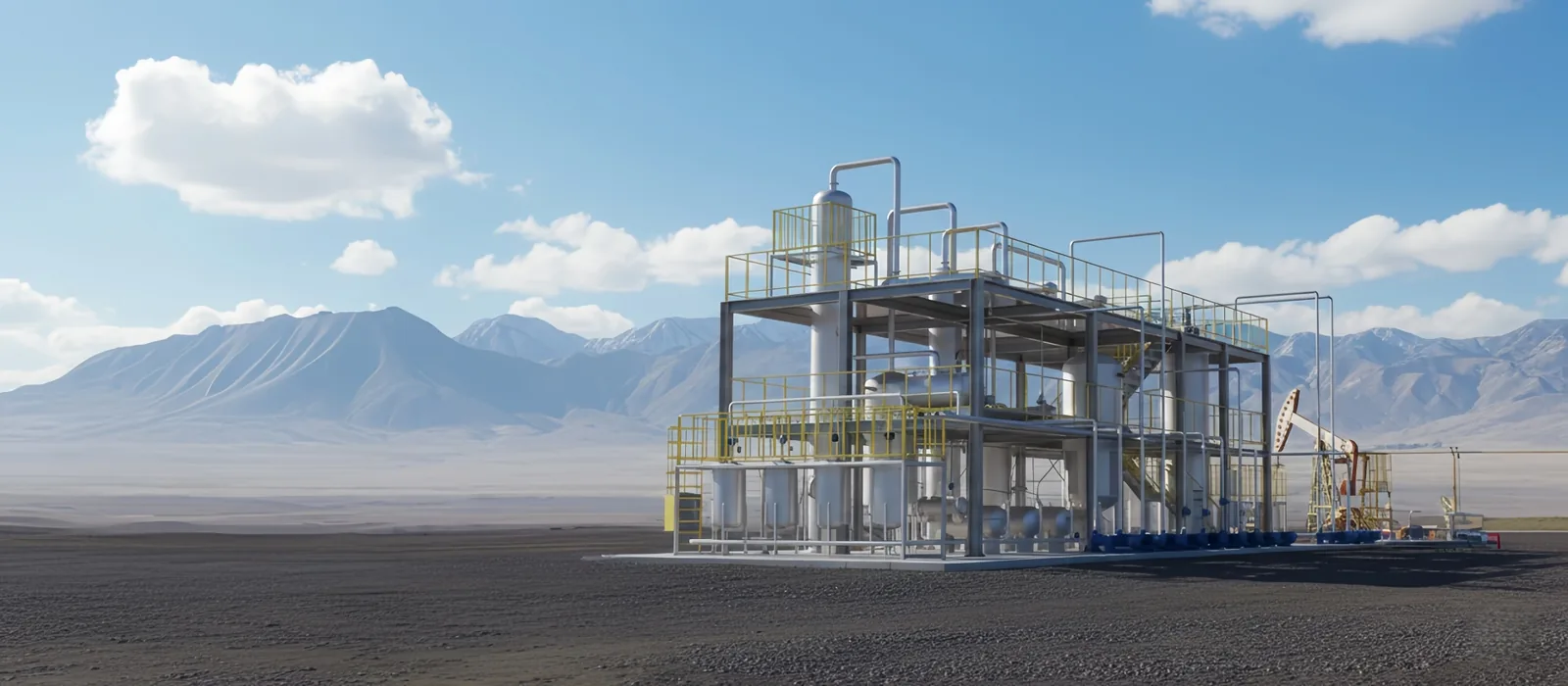
VBOLT waste lubricating oil to diesel plants are designed to process suitable used lubricating oils, used engine oils and compatible mineral-oil feedstocks into a diesel-type fuel fraction through pretreatment, controlled distillation, condensation and finishing.
- Feedstock: used lubricating oil, used engine oil and tested compatible mineral oils
- Output: diesel-type fuel fraction, subject to testing and local requirements
- Configuration: batch, semi-continuous or continuous options according to project conditions
- Capacity: selected according to daily feedstock availability
The final configuration depends on water content, sludge, sulfur, viscosity, contamination and the required product specification.
What Used Lubricating Oil Contains
Used engine, hydraulic, gear and transmission oils can contain water, fuel dilution, soot, oxidation products, degraded additives, metals, carbon residue and solids. Collection practices may also introduce coolant, brake fluid, solvents, chlorinated compounds or other incompatible materials.
A representative laboratory sample is required before final process selection. Typical screening may include water, sediment, density, viscosity, flash point, distillation behavior, ash, carbon residue, sulfur, chlorine and metals. PCB-contaminated material and unidentified hazardous streams must be isolated and managed under the applicable rules rather than assumed suitable for the plant.

Used Lubricating Oil Distillation Process
1. Feed Reception and Segregation
Incoming oil should be identified by source, sampled and assigned to compatible storage. Separate tanks allow operators to quarantine unknown material and prevent one contaminated load from changing the entire feed blend.
2. Settling, Filtration and Dehydration
Settling, screens, filters or centrifugation remove free solids and sludge according to the feed condition. Controlled dehydration removes free and emulsified water before high-temperature processing. The design must account for foaming, vapor load and safe handling of the separated water phase.
3. Vacuum Distillation and Fractionation
Indirect heating and reduced pressure allow selected hydrocarbons to vaporize at lower bulk temperatures than atmospheric operation. This can limit thermal cracking and coking when the heating duty, film temperature, residence time and vacuum system are properly controlled.
Vapors pass through separation equipment and condensers, then enter dedicated receivers. Temperature, pressure and reflux or condensation control determine the cut points. Light ends, the target middle fraction and heavier material should be collected separately so each stream can be tested and routed appropriately.
4. Configurable Finishing
Distillation controls boiling range but may not achieve the required sulfur, color, odor, stability or contaminant limits. Depending on test data, a project may evaluate adsorption, solvent treatment, catalytic treatment, hydrotreating or another finishing route. Each option has different utilities, consumables, safety requirements and waste streams.
Acid-clay treatment should not be presented as a universal solution. It can generate acidic waste and spent clay, and its use must be justified by product targets, material compatibility, worker protection and an approved disposal route. Finishing performance should be verified by defined laboratory methods.
5. Final Filtration, Storage and Release Testing
Finished fractions pass through final filtration and enter identified product tanks. A batch should be released only after it meets the agreed specification. Testing may include density, viscosity, flash point, water and sediment, sulfur, distillation range, ash, metals, oxidation stability, cold-flow properties or other market-specific parameters.
Use in boilers, burners, engines, generators, marine equipment or road vehicles requires a separate compatibility decision. A diesel-range boiling fraction is not automatically EN 590, ASTM D975 or another regulated diesel grade.
Main Equipment in a Distillation Line
- Feed sampling, receiving and segregated storage tanks
- Settling, filtration, centrifugation or sludge-removal equipment
- Controlled dehydration and water-separation system
- Indirect heating and vacuum distillation vessel or evaporator
- Fractionation, condensation and dedicated product receivers
- Vacuum pumps, seals and non-condensable-gas handling
- Configurable finishing, final filtration and product storage
- PLC controls, instrumentation, alarms, interlocks and emergency shutdown
- Process-water, residue, emissions and fire-protection systems
Equipment lists are not interchangeable between projects. Vessel materials, corrosion allowance, hazardous-area classification, pressure and temperature ratings, condenser area and instrumentation must follow the confirmed design basis and applicable codes.
Recovery Rate and Material Balance
No single recovery percentage applies to all used lubricating oils. Water, light ends, sludge, non-distillable residue, cut points and the product specification change the quantity of saleable liquid. A preliminary material balance should distinguish wet feed, dry oil, recovered fractions, process water, non-condensable gas and heavy residue.
An engineering estimate should state whether recovery is based on total wet feed or dry oil and whether it covers all condensate or only on-specification product. A contractual guarantee requires a representative feed, sampling procedure, operating conditions, test methods and acceptance criteria.
Safety and Environmental Design
Used-oil distillation involves hot hydrocarbons, vacuum operation and potentially flammable vapors. The design may require pressure relief, temperature and level trips, flame arrestors, inerting, bonding and grounding, leak detection, emergency shutdown, suitable electrical classification and a site fire-protection plan.
Non-condensable gas must be measured and routed through an engineered recovery, treatment or combustion system. It should not be assumed suitable as heater fuel without confirming composition, stable flow, burner compatibility and emissions requirements.
Heavy residue, separated water, spent filters, adsorbents and other wastes require characterization, contained storage and an authorized recovery or disposal route. Coke or residue must not be labeled harmless or automatically suitable as solid fuel.
How to Define Equipment Capacity
Capacity should be expressed with its basis: tonnes per 24 hours or litres per hour, feed density, water and solids content, operating hours, batch cycle, planned downtime and annual operating days. A nameplate rate for dry, filtered oil cannot be applied unchanged to wet, high-sludge feed.
Batch, semi-continuous and continuous arrangements can each be appropriate. Selection depends on confirmed feed supply, storage, utilities, staffing, maintenance plan, product offtake and the required operating flexibility. A mass balance and operating schedule should be developed before choosing a capacity label.
Information Needed Before Equipment Selection
| Project input | Details to confirm |
|---|---|
| Feed oil | Source, collection method, sample analysis and variability |
| Throughput | Daily volume, operating hours, storage and annual availability |
| Target product | Specification, intended use, test methods and local market |
| Site utilities | Power, fuel, cooling water, compressed air and drainage |
| Compliance | Emissions, fire, pressure equipment, electrical and waste rules |
| Supply scope | Tanks, civil work, installation, commissioning, training and laboratory |
If representative sample data are unavailable, the first equipment proposal should be marked preliminary. Final sizing, utility estimates and performance commitments should follow laboratory analysis and confirmation of the project boundary.
Used Oil to Fuel or Used Oil to Base Oil?
Fuel-fraction recovery and base-oil re-refining are different process objectives. Base-oil production normally requires tighter separation and a finishing route designed around viscosity, viscosity index, volatility, color, sulfur, oxidation stability and other lubricant properties.
Review the dedicated used-oil re-refining equipment for recovered base oil.
Review the continuous waste-oil distillation system for controlled fuel fractions.
Select a Used Lubricating Oil Distillation System
VBOLT can develop a preliminary process route from the feed analysis, required product, operating schedule and site conditions. A project proposal can define the design basis, principal equipment, preliminary material balance, estimated utilities, control philosophy and supply boundary.
Send VBOLT your feed analysis and project requirements for a technical review.