





From Used Motor Oil to a Tested Fuel Product
Used motor oil contains valuable hydrocarbons, but it also carries water, soot, degraded additives, wear metals, fuel dilution and contaminants collected during service. A distillation plant can recover controlled boiling-range fractions from suitable oil. The result should be described as diesel-range distillate until laboratory testing confirms the specification and legal end use.
The term “clean diesel” is not a process guarantee. Product quality depends on the incoming oil, separation cut points, thermal history, finishing method and quality-control plan. A product intended for a burner, generator, blending pool or road vehicle can require different properties, permits and release criteria.
Step 1: Characterize and Segregate the Feed
Representative samples should be tested for water and sediment, ash, density, viscosity, flash point, distillation behavior, sulfur, total halogens, acid number, carbon residue, metals and glycol. The storage and sampling plan should preserve traceability by source. Unknown, chlorinated or chemically incompatible streams must be quarantined rather than diluted into accepted oil.
Used lubricating oil should not be treated as interchangeable with tire or plastic pyrolysis oil. Pyrolysis liquids can have different olefin content, acidity, stability, sulfur, halogen and solids risks. Transformer oil, chemical waste and water-rich emulsions also need separate evaluation and a specifically engineered, legally permitted treatment route.
Step 2: Remove Water, Solids and Light Ends
Accepted oil is screened or filtered and transferred through closed systems. Settling, controlled heating, coalescing or another validated method removes free water and suspended solids. A dehydration and light-ends stage protects downstream vacuum equipment, reduces unstable operation and separates low-boiling material into a dedicated receiver.
Pretreatment conditions must be set from feed tests. Excessive heating can increase gas formation and fouling, while incomplete dehydration can disturb the vacuum system and product separation. Removed water and light ends are process outputs that need measurement, compatible storage and authorized treatment or reuse.
Step 3: Separate Fractions Under Vacuum
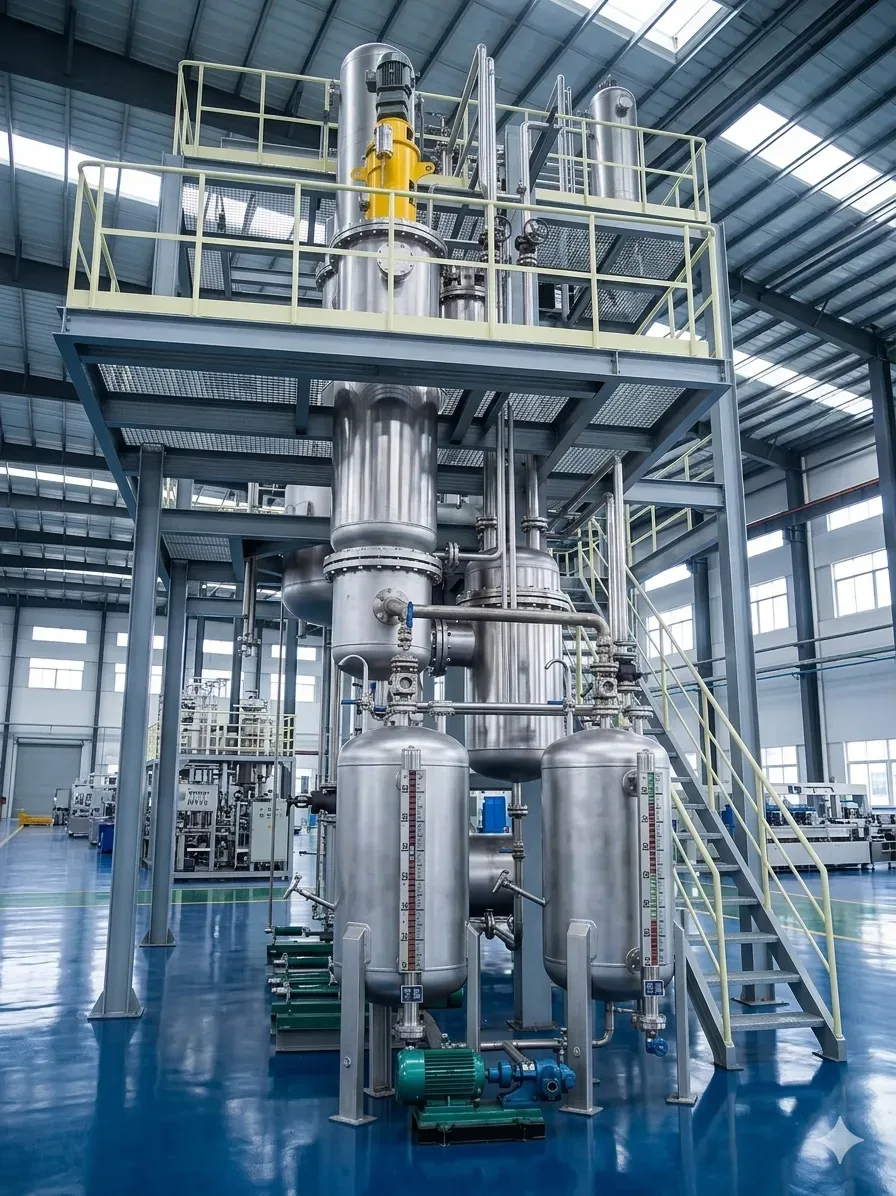
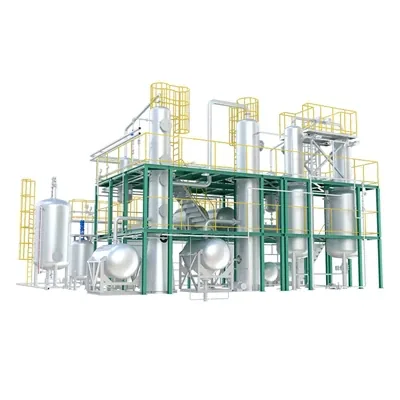
Vacuum distillation lowers the boiling temperature needed for separation and can limit thermal stress on the oil. The plant controls pressure, temperature profile, residence time and reflux or fractionation conditions to direct vapors into defined product cuts. Condensers and separate receiving tanks prevent different fractions from being mixed before testing.
There is no universal temperature range that proves diesel quality. Actual cut points depend on pressure, column design, feed composition and the target specification. Heavy molecules, additive residues, metals and carbonaceous material concentrate in the bottom stream, which must be removed through a controlled residue system.
Step 4: Finish and Test the Recovered Fuel
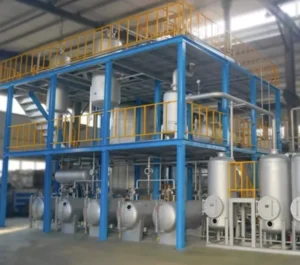
A finishing stage can use filtration, adsorption, solvent treatment, clay treatment or another method selected from laboratory results. Catalytic processing is not automatically required and does not by itself prove compliance. Each treatment should have a defined contaminant target, operating window, consumable rate and plan for spent media or catalyst.
An accredited laboratory should test the final product against its declared market specification. The test slate may include density, viscosity, flash point, distillation curve, sulfur, ignition quality or cetane index, cold-flow behavior, water, sediment, ash, carbon residue, acidity, lubricity and metals. Off-specification product must remain segregated for reprocessing or another authorized use.
A diesel-range fraction is not automatically legal road diesel. Road-fuel sale or use may require national and local fuel compliance, registration, taxation, traceability, sustainability documentation and restrictions on blending components. These requirements should be confirmed before the plant and finishing route are selected.
Control Gas, Water and Heavy Residue
A complete mass balance records accepted feed, removed water and light ends, each product fraction, off-specification material, heavy residue, non-condensable gas and normal process loss. Non-condensable gas requires a knock-out device, pressure protection and flame or combustion safeguards before controlled use as fuel or permitted treatment. Wastewater, filter solids and residue need characterization and authorized recovery or disposal.
Site design should address closed transfer, tank venting, pressure and vacuum protection, high-temperature and high-level trips, heating-system safeguards, grounding and bonding, hazardous-area classification, gas detection, ventilation, fire protection, spill containment and emergency shutdown. Environmental and fire approvals depend on the installation location and actual feed and product classifications.
Verify the Process Before Investment
Before purchase, request representative feed trials, a process flow diagram, equipment list, materials of construction, utility balance, control philosophy, emissions and residue plan, product specifications, laboratory methods and a complete mass balance. The acceptance test should define feed conditions, stable run time, measured throughput, product quality, energy use, downtime and treatment of every output.
Review the waste oil to diesel distillation equipment guide for supplier-evaluation criteria. If the feed is primarily used lubricating oil, compare diesel recovery with base-oil re-refining before choosing the product route.