




What Waste Oil to Diesel Distillation Equipment Does
Waste oil to diesel distillation equipment separates compatible hydrocarbon feedstocks into controlled boiling-range fractions through pretreatment, dehydration, vacuum distillation or fractionation, condensation and specification-led finishing. The correct process depends on the feed analysis and intended product use. Distillation alone does not guarantee road diesel, a fixed yield or unrestricted acceptance of mixed hazardous wastes.
Used lubricating oil, used engine oil and selected industrial oils can often be evaluated as feedstocks. Tire or plastic pyrolysis oils have different stability, sulfur, halogen and contaminant risks and should not be grouped with used lubricants without separate laboratory work and process confirmation. Transformer oils, chemical wastes, chlorinated streams and water-rich emulsions require dedicated assessment and legally permitted handling routes.
Feedstock Testing and Acceptance
A representative sampling plan should cover water and sediment, ash, density, viscosity, flash point, distillation behavior, sulfur, total halogens, acid number, carbon residue, metals and glycol. Multiple samples may be needed where storage tanks receive oil from different sources. The project should define rejection, segregation and off-specification handling rules before commercial operation.
Trial results establish dehydration duty, fouling tendency, usable cut points, residue production and the finishing route. A supplier should not promise capacity, energy consumption or saleable-product yield from the feed name alone. These figures need a documented feed envelope, test method and mass balance.
Process Stages and Equipment Scope
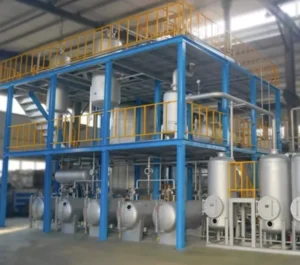
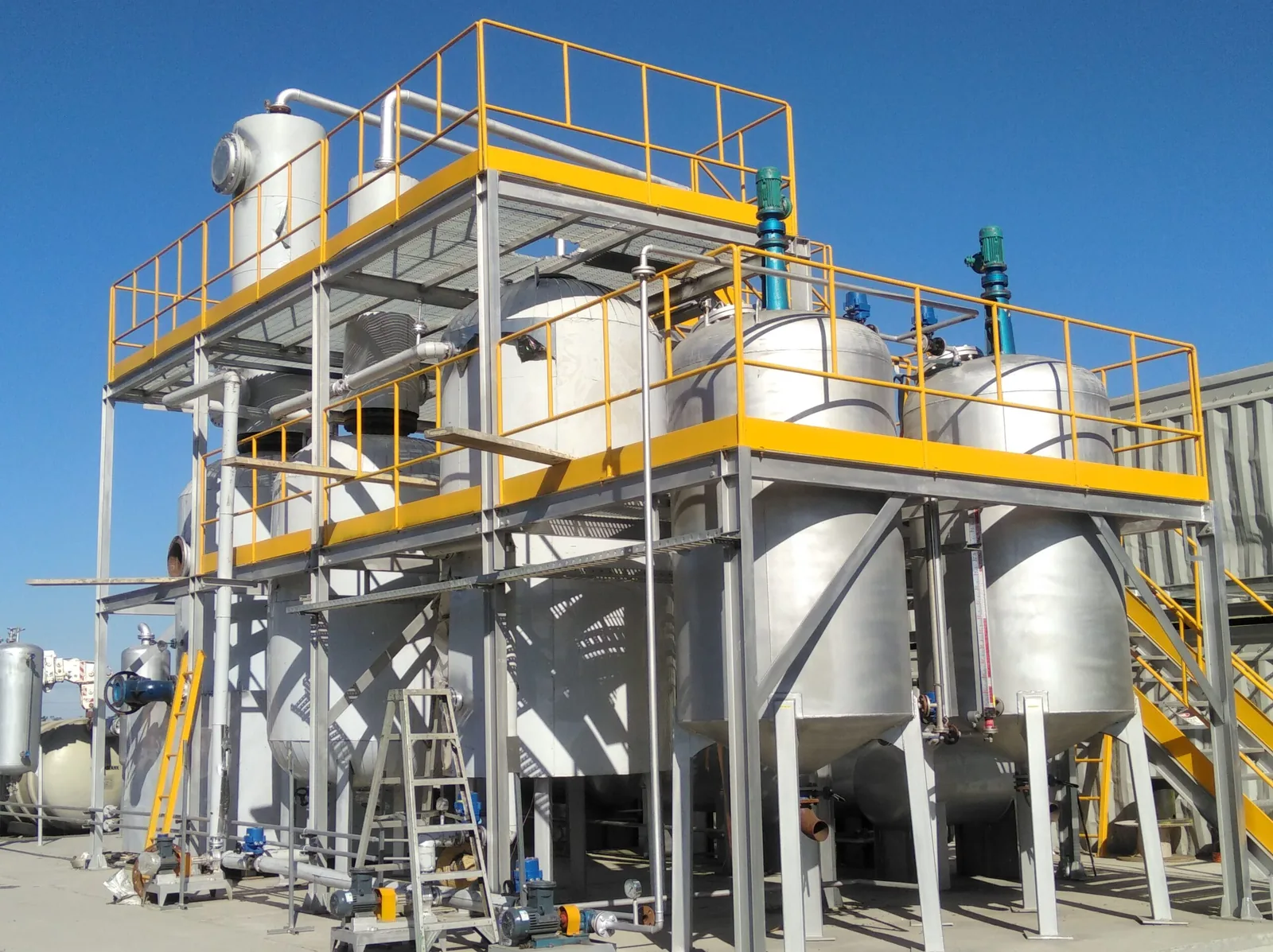
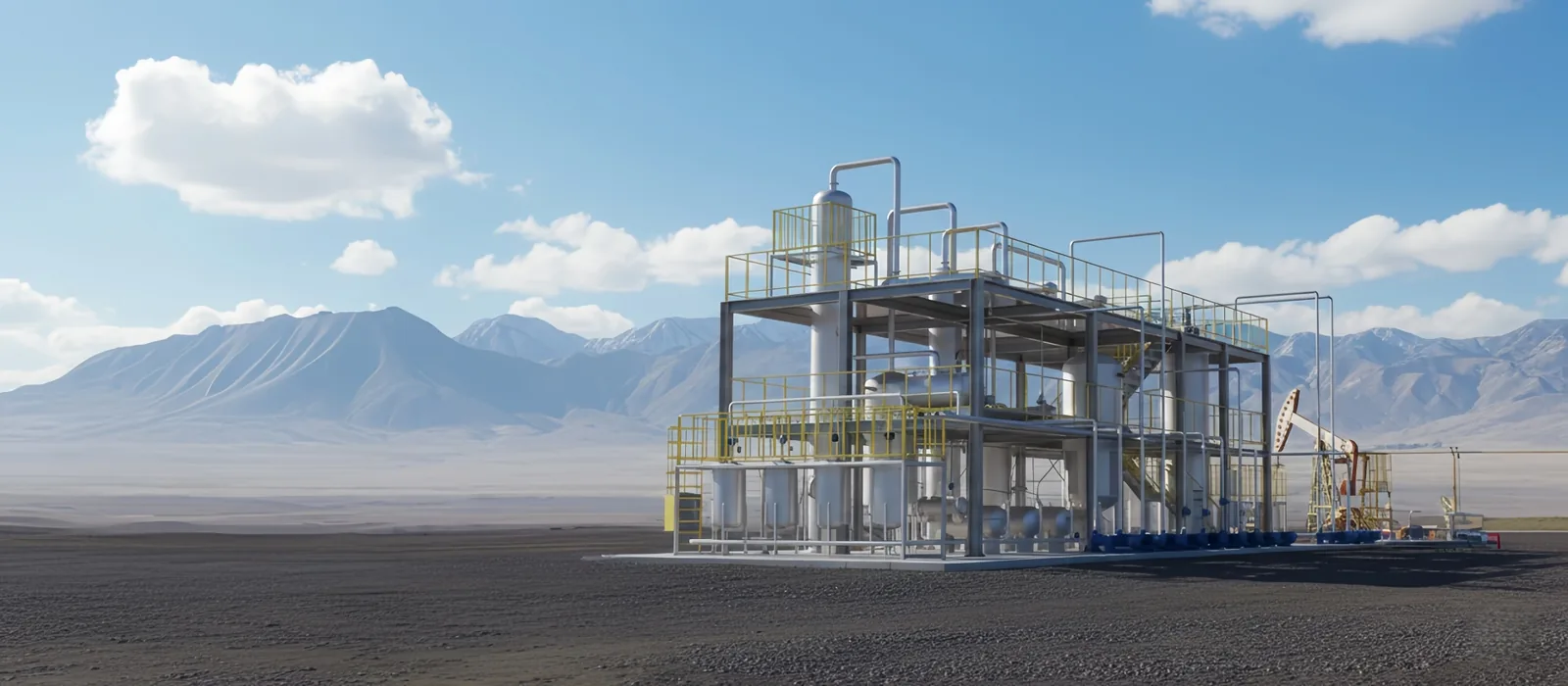
A continuous system can include feed receipt and segregation, screening or filtration, controlled preheating, dehydration, light-ends removal, vacuum distillation or fractionation, vapor-liquid separation, condensers, separate product receivers and residue discharge. Vacuum operation can reduce boiling temperature and thermal stress, but the operating pressure, temperature profile, residence time and cleaning interval must be matched to the feed.
Finishing may involve filtration, adsorption, solvent treatment, clay treatment or another validated step selected from laboratory data. Catalytic cracking is not a universal requirement and can change gas production, product stability, emissions controls and permitting needs. Every catalyst or additive should have a defined purpose, consumption rate, replacement method and waste-management plan.
Recovered Fuel Testing and Intended Use
Product release should be based on an accredited laboratory and the specification for the declared market. Relevant properties can include density, viscosity, flash point, distillation curve, sulfur, cetane index or ignition quality, cold-flow behavior, water, sediment, ash, carbon residue, acidity, lubricity and metals. The required list depends on whether the product is intended for a burner, generator, industrial fuel pool, blending component or road vehicle.
A diesel-range distillate is not automatically legal road diesel. Road-fuel sale or use may require compliance with national and local fuel standards, registration, taxation, sustainability or traceability rules and limits on blending components. Product that does not meet the selected specification must remain segregated for reprocessing or another authorized use.
Safety and Environmental Controls
The design should address closed transfer, tank venting, pressure and vacuum protection, high-temperature and high-level trips, heating-system safeguards, grounding and bonding, hazardous-area classification, gas detection, ventilation, fire protection, spill containment and emergency shutdown. Instrumented alarms and interlocks need documented set points, cause-and-effect logic and commissioning tests.
Light ends, non-condensable gas, wastewater, filter solids and heavy residue must be measured and characterized. Gas requires knock-out and safety devices before controlled use as fuel or permitted treatment. Wastewater and residue need compatible storage and authorized recovery or disposal. Air-emission, waste-processing, product-storage and fire approvals should be confirmed with the competent authorities for the installation site.
Capacity, Utilities and Mass Balance
Nameplate capacity normally describes feed throughput under stated conditions, not the amount of saleable fuel. A complete balance should record feed, removed water and light ends, each on-spec and off-spec fraction, heavy residue, non-condensable gas and normal process loss. The acceptance test should also record electricity, fuel, cooling water, compressed air, operator attendance, cleaning time and downtime.
Heat recovery can lower utility demand, but its benefit should be stated against a defined system boundary and operating case. Compare projects using guaranteed units such as energy per tonne of accepted feed, product recovery by measured mass and stable throughput over an agreed test period rather than an unsupported percentage.
Documents to Request Before Ordering
Request the process flow diagram, equipment list, materials of construction, tank schedule, utility balance, plot plan, electrical standard, control philosophy, hazardous-area basis, emissions and residue plan, battery limits, civil and installation responsibilities, operator training, spare parts, commissioning scope, performance-test method and warranty exclusions. Product specifications and laboratory methods should be attached to the commercial agreement.
Review the continuous waste oil to diesel equipment design for plant configuration and scale-up criteria. You can also compare diesel recovery with base-oil re-refining before selecting the product route.