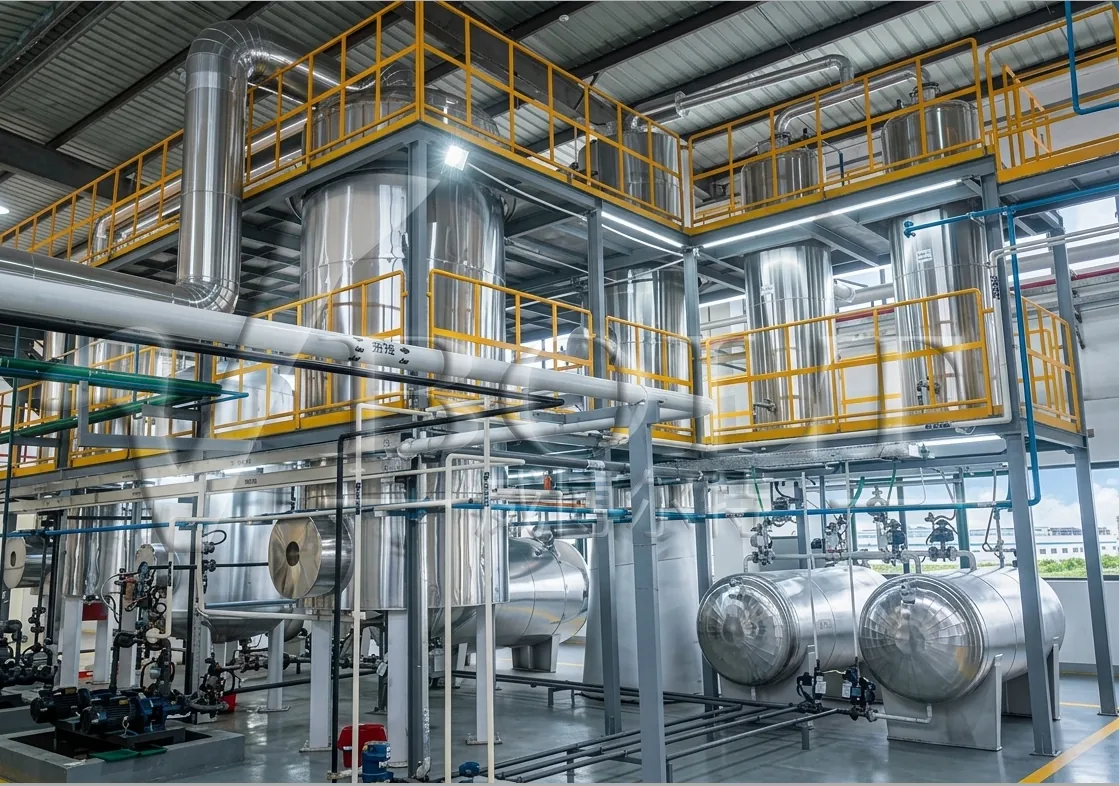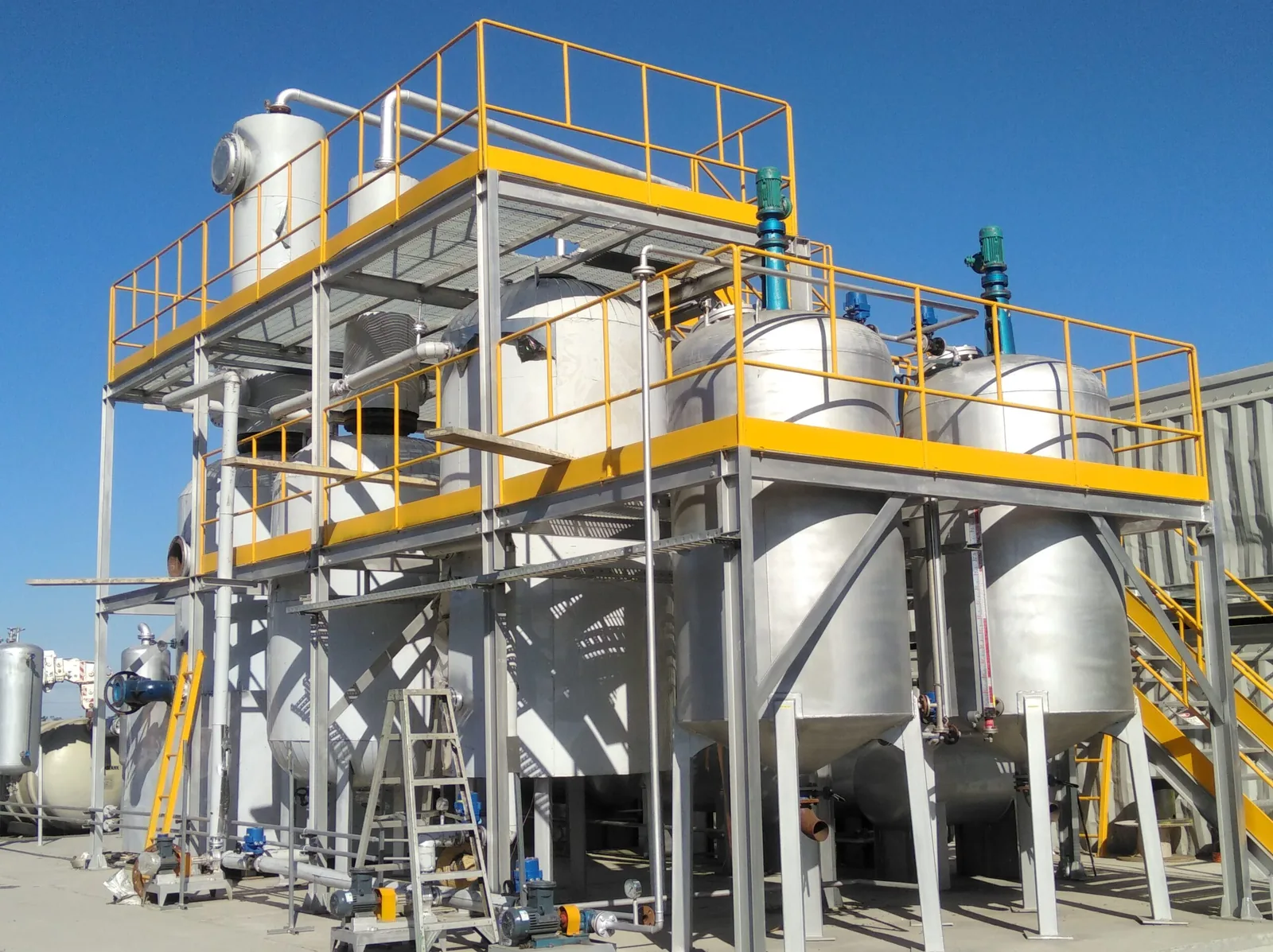






Choosing a waste oil to diesel plant is not only a matter of comparing machine price. For a used engine oil recycling project, the right equipment depends on feedstock condition, daily processing capacity, target fuel quality, heating method, distillation design, residue handling, automation level and local operating requirements.
Many buyers begin with a simple question: “Can this machine turn black engine oil into diesel?” In practice, the better question is: “Can this system process my actual waste oil continuously, control the output quality, manage residue safely and keep operating costs within my project budget?”
VBOLT supplies diesel distillation equipment for recovering diesel-range fuel fractions from used engine oil, lubricating oil and related waste oil. Final use depends on feedstock, process scope, laboratory test results and local rules, so buyers should not rely only on catalog capacity or final oil color.

1. Confirm the Type of Waste Oil You Want to Process
The first step is to define the raw material. Used engine oil is not always the same. A recycling plant may receive black motor oil from vehicle service stations, diesel engine oil from trucks, hydraulic oil from factories, gear oil, mixed lubricants or heavy contaminated waste oil from collection centers.
Each type of oil has different water content, light fraction content, additive residue, metal particles, carbon sludge and viscosity. These differences affect heating behavior, distillation temperature, vacuum stability, filtration load and final fuel performance.
For example, a project mainly processing used engine oil from vehicle workshops may require a different pretreatment and distillation setting from a project handling mixed industrial lubricants. If the raw material contains high water or sediment, the plant should include proper dehydration, impurity removal and residue discharge design before the oil enters the main distillation stage.
For buyers focused on used motor oil and contaminated lubricants, VBOLT’s waste engine oil to diesel plant is more relevant than a general oil purifier because the process uses dehydration, controlled distillation, condensation and optional polishing rather than simple filtration.
2. Decide Whether Your Target Product Is Diesel or Base Oil
Some buyers use the phrase “waste oil recycling machine” without clearly defining the final product. This is a common mistake. Used oil can be processed into different output directions, but the equipment configuration is not the same.
| Project Direction | Main Output | Typical Buyer | Key Evaluation Point |
|---|---|---|---|
| Used oil to diesel | Diesel-range fuel for approved industrial applications | Waste oil collectors, fuel users, recycling plants, industrial energy projects | Fuel recovery, distillation efficiency, odor control, sulfur and impurity handling |
| Used oil to base oil | Reusable base oil fractions for further refining or blending | Lubricant producers, oil blending plants, re-refining projects | Viscosity control, color stability, refining depth, final oil testing requirements |
If the project goal is to produce diesel-type fuel for industrial burners, boilers or generators, a waste oil to diesel plant is the practical route. If the goal is to recover lubricant base oil for blending, then buyers should evaluate base oil distillation equipment instead.
This distinction should be confirmed before quotation. Otherwise, the supplier may offer a machine that matches the keyword but not the actual business model.
3. Choose Capacity Based on Real Oil Supply, Not Ambition
Capacity is one of the biggest factors affecting equipment cost. However, a larger plant is not always the better choice. A 20 TPD or 30 TPD plant only makes sense when the buyer has stable raw oil supply, storage tanks, labor arrangement, power availability and enough finished fuel market demand.
For a first project, many buyers consider a small or medium-capacity plant to test local feedstock supply and sales channels. A plant such as a 5 TPD waste oil to diesel system can be suitable for projects that want controlled investment, easier operation and lower site pressure. Larger systems are more suitable for established waste oil collection companies or regional recycling centers.
Before choosing capacity, calculate these points:
- How many tons of used oil can be collected every day or every week?
- Is the supply stable throughout the year?
- What percentage of the raw oil is water, sediment and unusable residue?
- Can the site store enough raw oil and finished diesel safely?
- Does the local market accept the expected fuel application?
- Can the operator run the plant continuously or only in batches?
For buyers who want a compact starting configuration, the 5 TPD waste oil to diesel plant can be used as a reference when evaluating entry-level industrial capacity.
4. Check the Process Design: Pretreatment, Distillation and Refining
A reliable waste oil to diesel plant should not depend on one single tank or reactor. Used engine oil contains water, light ends, sludge, additives and heavy residue. The process should handle these materials step by step.
A practical system usually includes:
- Feeding and preheating: preparing raw oil for stable processing.
- Dehydration: removing free water and part of the light volatile content.
- Vacuum distillation: separating useful hydrocarbon fractions under controlled temperature and pressure.
- Condensation: cooling vapor fractions into liquid fuel.
- Optional polishing or refining: addressing specified fuel properties according to the approved process and test plan.
- Residue discharge: removing asphalt-like heavy residue from the system.
- Final filtration or polishing: reducing fine impurities before storage.
The buyer should ask whether each stage is included, optional or excluded. Some low-priced machines look attractive because they remove important support systems from the quotation. Later, the buyer may need to add a condenser, vacuum pump, cooling system, oil tank, control cabinet or emission treatment unit separately.
VBOLT’s recycle engine oil plant waste oil to diesel machine is positioned for handling waste motor oil, gear oil, hydraulic oil and pyrolysis oil, which makes it useful for buyers comparing different feedstock conditions and project requirements.
5. Evaluate the Heating Method and Energy Consumption
Heating design affects operating cost, safety and fuel quality. Waste oil distillation requires controlled heat transfer. If heating is unstable, the system may face local overheating, coking, poor vapor separation or unstable output.
Common heating options may include fuel oil, natural gas, electric heating, hot oil circulation or other project-specific methods. The right choice depends on local energy cost, available fuel, plant location, safety rules and daily operating schedule.
Buyers should not only ask for machine price. They should also ask:
- What heating method is recommended for this capacity?
- How much fuel or electricity is expected per ton of raw oil?
- Can part of the produced fuel be used for heating?
- How is temperature controlled during distillation?
- What design helps reduce coking inside the system?
Energy consumption is one of the long-term cost factors. A cheaper plant with poor thermal efficiency may cost more during real operation.
6. Do Not Judge Diesel Quality by Color Alone
Many buyers ask for “clear diesel” or “water-like diesel.” Color is visible, but it is not the only quality indicator. A recycled fuel should be evaluated by practical fuel parameters and intended application.
Depending on local requirements, buyers may need to check:
- Density
- Flash point
- Water content
- Sulfur content
- Viscosity
- Ash content
- Carbon residue
- Odor
- Distillation range
- Storage stability
For industrial use, the output may be used as burner fuel, boiler fuel, generator fuel or light fuel oil, depending on the final refining level and local market acceptance. The buyer should confirm the target application before equipment selection. A plant designed for industrial fuel recovery may not automatically produce road-standard diesel.
This point is important because unrealistic fuel promises can create problems after installation. A professional supplier should explain what the machine can achieve under specific feedstock conditions instead of promising one fixed result for every type of waste oil.
7. Compare Continuous Operation and Batch Operation
Waste oil recycling projects may use batch or continuous systems. The right choice depends on capacity, labor cost, project maturity and investment plan.
| Operation Type | Suitable For | Main Advantages | Points to Check |
|---|---|---|---|
| Batch operation | Small projects, limited budget, irregular feedstock supply | Lower initial investment, simpler layout | More manual work, lower continuity, repeated heating and cooling |
| Continuous operation | Stable raw oil supply, industrial recycling plants, long-term projects | Potentially steadier throughput and process control at suitable scale | Higher configuration requirement, stronger need for trained operation |
For investors planning a long-term recycling business, continuous operation is usually worth evaluating because labor, energy use and production stability have a direct effect on return. For smaller local projects, a lower-capacity configuration may be a more realistic starting point.
8. Pay Attention to Residue Handling
Used engine oil cannot be fully recovered as diesel-range fuel. Water, sludge, heavy carbon residue, metal contaminants and asphalt-like residue must be separated from useful fractions. Buyers should confirm how each residue stream is discharged, stored, tested, transported and treated or disposed of under site permits and local waste rules; it should not be assumed to be a saleable product.
Residue handling affects:
- Plant cleanliness
- Operating safety
- Maintenance frequency
- Environmental approval
- Final disposal cost
- Overall oil recovery calculation
If a quotation only highlights diesel output and ignores residue, it is incomplete. A practical proposal should identify the expected mass-balance categories: recovered liquid fractions, separated water, non-condensable process gas and heavy residue. The engineering estimate must state its feedstock assumptions and should be confirmed by representative sampling or testing; it is not a guaranteed saleable-fuel yield.
9. Check Automation, Control System and Operator Skill Requirements
A waste oil to diesel plant involves temperature control, vacuum control, feeding rate, condensation, residue discharge and safety monitoring. Manual operation may be possible for small systems, but industrial projects usually benefit from PLC control and clear operating interfaces.
When comparing suppliers, buyers should check:
- Is the plant controlled manually, semi-automatically or by PLC?
- Can operators monitor temperature and pressure in real time?
- Are alarms included for abnormal pressure or temperature?
- Is the control cabinet designed for the local electrical standard?
- Does the supplier provide operation training and documentation?
- Are spare parts and wearing parts easy to replace?
Automation does not replace proper operation, but it can reduce human error and improve process consistency. For overseas buyers, training, manuals, remote support and spare parts supply should be included in the evaluation.
10. Review the Plant Layout Before Placing an Order
The equipment itself is only part of the project. A waste oil to diesel plant also needs tanks, piping, cooling water, power supply, heating system, residue area, finished oil storage and safe working space. If the layout is not considered early, installation may become difficult after the equipment arrives.
Before confirming an order, prepare basic site information:
- Available workshop size or outdoor installation area
- Local power voltage and frequency
- Heating fuel availability
- Cooling water source
- Raw oil storage plan
- Finished diesel storage plan
- Distance between tanks, equipment and fire control areas
- Local environmental and safety requirements
For a serious quotation, the supplier should understand the site condition rather than only send a standard price list. This is especially important for buyers planning a turnkey or semi-turnkey project.
11. What Information Should Buyers Send Before Requesting a Quote?
A clear inquiry helps the supplier recommend the right configuration and avoid inaccurate pricing. Instead of asking only “How much is the machine?”, buyers should prepare the following details:
- Raw material type: used engine oil, hydraulic oil, gear oil, mixed lubricants or pyrolysis oil
- Approximate water content and impurity level
- Daily processing capacity required
- Target output: diesel fuel, burner fuel, generator fuel or light fuel oil
- Expected operation hours per day
- Available heating fuel or electricity condition
- Installation country and project site condition
- Local fuel quality requirement, if available
- Preferred automation level
- Whether tanks, cooling system and installation support are required
With this information, VBOLT can recommend a more suitable waste oil to diesel distillation plant configuration instead of giving a rough quotation that may not match the project.
12. Final Checklist Before Choosing a Waste Oil to Diesel Plant
Before selecting a supplier, buyers can use the following checklist:
- Does the plant match your actual waste oil feedstock?
- Is the capacity based on real raw oil supply?
- Is the target product clearly defined?
- Are pretreatment, distillation, condensation and refining included?
- Is the heating method practical for your local energy cost?
- Are output fuel parameters explained realistically?
- Is residue handling included in the process design?
- Does the quotation include control system, pumps, condensers and support equipment?
- Can the supplier provide layout guidance and installation support?
- Are spare parts, operator training and after-sales support available?
A well-selected waste oil to diesel plant should fit the buyer’s raw material, permitted product use and operating conditions. The best equipment is not always the largest or cheapest one. It is the system whose process scope, mass balance, test plan, utilities and responsibilities are clear enough to evaluate over the project life.
For buyers comparing different recycling routes, VBOLT also supplies related waste oil recycling equipment, including diesel distillation systems, base oil distillation equipment, oil purification systems and refining solutions for different feedstocks and project capacities.
FAQ: Choosing a Waste Oil to Diesel Plant
1. Can used engine oil really be converted into diesel?
Used engine oil can be separated into diesel-range fuel fractions through controlled pretreatment, distillation and refining. The final application depends on feedstock quality, process configuration, laboratory results and local fuel rules. It must not be represented as road-standard diesel unless the tested product meets every applicable specification and approval requirement.
2. What raw materials can a waste oil to diesel plant process?
Potential feedstocks include used engine oil, black motor oil, waste lubricating oil, hydraulic oil, gear oil, mixed used lubricants and selected pyrolysis oils. Acceptance must be confirmed from representative samples because water, solids, halogens, sulfur, additives and boiling range can change the required process and product route.
3. How much diesel can be recovered from one ton of waste oil?
The recovery rate depends on feedstock quality, water content, sediment level and distillation design. Clean and consistent used lubricating oil usually gives better recovery than heavily contaminated mixed waste oil. Buyers should provide raw oil details or a test report for a more accurate estimate.
4. Is a 5 TPD waste oil to diesel plant suitable for a first project?
A 5 TPD plant can be suitable for buyers with limited but stable raw oil supply, controlled investment budget and a local market for recovered fuel. It is often easier to manage than a larger plant during the early stage of a recycling business.
5. What is the difference between waste oil to diesel and waste oil to base oil?
Waste oil to diesel focuses on producing fuel fractions for industrial use. Waste oil to base oil focuses on recovering lubricant base oil fractions for further refining or blending. The equipment process, refining depth and quality testing requirements are different.
6. Should I choose batch operation or continuous operation?
Batch operation may suit small projects or irregular feedstock supply. Continuous operation is more suitable for stable industrial recycling projects that require higher efficiency and better process consistency. The choice should be based on daily capacity, labor cost and long-term production plan.
7. What affects the price of a waste oil to diesel plant?
The main cost factors include daily capacity, material selection, heating method, vacuum system, condenser design, refining section, automation level, tanks, cooling system, installation support and shipping destination. A complete quotation should clarify what is included and what is optional.
8. Can the produced diesel be used directly in vehicles?
Not by default. Vehicle use is only appropriate when the finished fuel has been sampled and tested against every applicable local diesel specification and is legally approved for that use. Otherwise, the project should define an approved industrial application and the corresponding fuel-quality limits before equipment selection.
9. What site conditions are needed for installation?
The project site should provide enough space for equipment, raw oil tanks, finished oil tanks, residue handling, cooling water, power supply and safe operation. Local environmental, fire safety and installation rules should be checked before equipment shipment.
10. What should I send to VBOLT before asking for a quotation?
Please provide the type of waste oil, estimated water and impurity content, required daily capacity, target output fuel, installation country, available heating method, operation schedule and any local quality requirement. This information helps VBOLT recommend a suitable waste oil to diesel plant configuration.