





Sometimes—but not by default. Used engine oil, lubricating oil, hydraulic oil and gear oil may sometimes enter the same processing route when testing confirms that the feedstocks are compatible. Transformer oil, turbine oil, pyrolysis oil, water-rich emulsions and chemically contaminated waste normally require separate evaluation or different equipment.
For a waste oil recycling project, the correct question is not simply whether two oils can be mixed. It is whether their composition, contamination level and target output match the selected VBOLT processing system.

Which Waste Oils May Share the Same Processing Route?
Waste oils should first be grouped by their original application, base-oil type, contamination and intended output. Oils that look similar may still behave differently during dehydration, distillation, re-refining or purification.
| Feedstock Group | Can It Be Combined? | Possible VBOLT Route |
|---|---|---|
| Used engine oil, lubricating oil, hydraulic oil and gear oil | Possibly, after testing confirms compatibility | Diesel-type fuel recovery or, with sufficiently controlled feedstock, base oil re-refining |
| Different sources of used lubricating oil | Possibly, when contamination and composition remain controlled | Used oil re-refining for base oil |
| Transformer and insulating oil | Normally evaluated separately | Transformer or insulating oil purification |
| Turbine oil | Normally evaluated separately | Turbine oil purification |
| Tire or plastic pyrolysis oil | Do not assume compatibility with used lubricating oil | Dedicated pyrolysis oil upgrading system |
| Oil-water emulsion or high-water waste | Not directly | Separate water removal and feedstock evaluation before further processing |
| Oil mixed with solvents, coolant or unknown chemical waste | Not as ordinary mixed waste oil | Separate analysis and regulatory assessment required |
In equipment selection, mixed waste oil should mean tested and compatible mineral-oil feedstocks. It should not mean an uncontrolled mixture of oil, water, solvents, coolant and unidentified industrial chemicals.
Why Feedstock Compatibility Matters
Different Oils Contain Different Additives and Contaminants
Used engine oil may contain fuel dilution, soot, metal particles and degraded additives. Hydraulic and gear oils have different viscosity and additive systems. Transformer and turbine oils are normally assessed according to their remaining service value and specific contamination problems.
Combining incompatible streams can make the feedstock less predictable and increase the difficulty of pretreatment and process control.
The Target Product Determines What Can Be Combined
A mixture considered for a diesel-type fuel route does not automatically qualify for base oil re-refining. Base oil production generally requires more consistent lubricant-based feedstock because the objective is to recover controlled base-stock fractions.
Industrial oil purification is different again. The goal is to remove water, gas and particles while preserving the oil for continued use—not to convert it into another product.
Contamination Can Change the Entire Project
Before different oils enter the same tank or processing line, the project should evaluate possible contamination from:
- Free water and stable emulsions
- Sludge and suspended solids
- Fuel and light solvents
- Antifreeze or glycol-containing coolant
- Chlorinated cleaning solvents
- High-halogen materials
- Acidic or corrosive process liquids
- Unknown industrial chemicals
These materials may require separate storage, additional analysis, different pretreatment or another disposal route. Local waste and fuel regulations must also be checked before the equipment configuration is finalized.
How VBOLT Matches Feedstock with Processing Equipment
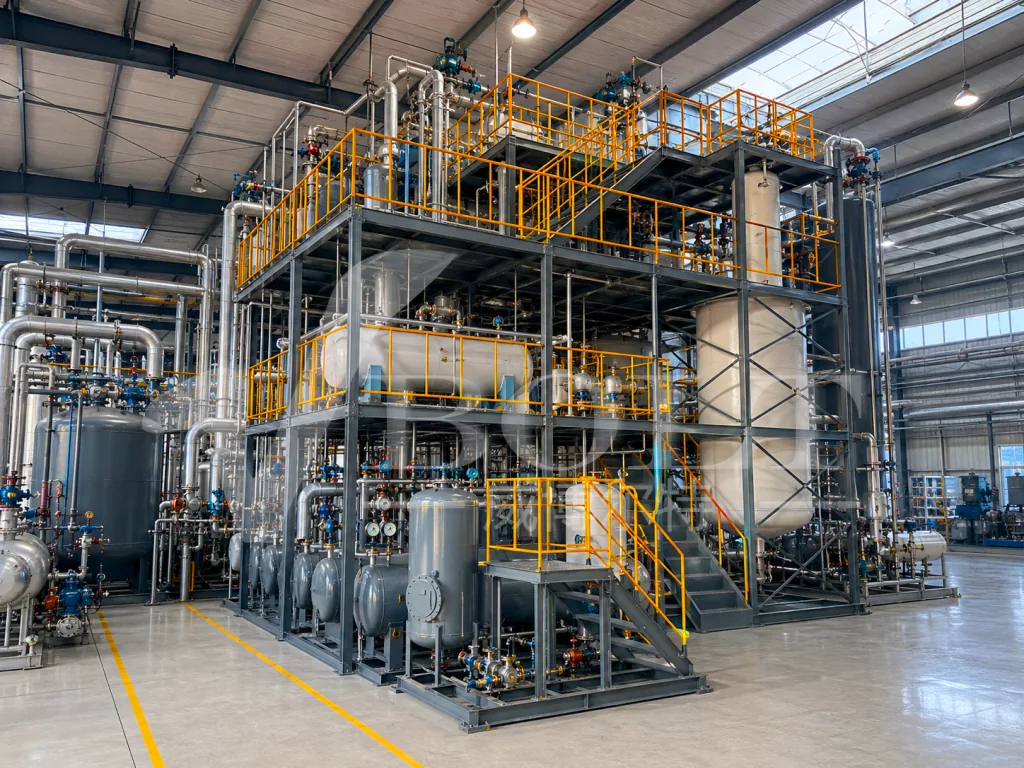
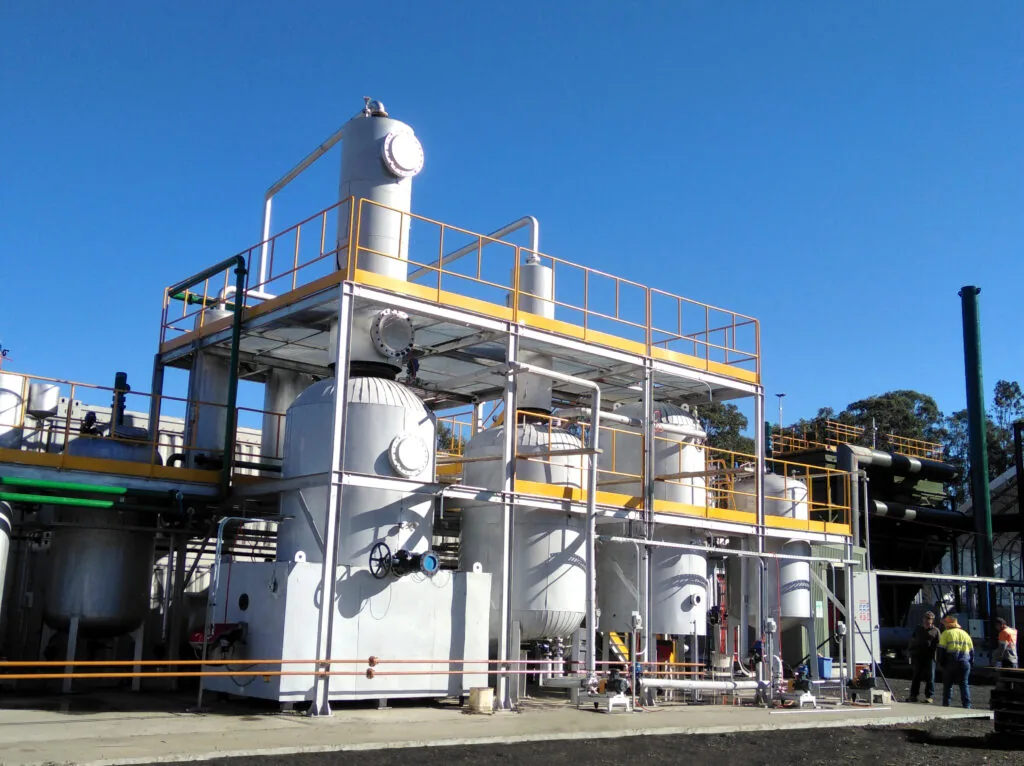
VBOLT does not recommend a recycling plant based only on the general description “waste oil.” The suitable system depends on feedstock type, monthly volume, contamination, target product and required capacity.
Waste Oil Distillation and Diesel-Type Fuel Recovery
This route may suit facilities handling used engine oil, used lubricating oil, hydraulic oil, gear oil or tested compatible mineral-oil mixtures.
Possible VBOLT solutions include:
- Waste Engine Oil to Diesel Plant
- Waste Lubricating Oil to Diesel Plant
- Mixed Waste Oil Distillation Plant
The recovered output should be treated as a diesel-type fuel or fuel-range fraction until laboratory testing confirms its specifications and permitted downstream use.
Used Oil Re-Refining for Base Oil
This route is more suitable for controlled used lubricating oil and selected lubricant-based industrial oils. Mixed feedstock may be considered only when its source, contamination and composition remain sufficiently consistent for the planned re-refining process.
Related VBOLT solution:
Producing base oil generally requires stricter feedstock control than recovering a fuel-range product. Unknown mixed waste should not automatically be directed into a base oil plant.
Transformer, Insulating and Turbine Oil Purification
Transformer, insulating and turbine oils should normally be evaluated separately from automotive and mixed mineral waste oil. When their main problems are moisture, dissolved gas or particles, purification may preserve more value than sending the oil into a conversion process.
VBOLT can match these applications with dedicated transformer oil, insulating oil or turbine oil purification equipment according to the oil condition and operating requirements.
Pyrolysis Oil Upgrading
Tire and plastic pyrolysis oil has different chemical and operating characteristics from used lubricating oil. It should not be assumed to be compatible with a standard used-oil processing route.
Related VBOLT solution:
Do Your Waste Oils Belong in the Same Processing Line?
Send VBOLT your oil types, monthly volume, current storage method and target product. We will evaluate whether the feedstocks may share one processing route or should be handled separately.
What VBOLT Needs Before Recommending Equipment
Prepare the following information before requesting an equipment configuration:
- Oil types: engine oil, lubricating oil, hydraulic oil, gear oil, transformer oil, turbine oil or pyrolysis oil
- Oil sources: workshops, factories, power plants, collection centers or pyrolysis facilities
- Monthly volume: preferably separated by oil category
- Current storage: whether different oils are already mixed
- Visible condition: water, sludge, solids, emulsion or unusual odor
- Available tests: water, viscosity, density, flash point, sulfur, acidity or halogen screening
- Target product: diesel-type fuel, re-refined base oil or purified industrial oil
- Required capacity and installation country
Photos and laboratory reports can make the preliminary evaluation more accurate. Final equipment design and output expectations should be confirmed against representative feedstock samples and the applicable local requirements.
Frequently Asked Questions
Can used engine oil and hydraulic oil be processed together?
Possibly. They may share a fuel-recovery route when testing confirms that the oils are compatible and do not contain unacceptable water, solvents, halogens or unrelated chemical waste. They should not be combined based only on appearance.
Can all collected waste oil enter a mixed waste oil distillation plant?
No. A mixed waste oil plant is intended for compatible and evaluated oil feedstocks. Oil-water emulsions, chlorinated solvents, coolant, corrosive liquids and unknown chemical waste require separate assessment.
Can mixed used oils be re-refined into base oil?
Some lubricant-based mixtures may be suitable when their source and contamination remain controlled. Highly variable or unknown mixtures may reduce fraction control and are not automatically suitable for base oil production.
Should transformer or turbine oil be mixed with used engine oil?
Normally not. Transformer and turbine oils should first be assessed for dedicated purification because retaining their original use may provide more value than converting them into a fuel fraction.
Request a Waste Oil Feedstock and Equipment Evaluation
Share your feedstock types, monthly quantity, test data and required output. VBOLT will review the project and recommend a suitable distillation, re-refining, purification or dedicated upgrading solution.