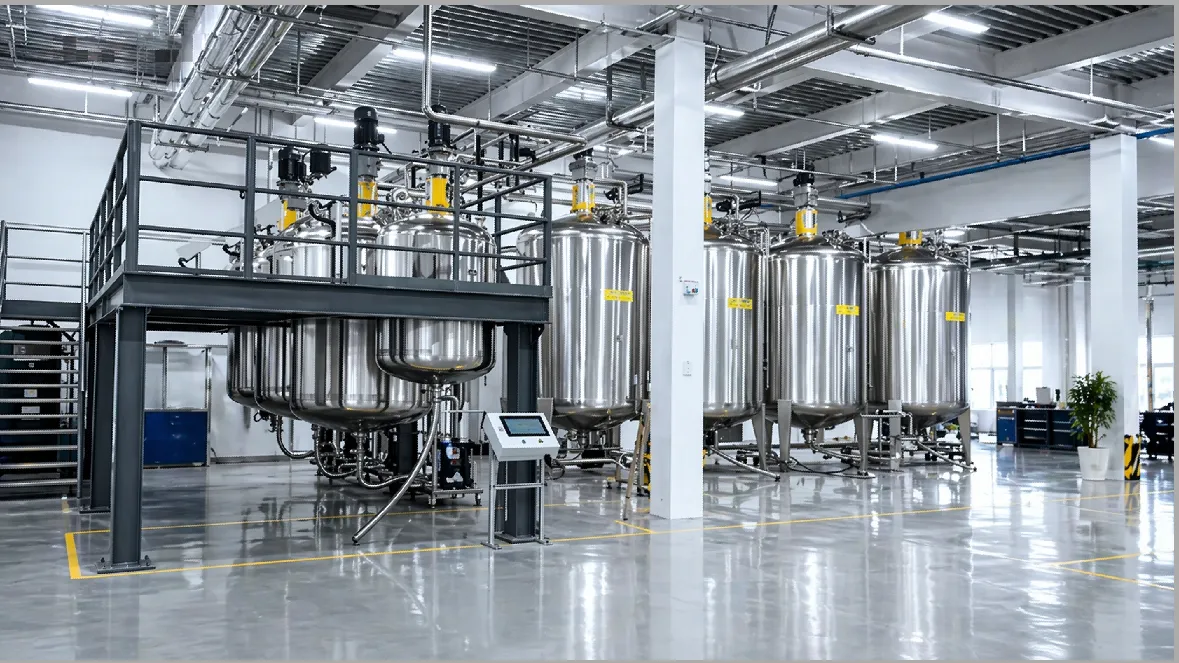






You have a stable supply of waste oil—but should your project recover a diesel-type fuel or produce re-refined base oil?
The decision affects far more than the final product. It determines the suitable feedstock, equipment configuration, refining depth, operating requirements, quality-control system and downstream market.
Choosing the wrong route can result in an unsuitable plant configuration, inconsistent output or a product with no clear local buyer. This comparison helps waste oil collectors, recyclers and project investors identify the more practical route before selecting equipment.
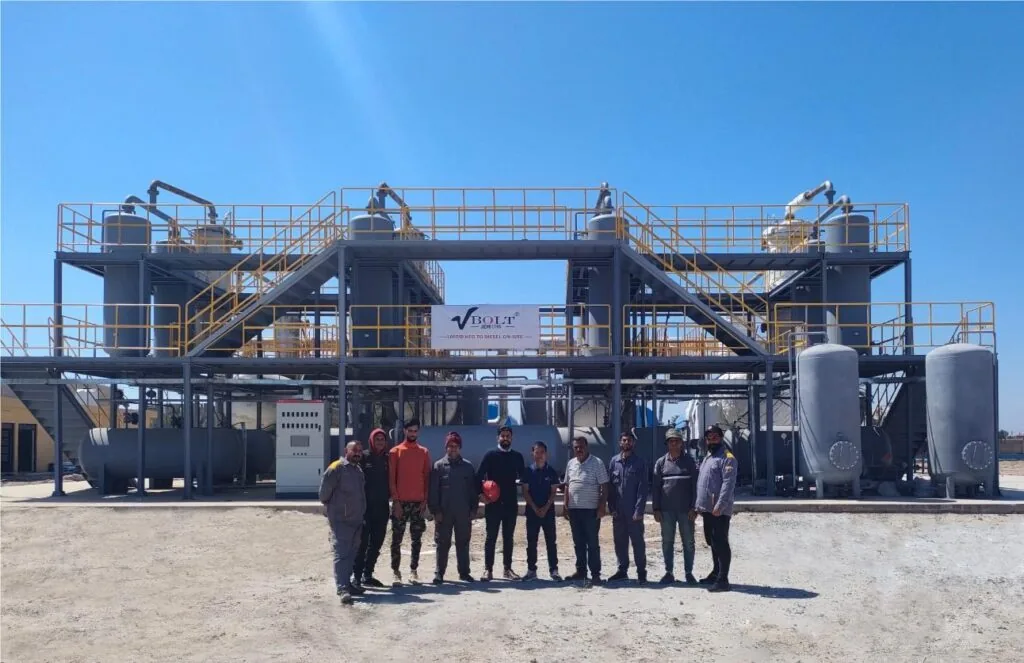
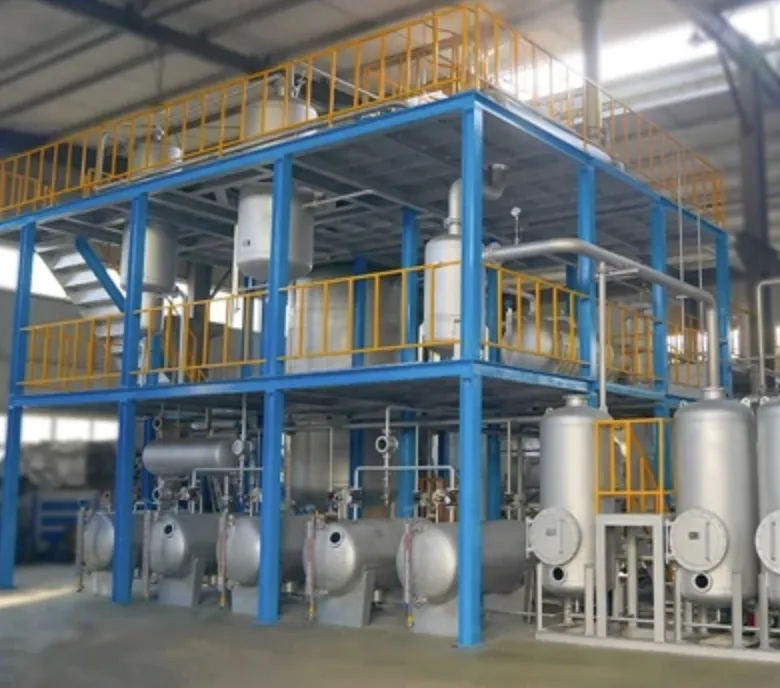
Diesel vs Base Oil: Quick Project Comparison
| Project factor | Diesel route | Base oil route |
|---|---|---|
| Typical feedstock | Waste engine oil and selected mixed mineral oils | Controlled used lubricating oil streams |
| Target output | Diesel-type fuel fraction | Re-refined base oil |
| Process depth | Pretreatment, distillation, condensation and fuel finishing | Pretreatment, vacuum distillation, fraction separation and deeper refining |
| Typical buyer | Waste oil recycler, collector or fuel project investor | Used oil re-refiner, lubricant producer or base oil processor |
| Downstream market | Industrial fuel users and locally permitted applications | Lubricant blenders and industrial oil manufacturers |
| Equipment complexity | Generally more direct | Usually more demanding |
The main decision is not which route sounds more profitable. It is which route best matches your feedstock and the market available for the finished product.
Unsure which route fits your oil? Prepare your feedstock source, available monthly quantity and target product before requesting equipment.
Choose the Diesel Route If...
A waste oil to diesel project may be more suitable when:
- Your main feedstock is waste engine oil or used motor oil.
- You collect compatible hydraulic oil, gear oil or other mineral-based waste oils.
- The incoming oil varies between collection batches.
- Your main objective is to recover a fuel-range product.
- There is an identifiable local market for industrial fuel.
- You do not currently have a lubricant blending or base oil sales channel.
- Your project requires a comparatively direct recycling route.
The diesel route usually involves dehydration, removal of solids, vacuum distillation, fraction separation, condensation and final filtration or polishing.
The resulting product should normally be described as a diesel-type fuel or fuel-range fraction. It should not automatically be described as road diesel. The permitted application depends on laboratory test results, final product properties and local fuel regulations.
Projects based mainly on waste engine oil can be evaluated through VBOLT’s waste engine oil recycling equipment.
When the feedstock contains several compatible waste mineral oils, a mixed waste oil distillation plant may be more appropriate.
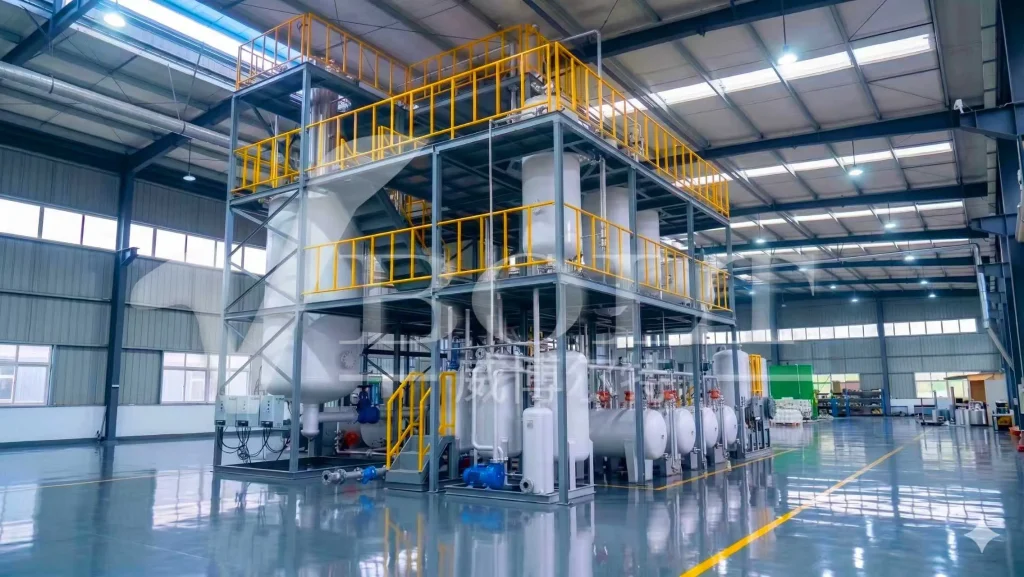

Choose the Base Oil Route If...
A waste oil to base oil project may be more suitable when:
- Your feedstock mainly consists of used lubricating oil.
- The oil sources are relatively stable and traceable.
- Different waste streams are not heavily mixed.
- You have access to lubricant manufacturers or base oil buyers.
- Your project can support laboratory testing and product-quality control.
- You want to recover lubricant base-stock fractions rather than fuel fractions.
- Your team can manage a more complex refining and finishing process.
The base oil route normally requires tighter feedstock control because the process is intended to separate and preserve useful lubricant fractions.
The system may include dehydration, removal of light fractions, vacuum distillation, thin-film or high-vacuum separation, refining, filtration and final product storage.
The output is generally described as re-refined base oil. It may be used as a raw material for lubricant production, subject to test results, formulation requirements and downstream buyer specifications.
Projects targeting base oil recovery should evaluate dedicated used oil re-refining base oil equipment rather than assuming that a diesel-oriented distillation plant can produce the same result.
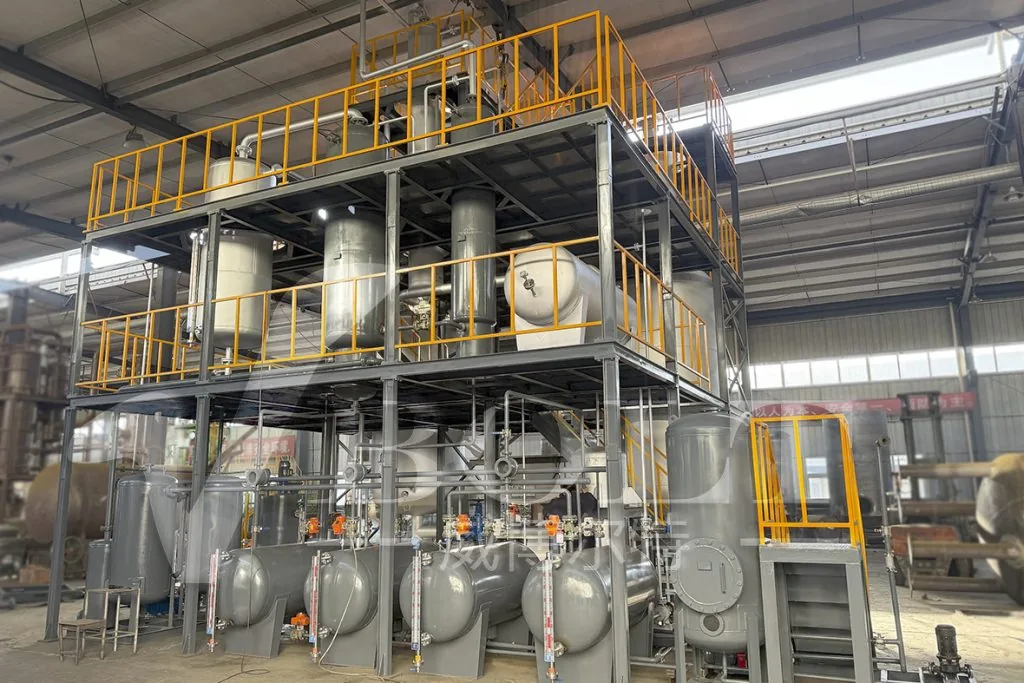
Match the Process to Your Feedstock
| Feedstock | More likely route | Main point to confirm |
|---|---|---|
| Waste engine oil | Diesel or base oil | Source consistency and target product |
| Used motor oil from controlled collection | Often suitable for base oil evaluation | Fuel, coolant and chemical contamination |
| Mixed mineral waste oil | Usually diesel-oriented evaluation | Unknown liquids and mixed fractions |
| Hydraulic oil | Depends on composition | Water, oxidation and mixed additives |
| Gear oil | Often diesel-oriented evaluation | High viscosity and additive content |
| Tire or plastic pyrolysis oil | Dedicated pyrolysis oil upgrading route | Sulfur, acidity, solids and stability |
Two oils may have the same dark appearance but behave very differently during processing. A suitable assessment should consider:
- Oil source
- Water content
- Solid particles and sludge
- Viscosity
- Fuel dilution
- Coolant or glycol contamination
- Unknown solvents or process chemicals
- Chlorine or halogen risk
- Consistency between collection batches
The phrase mixed waste oil does not mean that any unidentified industrial liquid can enter the plant. Unknown chemical contamination can affect equipment materials, emissions, output quality and operating safety.
Next step: Send VBOLT a representative sample, laboratory report, or clear feedstock description before the equipment configuration is confirmed.
Same Oil, Different Project Goals
Waste engine oil may technically be considered for either diesel recovery or base oil re-refining. The final decision depends on what remains in the oil and what the project intends to sell.
For example, used lubricating oil collected through a controlled network may justify a base oil route because the feedstock is more consistent and the customer has a lubricant buyer. The same general category of oil, when mixed with fuels, hydraulic oils and unknown industrial liquids, may be more practical for a diesel-oriented process after testing.
Before choosing, answer these questions:
- Is the feedstock mainly used lubricant?
- Can the oil source be traced?
- Are multiple waste streams mixed together?
- How much feedstock is available each month?
- Is there a confirmed market for diesel-type fuel?
- Is there a buyer for re-refined base oil?
- What product specifications must be achieved?
- Can the project support regular laboratory testing?
A process should be selected only after the feedstock and downstream market have both been confirmed.
Equipment Differences at a Glance
| Equipment module | Diesel route | Base oil route |
|---|---|---|
| Pretreatment | Required | Required |
| Dehydration | Required | Required |
| Vacuum distillation | Required | Required |
| Fraction control | Fuel-range fractions | More precise base oil fractions |
| Thin-film separation | Project-dependent | Often more important |
| Deep refining | Optional or target-dependent | Usually more important |
| Decolorizing filtration | Optional finishing stage | May support final polishing |
| Laboratory control | Important | Generally more demanding |
A multi-functional decolorizing filter may support downstream oil finishing, but it does not replace the main distillation or re-refining system.
Pyrolysis Oil Needs a Separate Route
Tire pyrolysis oil and plastic pyrolysis oil should not be treated as ordinary waste engine oil.
Pyrolysis oil may have different sulfur levels, acidity, solids, instability and boiling characteristics. A customer who already operates a tire or plastic pyrolysis plant should therefore evaluate a dedicated pyrolysis oil to diesel plant.
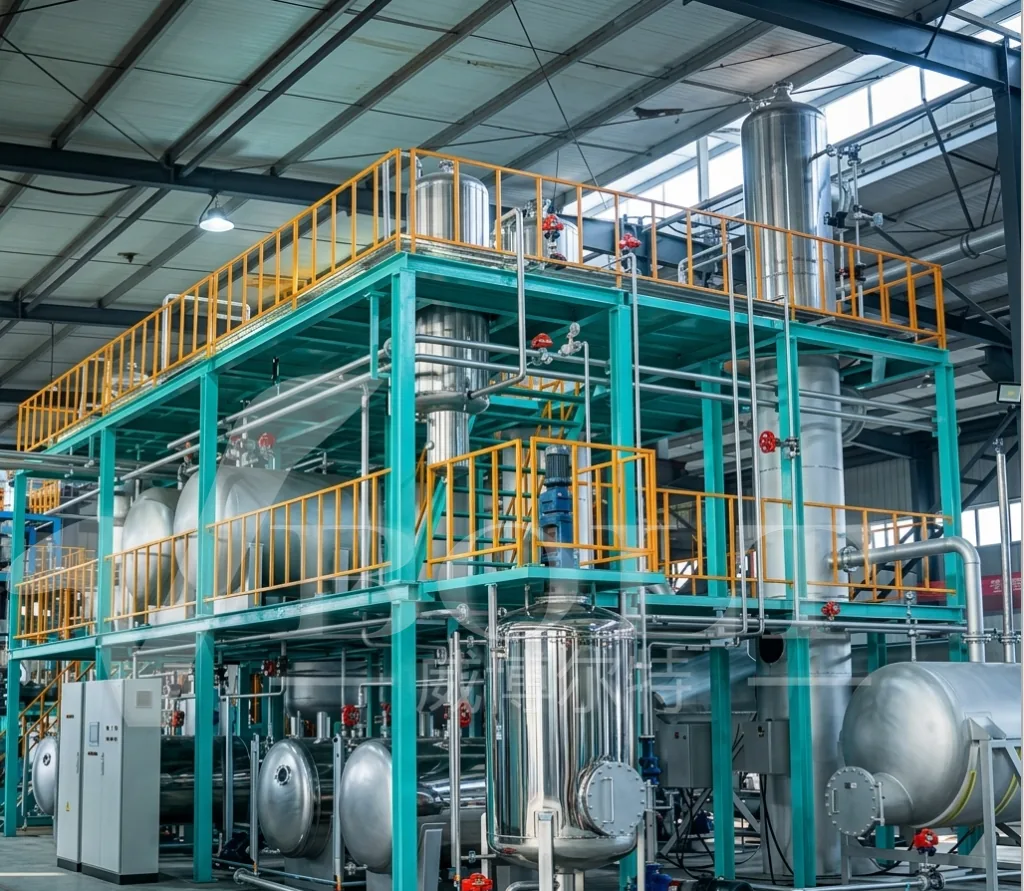
The system configuration should be based on:
- Pyrolysis feedstock source
- Sulfur content
- Acidity
- Water and solid contaminants
- Oil stability
- Required fuel properties
A used engine oil plant should not be assumed to process pyrolysis oil without changes to pretreatment, distillation and finishing configuration.
What Determines Project Cost?
A base oil project may require more precise separation and deeper refining than a diesel project, but one route is not automatically more expensive in every case.
The main quotation factors include:
- Feedstock type and consistency
- Water, solids and sludge content
- Required daily capacity
- Batch or continuous operation
- Heating method
- Vacuum system configuration
- Required distillation and refining depth
- Automation level
- Emission-control requirements
- Product-quality targets
- Filtration and decolorization requirements
- Installation country
- Shipping, installation and training scope
A useful quotation cannot be prepared from the words “waste oil recycling machine” alone. Equipment recommendations should be based on real feedstock and project conditions.
What VBOLT Needs from You
To recommend a suitable process, prepare the following information:
- Oil type: engine oil, lubricant oil, hydraulic oil, mixed waste oil or pyrolysis oil
- Feedstock source: vehicle service, industrial collection, factory, mine, power plant or pyrolysis facility
- Available volume: monthly supply and required daily processing capacity
- Contamination: water, solids, sludge, fuel, coolant or unknown chemicals
- Target product: diesel-type fuel or re-refined base oil
- Downstream market: expected buyer or intended use
- Utilities: available heating source, electricity and cooling water
- Location: installation country and site conditions
- Supporting data: photos, sample or laboratory report
This information allows the process team to determine whether the project is better suited to diesel recovery, base oil re-refining, mixed waste oil distillation or pyrolysis oil upgrading.
Frequently Asked Questions
Is waste oil to diesel the same as used oil re-refining?
No. Waste oil to diesel processing focuses on recovering fuel-range fractions. Used oil re-refining focuses on recovering and refining base oil fractions for lubricant production.
Which route is better for waste engine oil?
Waste engine oil may be suitable for either route. Controlled and consistent used lubricating oil is generally more suitable for base oil evaluation, while more variable or mixed mineral oil streams may be considered for diesel recovery after testing.
Can mixed waste oil be processed into base oil?
Not all mixed waste oil is suitable. Unknown fuels, solvents, coolants or chemical contaminants can make base oil fraction control and final product consistency difficult.
Can one machine produce both diesel and base oil?
Some front-end modules may be similar, but the fraction-control and finishing requirements are different. One system should not be assumed to produce both products without process and equipment changes.
Is the diesel output suitable for road vehicles?
It should not automatically be described as road diesel. Its permitted use depends on product testing, intended application and local fuel regulations.
What information is needed before choosing equipment?
Provide the oil type, feedstock source, available quantity, water and solid content, target product, required capacity, installation country and any available sample or laboratory report.
Choose the Route Before Choosing the Machine
Waste oil to diesel and waste oil to base oil are not two simple output settings on the same machine.
They are different project routes with different feedstock priorities, equipment modules, refining requirements, output specifications and downstream markets.
The diesel route may be more practical for suitable waste engine oil and selected mixed mineral oils when there is a clear fuel market. The base oil route may be more appropriate when the feedstock mainly consists of controlled used lubricating oil and there is access to lubricant producers or base oil buyers.
The process recommendation should be based on the oil itself—not only on the name used to describe it.
Submit Your Waste Oil Project
Send VBOLT your feedstock source, monthly volume, contamination data, target product, required processing capacity and installation country. Our team will evaluate which recycling route and equipment configuration better fits your project.
Submit Your Project Details