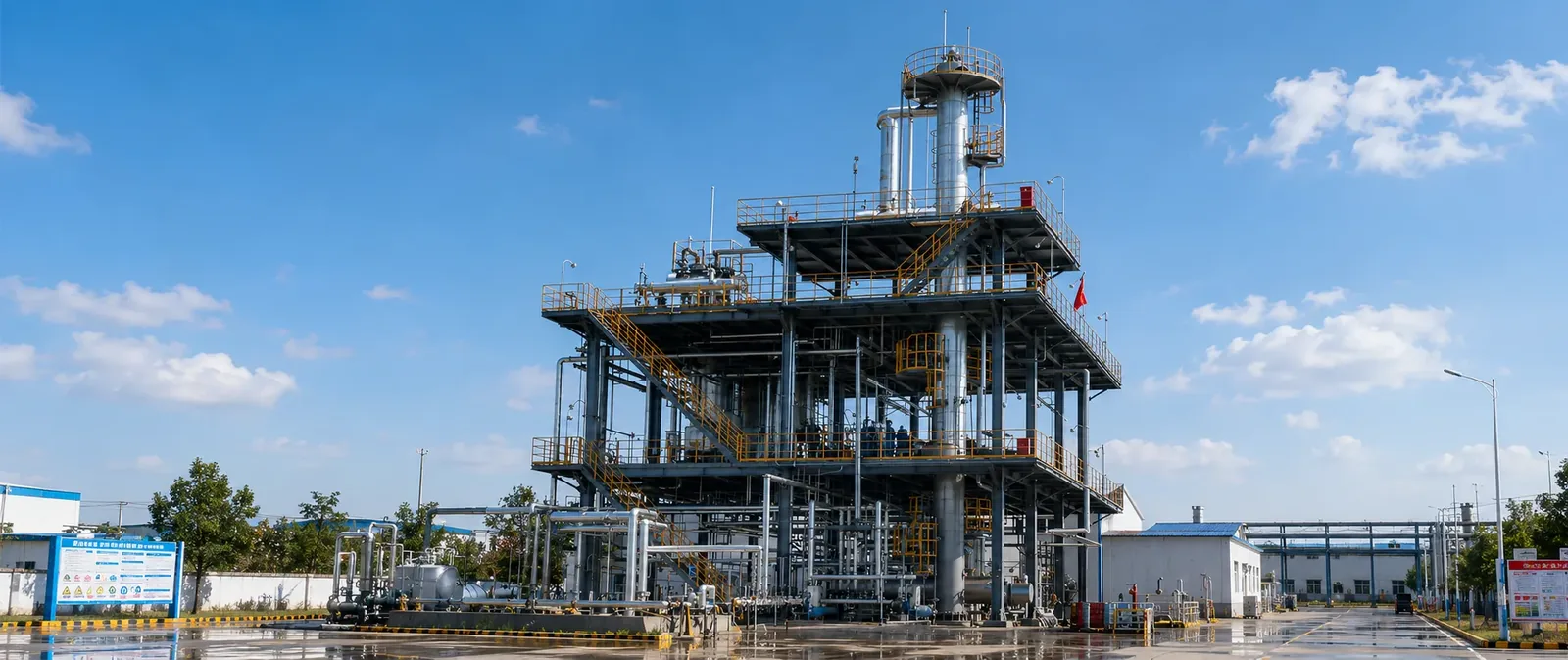






Ultrasonic Oxidative Desulfurization Plant
Ultrasound-assisted oxidative desulfurization converts selected sulfur compounds into more polar forms that can then be separated by extraction, adsorption or another finishing step. Ultrasound can improve mixing and mass transfer, but it does not remove sulfur on its own. Performance depends on the sulfur species, feed properties, oxidant and catalyst system, reaction conditions and downstream separation.
Process Scope and Safety Controls
A complete line may include feed conditioning, reagent dosing, controlled mixing, ultrasonic reactors, temperature control, phase separation, solvent or reagent recovery, polishing and spent-material handling. The design should define chemical compatibility, containment, ventilation, explosion protection where applicable, automation, emissions and wastewater or solid-waste management.
Testing and Acceptance Criteria
Provide representative samples and results for total sulfur and sulfur species where available, density, viscosity, water, acidity, distillation range and contaminants that may consume oxidant or interfere with separation. The proposal should specify throughput, reagent consumption, sulfur test method, target concentration, product recovery, by-products, utilities and acceptance tests.