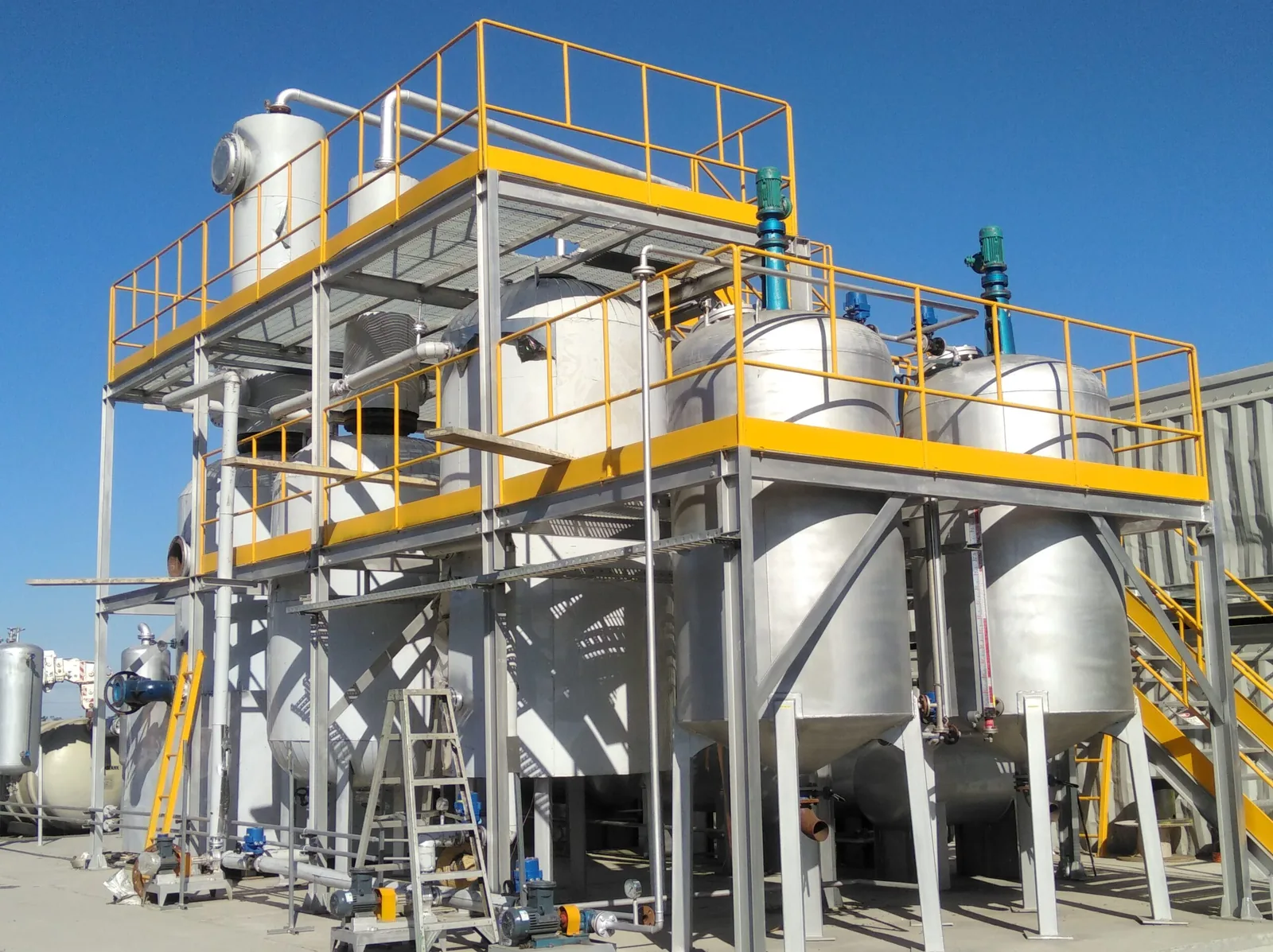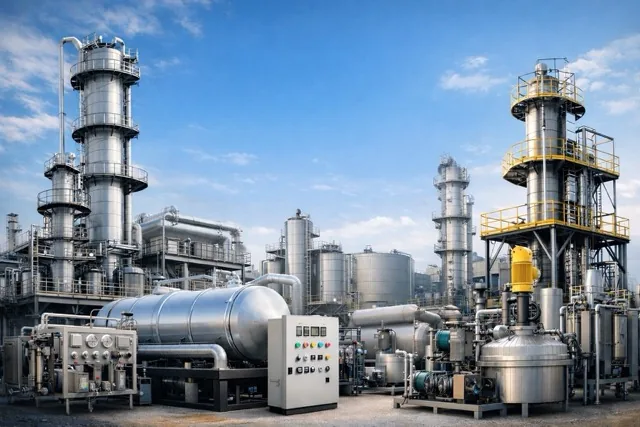






Requesting a quotation for a waste oil recycling machine is different from asking for the price of a standard industrial product. In most projects, the equipment configuration depends on the type of waste oil, expected processing capacity, final product target, site conditions, heating method, environmental requirements, and the buyer’s operating plan.
A practical quotation should not only show the machine price. It should explain the process route, main equipment configuration, heating system, condensation method, oil receiving system, auxiliary equipment, installation requirements, and technical support scope. If the project information is incomplete, the supplier can only provide a rough estimate, which may not match the actual working conditions.
For buyers planning to invest in waste oil recycling equipment, preparing clear project information at the inquiry stage helps the supplier recommend a more suitable solution and avoid unnecessary changes after ordering.
1. Type of Waste Oil to Be Processed
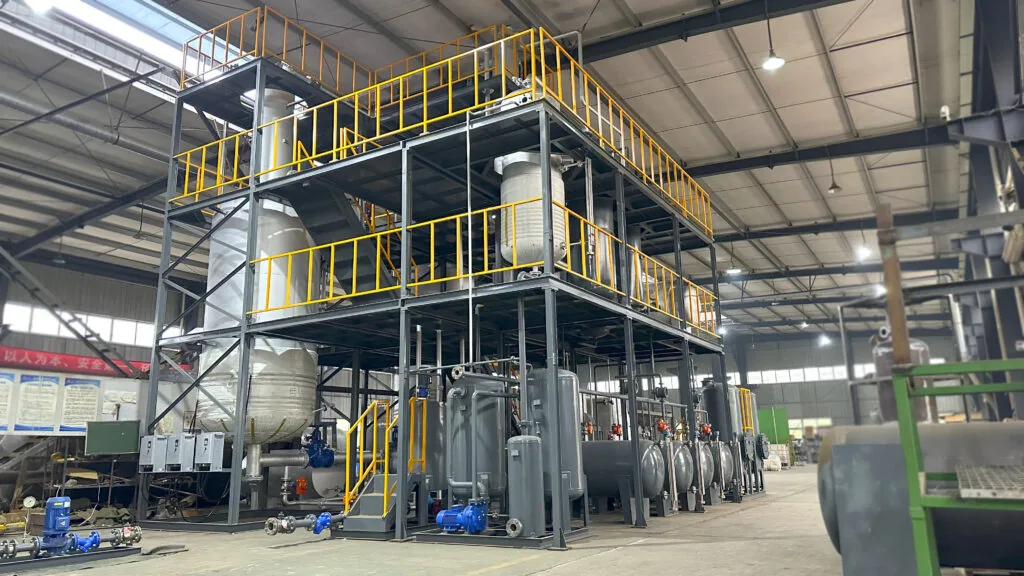
The first information required is the type of waste oil. Different waste oils have different water content, impurity levels, viscosity, additive residues, carbon deposits, and distillation behavior. These factors directly affect the pretreatment method, heating design, filtration system, residue discharge, and final oil quality.
Common feedstock types include used engine oil, waste lubricating oil, used hydraulic oil, gear oil, transformer oil, industrial waste oil, and mixed waste oil collected from repair shops, factories, or recycling stations.
For example, used engine oil may contain carbon residue, metal particles, water, sludge, and degraded additives. Industrial lubricating oil may have a different impurity profile. If the feedstock comes from multiple sources and the quality is unstable, the system may require stronger pretreatment, dehydration, filtration, or impurity removal before distillation.
When sending an inquiry, buyers should explain where the waste oil comes from, whether the source is stable, and whether different types of oil will be mixed before processing.
2. Basic Oil Test Data
A quotation can be more accurate if the buyer provides basic oil test data. Full laboratory analysis is not always necessary at the early inquiry stage, but several indicators are useful for process judgment.
| Test Item | Why It Matters |
|---|---|
| Water content | Affects dehydration, heating efficiency, and pretreatment design. |
| Solid impurities | Influences filtration, sludge handling, and equipment protection. |
| Viscosity | Affects pumping, heating, and flow performance. |
| Flash point | Helps evaluate safety and final fuel characteristics. |
| Sulfur content | Important for fuel use, emissions, and local requirements. |
| Acid value | Helps judge oil degradation and refining needs. |
| Ash content | Indicates inorganic residue and possible contamination. |
| Density | Supports process evaluation and final product judgment. |
If test data is not available, clear photos or short videos of the waste oil can still help the supplier make an initial assessment. However, for larger industrial projects, feedstock testing is recommended before final equipment confirmation.
When the waste oil contains high water content, sludge, or suspended impurities, an oil purification system may be required before or after the main recycling process.
3. Required Processing Capacity
Processing capacity is one of the most important details for quotation. A waste oil recycling machine can be designed for small batch operation, medium-capacity production, or continuous industrial processing.
Buyers should provide capacity information in one of the following ways:
- Tons per day
- Liters per day
- Tons per batch
- Monthly waste oil volume
- Annual processing target
- Expected working hours per day
A 5 TPD waste oil recycling machine and a 30 TPD waste oil distillation plant require different reactor volume, heating capacity, condenser size, vacuum system, oil receiving tanks, automation level, and installation layout.
If the buyer is not sure about the exact model, it is better to provide the available waste oil volume and planned working schedule. The supplier can then recommend a suitable capacity based on actual operating conditions rather than only the buyer’s estimated equipment size.
4. Target Final Product
Before preparing a quotation, the supplier needs to know what the buyer wants to produce from the waste oil. The process route for waste oil to diesel-like fuel is different from the route for waste oil to base oil or cleaned industrial fuel oil.
Common final product targets include:
- Diesel-like fuel oil
- Industrial fuel oil
- Recycled base oil
- Cleaned lubricating oil
- Distilled oil for further refining
If the buyer plans to produce diesel-like fuel, the quotation should be based on a complete used oil to diesel plant, including distillation, condensation, oil receiving, and final treatment systems. If the project target is reusable base oil, the supplier should evaluate the configuration of a used oil to base oil plant, including refining depth, filtration, color control, and final oil quality requirements.
The final product requirement also depends on the intended market and permitted use. Proposed use in boilers, burners, stationary generators, industrial heating, or commercial sale must be supported by product testing, applicable specifications, equipment requirements, and local regulations.
5. Expected Final Oil Quality
A practical quotation should be based on defined product specifications and testing requirements. Buyers should explain the intended permitted use, whether internal or commercial, and any planned further processing.
Important quality requirements may include:
- Final oil color
- Odor requirement
- Flash point target
- Water and impurity limit
- Sulfur control requirement
- Intended application of the output oil
- Local fuel or recycled oil standards
For some projects, the buyer only needs usable industrial fuel oil. For other projects, the buyer may need a more refined product with better color, lower odor, and more stable performance. The stricter the final oil requirement, the more treatment stages may be required.
For base oil recovery projects with higher quality requirements, solvent extraction refining equipment may be considered when the buyer needs better color improvement, odor control, and final oil stability.
6. Batch Type or Continuous Operation
The operating mode should also be confirmed before quotation. Waste oil recycling systems can be designed as batch-type systems or continuous production lines.
Batch-type equipment is often used for small and medium projects. It is easier to operate and may require a lower initial investment. Continuous systems are more suitable for larger production volumes, stable feedstock supply, and long operating hours.
Buyers should provide information such as:
- Expected working hours per day
- Number of operating shifts
- Whether production needs to be continuous
- Available manpower
- Expected automation level
- Whether the project may expand later
For long-term commercial operation, equipment should not be selected only by the lowest purchase price. Heating efficiency, maintenance workload, output stability, oil yield, residue handling, and spare parts availability should also be evaluated.
7. Heating Method and Available Energy Source
Waste oil recycling equipment requires a suitable heating system. The heating method affects operating cost, temperature control, heating speed, site layout, emissions, and local compliance.
Common heating options include:
- Electric heating
- Fuel oil heating
- Diesel burner heating
- Natural gas heating
- Thermal oil heating system
- Other locally available energy sources
Electric heating may be easier to control, but it may not be economical in regions with high electricity costs. Burner heating may be more practical for higher-capacity systems where fuel oil or gas is available. Thermal oil heating may be considered when stable heat transfer and temperature control are required.
Buyers should tell the supplier what energy sources are available at the project site and whether there are local restrictions on emissions or heating methods.
8. Project Site Conditions
The installation site has a direct impact on equipment layout and quotation. A complete waste oil recycling project may include raw oil tanks, pretreatment units, distillation equipment, condensers, receiving tanks, residue discharge systems, pumps, pipelines, control cabinets, cooling systems, and safety devices.
Useful site information includes:
- Available workshop size
- Indoor or outdoor installation
- Foundation condition
- Power supply
- Water supply
- Cooling water availability
- Ventilation condition
- Distance between tanks and main equipment
- Local temperature and climate
- Space limitation for transport or installation
Photos, layout drawings, or a simple site sketch can help the supplier evaluate whether standard equipment can be used or whether the layout needs adjustment.
9. Local Environmental and Safety Requirements
Waste oil recycling is an industrial process involving heating, oil vapor, distillation, residue discharge, and possible emission treatment. Local environmental and safety requirements should be considered before equipment selection.
Buyers should clarify:
- Whether emission treatment is required
- Whether odor control is required
- Whether wastewater treatment is involved
- How residue should be handled
- Whether local environmental approval is required
- Fire safety requirements
- Explosion-proof requirements, if applicable
In some regions, environmental approval is one of the key conditions before a waste oil recycling project can start. If the buyer already has local compliance requirements, these should be shared before the quotation stage.
This helps avoid a situation where the initial equipment price appears acceptable, but additional systems must be added later to meet local regulations.
10. Destination Country and Delivery Requirements
The destination country affects packing, shipping method, documentation, voltage configuration, and sometimes equipment design.
Buyers should provide:
- Destination country
- Nearest seaport
- Required voltage and frequency
- Import documentation requirements
- Preferred shipping method
- Whether installation guidance is needed
- Whether spare parts should be included
For export projects, voltage differences are especially important. Equipment designed for 380V / 50Hz may not be directly suitable for a country using 415V / 50Hz, 440V / 60Hz, or other industrial power standards.
Clear destination information allows the supplier to prepare a more practical quotation, including export packing, electrical configuration, and shipping reference.
11. Required Auxiliary Equipment
Some buyers only ask for the main distillation unit, while others need a complete production line. This difference has a significant impact on the quotation.
Possible auxiliary equipment may include:
- Raw oil storage tank
- Pretreatment tank
- Filtration system
- Dehydration system
- Vacuum system
- Condenser
- Cooling tower
- Oil receiving tank
- Decolorization system
- Deodorization system
- Final oil filtration unit
- Residue tank
- Pumps and pipelines
- Control system
- Spare parts package
When comparing quotations from different suppliers, buyers should check whether the quoted scope is the same. A lower price may only include the main reactor, while another quotation may include a more complete system with pretreatment, cooling, receiving, and final oil handling equipment.
12. Installation, Training, and After-Sales Support
Equipment quotation should also consider installation and operation support. Waste oil recycling equipment requires correct installation, safe heating control, vacuum control, distillation temperature management, residue discharge, and routine maintenance.
Before ordering, buyers should confirm:
- Whether installation guidance is included
- Whether online or on-site training is available
- Whether operation manuals are provided
- Whether spare parts are available
- Whether process adjustment support is provided
- Whether troubleshooting support is available after commissioning
For first-time buyers, technical support is especially important. Even if the equipment configuration is suitable, poor operation can affect oil yield, final product quality, energy consumption, and equipment service life.
13. Budget Range and Project Stage
Although many buyers prefer not to disclose a budget, a rough investment range helps the supplier recommend a realistic solution. A pilot project, a small commercial plant, and a large continuous production line should not be quoted in the same way.
Buyers can explain the project stage:
- Initial feasibility study
- Comparing equipment options
- Preparing investment budget
- Ready to purchase
- Existing plant upgrade
- Expanding current processing capacity
This helps the supplier decide whether to provide a preliminary proposal, a budget quotation, or a more detailed technical and commercial offer.
Information Checklist Before Requesting a Quote
| Required Information | Details to Provide |
|---|---|
| Waste oil type | Used engine oil, lubricating oil, hydraulic oil, mixed waste oil, industrial waste oil |
| Oil source | Repair shops, factories, collection stations, industrial users, multiple suppliers |
| Oil test data | Water content, viscosity, sulfur, flash point, impurities, acid value, density |
| Processing capacity | Tons per day, liters per day, monthly volume, working hours |
| Final product | Diesel-like fuel, industrial fuel oil, recycled base oil, cleaned oil |
| Quality target | Color, odor, flash point, water content, application, local standard |
| Operation mode | Batch operation or continuous operation |
| Heating source | Electricity, gas, diesel, fuel oil, thermal oil |
| Site condition | Workshop size, power supply, water supply, cooling condition, layout |
| Compliance needs | Emission control, odor control, fire safety, environmental approval |
| Destination | Country, port, voltage, frequency, shipping requirements |
| Auxiliary systems | Tanks, pumps, filtration, cooling tower, vacuum system, refining system |
| Support needs | Installation, training, commissioning, spare parts, technical support |
Why Complete Information Leads to a Better Quotation
A waste oil recycling machine quotation should be based on real project conditions. Without information about raw oil quality, processing capacity, final oil target, site layout, heating source, and local requirements, the quotation may be incomplete or unsuitable.
For buyers, preparing detailed information does not only help the supplier quote faster. It also helps avoid wrong equipment selection, hidden costs, low oil quality, insufficient capacity, difficult installation, and later modification expenses.
A practical quotation should answer three questions:
- Can the equipment process the buyer’s waste oil?
- Can it produce the required final oil?
- Can it operate safely and economically under the buyer’s local conditions?
Once these points are clear, the supplier can recommend a suitable waste oil recycling machine, waste oil distillation system, used oil to diesel plant, or base oil recovery solution according to the project scale.
FAQ
What is the most important information when requesting a waste oil recycling machine quotation?
The most important information includes waste oil type, processing capacity, target final product, oil test data, site conditions, heating method, and destination country. These details determine the main equipment configuration and process route.
Can I get a quotation without oil test data?
Yes. An initial quotation can usually be prepared without full oil test data. However, photos, videos, and a basic description of the waste oil source are helpful. For larger projects, oil testing is recommended before final equipment confirmation.
Why do waste oil recycling machine prices vary so much?
Prices vary because capacity, heating method, automation level, material configuration, pretreatment system, condenser design, vacuum system, emission control, and final oil quality requirements are different from project to project.
Is a waste oil to diesel machine different from a base oil recycling machine?
Yes. Waste oil to diesel projects and base oil recovery projects may require different process routes and refining stages. The final product requirement should be confirmed before equipment selection.
What capacity should I choose for a waste oil recycling project?
The capacity should be selected according to available waste oil supply, working hours, target production volume, and future expansion plan. Common project sizes may range from small batch systems to 5 TPD, 10 TPD, 20 TPD, 30 TPD, or larger continuous systems.
What auxiliary equipment may be needed for a complete waste oil recycling plant?
A complete plant may require raw oil tanks, pretreatment equipment, filtration system, dehydration unit, distillation equipment, condenser, vacuum system, receiving tanks, cooling tower, pumps, pipelines, control system, and residue handling equipment.
How can buyers receive a more accurate quotation?
Buyers should provide waste oil type, test data if available, required capacity, final product target, site layout, heating source, local environmental requirements, destination country, and whether installation or training support is needed.
Should I choose a waste oil to diesel plant or a used oil to base oil plant?
The choice depends on feedstock condition, local market demand, product specifications, investment budget, and the operating plan. A diesel-range product route should address distillation, fraction recovery, product testing, and permitted end use; a base-oil route may require deeper refining and testing against the target base-oil specification.
Does the destination country affect the equipment quotation?
Yes. The destination country affects voltage, frequency, packing, shipping method, documentation, local compliance, and sometimes equipment configuration. Buyers should provide the destination country and nearest port when requesting a quotation.
Why should the heating method be confirmed before quotation?
The heating method affects energy cost, temperature control, installation layout, operating safety, and emissions. The supplier needs to know whether electricity, diesel, fuel oil, natural gas, or thermal oil heating is suitable for the project site.