





Ordering used oil distillation equipment is not just a matter of choosing a machine with the right daily capacity. For industrial oil recycling projects, the final result depends on several connected factors: the type of waste oil, water and sludge content, target output, pretreatment design, distillation method, refining process, plant layout, operating cost, and long-term technical support.
VBOLT supplies waste oil recycling equipment for projects that process used engine oil, lubricating oil, ship oil, mixed waste oil, and related industrial oils. Depending on the project target, buyers may choose a base oil recovery plant, a system for producing diesel-range fuel fractions, an oil purifier, or solvent extraction refining equipment. Before confirming an order, buyers should verify that the process matches the actual feedstock and the product specifications, testing requirements, and permitted end use.
1. Confirm the Type of Waste Oil Before Selecting Equipment
Different waste oils cannot always be handled with the same process design. Used engine oil, waste lubricating oil, hydraulic oil, ship oil, mixed industrial oil, and heavy waste oil may contain different levels of water, sludge, additives, carbon residue, metal particles, asphalt components, odor, and acidic substances.
Before ordering used oil distillation equipment, buyers should prepare basic feedstock information, such as:
- Main source of the waste oil
- Approximate water content
- Sludge or solid impurity level
- Whether the oil contains fuel, solvent, or chemical additives
- Current storage condition
- Expected daily or monthly collection volume
- Target output: base oil, diesel-range fuel fractions, or purified oil for a defined permitted use
This step helps avoid buying equipment that looks suitable in capacity but does not match the real oil condition.
2. Decide Whether the Target Product Is Base Oil, Diesel-Range Fuel, or Purified Oil
A common mistake is using the term “oil recycling machine” too generally. In real projects, the process should be selected according to the final product target.
For buyers who want to re-refine used engine oil or lubricating oil into recovered base oil, a used oil to base oil plant or base oil distillation equipment is usually the main option. The system separates useful oil fractions and may include additional refining so the recovered oil can be tested against the target base oil specification before further processing or blending.
For projects targeting diesel-range fuel fractions, a used oil to diesel plant or diesel distillation equipment may be suitable. The recovered product is not automatically road diesel: its classification and permitted use depend on feedstock, process control, laboratory testing, applicable product specifications, engine or burner requirements, and local regulations.
For projects where the oil is not heavily degraded and mainly needs dehydration, impurity removal, or filtration, an oil purifier may be enough. It can be used in maintenance, power, machinery, metallurgy, and manufacturing applications where oil service life needs to be extended before full regeneration becomes necessary.
When buyers require further refining after distillation, solvent extraction refining equipment can be considered to improve color, stability, odor, and impurity removal, especially for projects with higher finished oil expectations.
3. Check Whether Pretreatment Is Included
Pretreatment is one of the most important parts of a used oil recycling line. Waste oil normally contains water, fine particles, sludge, carbon residue, and other impurities. If these materials enter the distillation system directly, they may reduce efficiency, increase maintenance work, affect heat transfer, or create unstable operation.
A practical used oil distillation line should usually consider:
- Raw oil storage and settling
- Heating and dehydration
- Filtration or impurity removal
- Sludge handling
- Feed pump and pipeline design
- Pretreatment before vacuum distillation or refining
For waste oil with high water or sludge content, pretreatment should not be treated as an optional detail. It directly affects equipment stability, output quality, and operating cost.
4. Review the Distillation and Refining Process
Used oil distillation equipment should be evaluated as a process system, not only as a tank or reactor. Buyers should ask the supplier to explain the full process flow clearly, including how the oil is heated, how light fractions are separated, how vacuum conditions are controlled, how vapor is condensed, and how the finished oil is collected.
For base oil recovery projects, buyers should pay attention to:
- Vacuum distillation design
- Fraction separation control
- Temperature control accuracy
- Condenser capacity
- Residue discharge method
- Refining or polishing process after distillation
- Finished base oil appearance and stability
For diesel-range fuel projects, buyers should check:
- Feedstock suitability
- Distillation temperature range
- Cooling and condensation system
- Odor control
- Desulfurization or refining options
- Finished fuel use conditions
- Local compliance requirements
Appearance and distillation range alone do not establish that a recovered fuel meets a diesel or industrial fuel specification. Buyers should define the required tests, acceptance limits, intended equipment, and permitted use before the process configuration is finalized.
For higher-quality output, solvent extraction or additional refining may be required after distillation. This is especially important when buyers want cleaner color, better odor control, and more stable finished oil.
5. Match Capacity With Real Operating Conditions
Capacity is often the first number buyers ask for, but it should be checked carefully. A plant described as 5 tons per day, 10 tons per day, or 20 tons per day may be based on specific operating hours, feedstock conditions, and process assumptions.
Before confirming capacity, buyers should clarify:
- Is the capacity based on 8, 16, 20, or 24 working hours per day?
- Is the figure calculated by raw oil input or finished oil output?
- What feedstock condition was used for the estimate?
- How much residue will remain after processing?
- How much labor is required per shift?
- Is continuous operation possible?
- What is the estimated energy consumption per ton?
For industrial projects, a slightly more stable configuration is often better than a machine that only looks attractive by capacity number.
6. Check Materials, Heating Method, and Safety Design
Used oil distillation involves heating, vapor separation, condensation, and residue handling. Equipment material, sealing quality, insulation, pressure control, and safety protection should be checked before ordering.
Important points include:
- Reactor and tank material
- Pipeline and valve quality
- Vacuum system configuration
- Condenser material and cooling method
- Heating method, such as fuel, gas, electricity, or thermal oil
- Temperature and pressure monitoring
- Explosion-proof or electrical safety requirements
- Emergency stop and alarm system
- Residue discharge safety
- Waste gas or odor treatment design
For overseas projects, buyers should also confirm whether the electrical system, voltage, layout, and control language can be matched to local site conditions.
7. Ask for a Clear Plant Layout Before Production
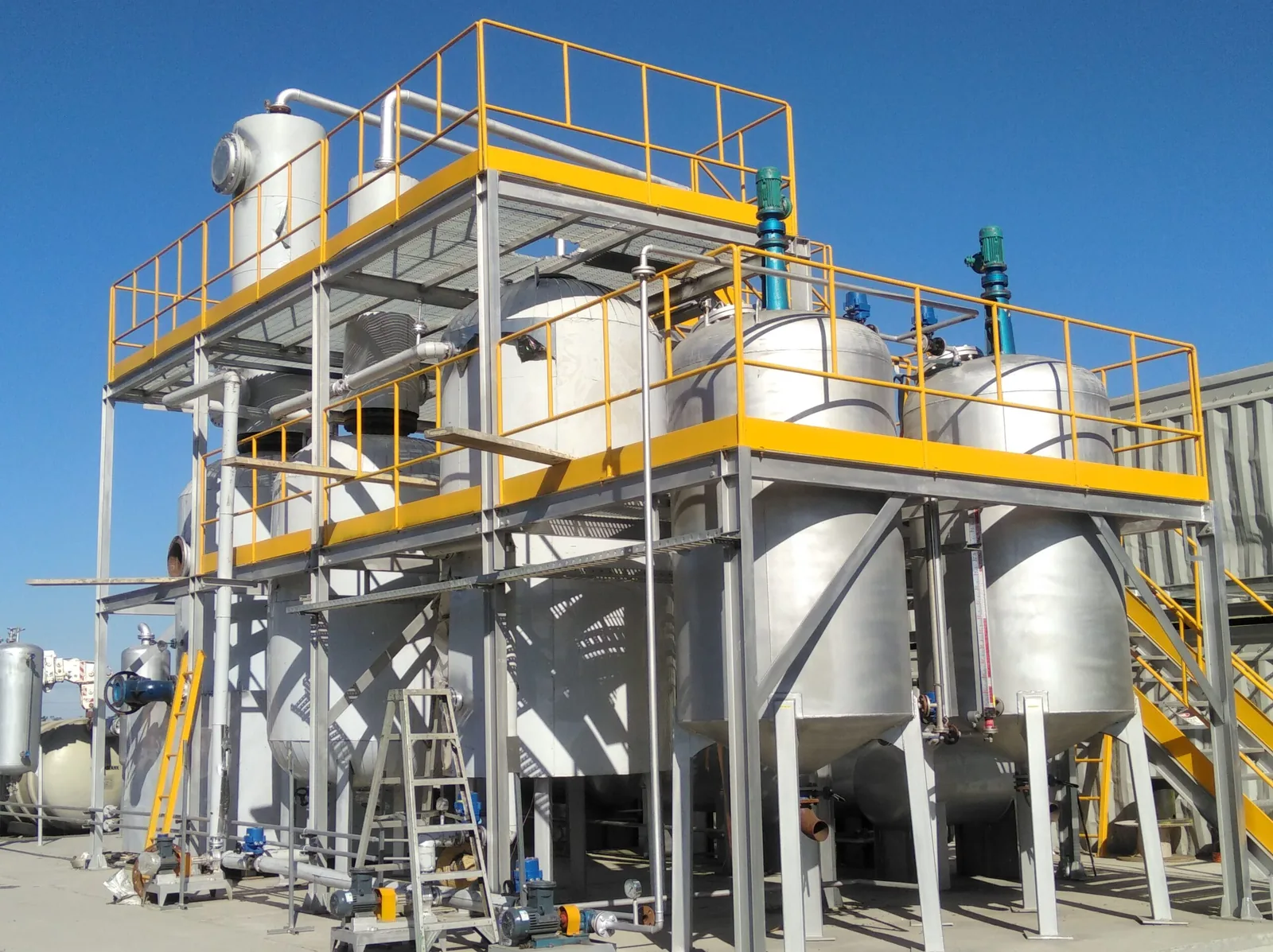
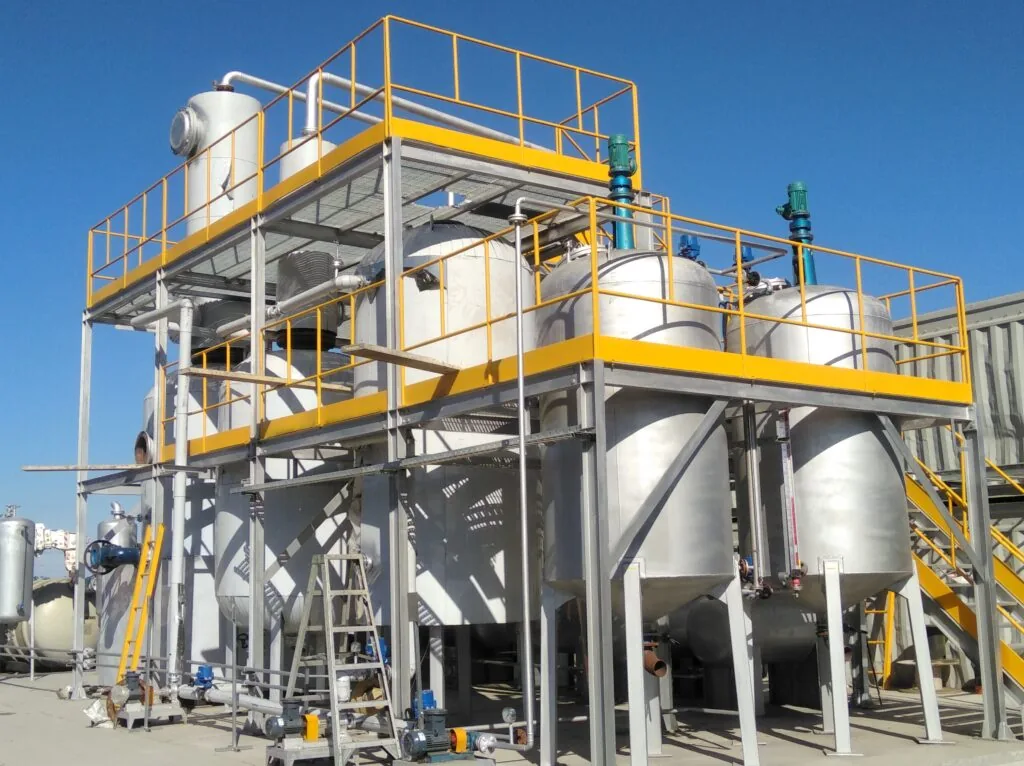
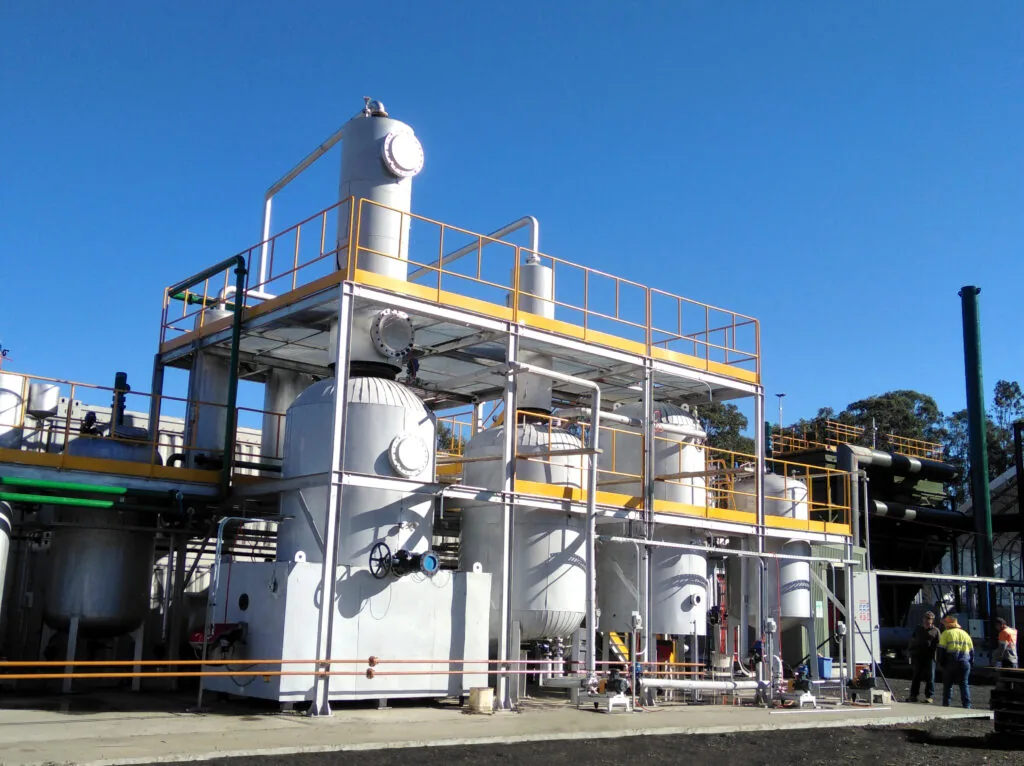
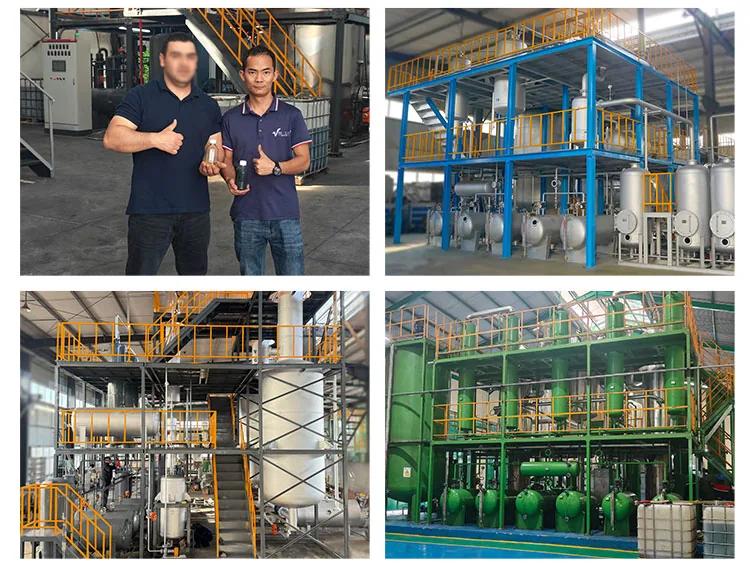
Used oil distillation equipment is not a small standalone machine in most industrial projects. It may include raw oil tanks, pretreatment units, distillation reactors, vacuum systems, condensers, receiving tanks, refining units, pumps, pipelines, platforms, control cabinets, and finished oil storage tanks.
Before ordering, buyers should ask for a layout proposal based on their available site area. The layout should consider:
- Raw oil unloading area
- Equipment foundation
- Maintenance space
- Operator access
- Pipeline direction
- Cooling water system
- Power and heating supply
- Finished oil storage
- Residue collection
- Fire safety distance and ventilation
A clear layout helps buyers estimate civil work, installation cost, and commissioning time before the equipment arrives.
8. Evaluate Finished Oil Quality Expectations
Finished oil quality should be discussed before placing the order, not after the machine is installed. Buyers should define what they expect from the recovered oil and how it will be used.
For base oil projects, common concerns include:
- Color
- Odor
- Flash point
- Viscosity
- Water content
- Mechanical impurities
- Stability
- Blending suitability
For diesel-range or industrial fuel oil projects, buyers should define:
- Appearance
- Odor
- Ignition and combustion properties required by the target specification
- Sulfur level
- Density
- Distillation range
- Storage stability
- Applicable product specifications, required testing, and permitted use
The supplier should match the process to defined product specifications and testing requirements. A higher-grade target may require additional refining rather than simple distillation, and commercial claims should be based on representative feedstock tests and verified product results.
9. Consider Operating Cost, Not Only Purchase Price
A lower initial quotation may become expensive if the equipment consumes too much energy, requires frequent cleaning, produces unstable output, or needs many manual operations. Buyers should compare the full operating cost before making a decision.
Key cost factors include:
- Heating fuel or power consumption
- Cooling water consumption
- Chemical or solvent use
- Labor requirement
- Filter replacement
- Maintenance parts
- Residue disposal
- Installation and commissioning cost
- Downtime risk
- Expected material balance and product yield for the defined feedstock
For long-term recycling businesses, stable operation and predictable maintenance are often more important than a low machine price.
10. Check Supplier Experience and After-Sales Support
Used oil recycling projects require process knowledge, not only equipment fabrication. A qualified supplier should be able to discuss feedstock conditions, recommend a process route, provide layout support, guide installation, assist commissioning, and train operators.
Before ordering, buyers should ask:
- Has the supplier built similar used oil recycling plants?
- Can they provide process flow and layout drawings?
- Can the system be customized for different feedstocks?
- What installation support is available?
- Are spare parts supplied?
- Can operators receive training?
- How are troubleshooting and technical questions handled after delivery?
- Can the supplier support future expansion or process adjustment?
For buyers planning a long-term oil recycling business, after-sales support can be as important as the equipment itself.
Why VBOLT Equipment Is Suitable for Used Oil Recycling Projects
VBOLT provides equipment options for several oil-recycling routes, including base oil recovery plants, systems for producing diesel-range fuel fractions, oil purification systems, and solvent extraction refining equipment. The process can therefore be matched to the feedstock, required capacity, site conditions, product specification, and permitted end use.
For buyers processing used engine oil, used lubricating oil, used marine oil, mixed waste oil, or industrial waste oil, VBOLT can evaluate the required process rather than quote a generic machine. Depending on the verified feedstock and product target, the configuration may include pretreatment, vacuum distillation, condensation, refining, filtration, storage, emission controls, and automation.
Final Checklist Before Ordering Used Oil Distillation Equipment
Before confirming an order, buyers should check the following points carefully:
- What type of waste oil will be processed?
- What is the target finished product?
- Is pretreatment included?
- Does the distillation process match the oil condition?
- Is additional refining required?
- Is the stated capacity based on realistic working hours?
- Are material, heating, cooling, and safety systems clearly specified?
- Is the plant layout suitable for the site?
- What finished oil quality can be expected?
- What is the estimated operating cost?
- What installation, commissioning, and after-sales support are included?
Used oil distillation equipment is a project investment, not only a machine purchase. The right choice should be based on feedstock analysis, process matching, output expectations, and long-term operating stability.
For base oil recovery plants, diesel-range fuel projects, oil purification equipment, or solvent extraction refining systems, buyers can contact VBOLT with their waste oil type, representative analysis, daily processing target, site conditions, product specification, and permitted use. VBOLT can then review the process route and recommend an equipment configuration for the stated project requirements.