




A waste oil to diesel machine price cannot be judged from capacity alone. A useful quotation must match the feed oil, required product specification, operating schedule, site utilities, emissions controls and the supplier's scope of supply.
This guide explains the cost factors that normally change a waste oil distillation project, the information an engineer needs before sizing equipment, and how to compare quotations on the same technical basis. It does not present a fixed price because two plants with the same nominal throughput can require very different pretreatment, finishing and site systems.
What Does a Waste Oil to Diesel Machine Produce?
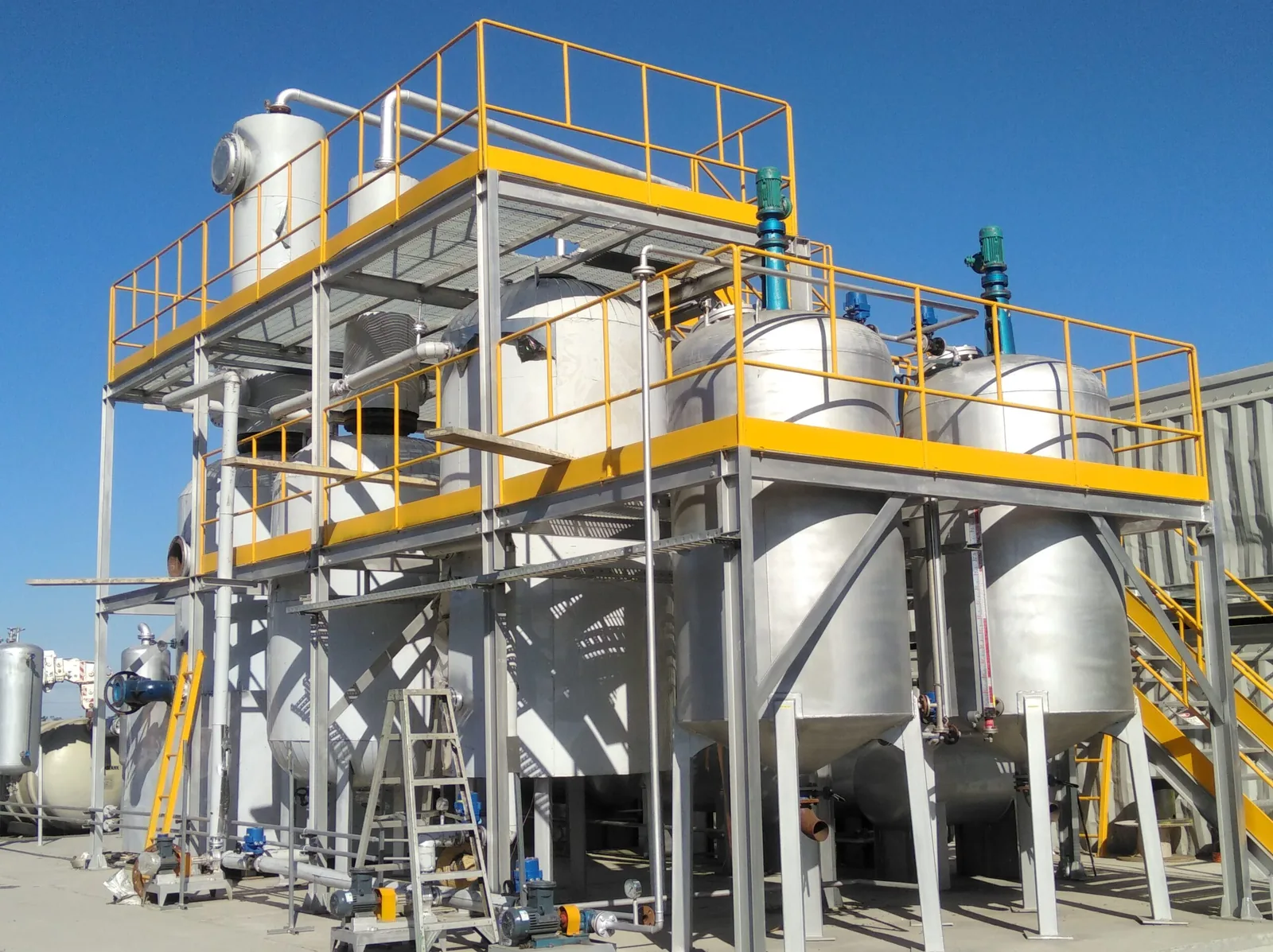
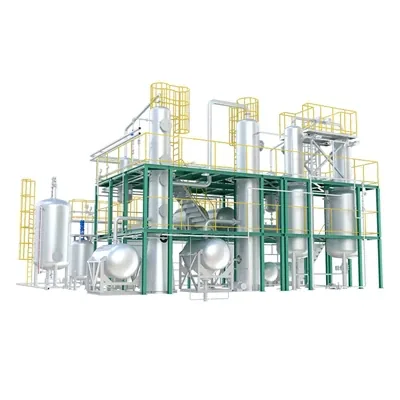
The equipment separates suitable used oils into controlled hydrocarbon fractions through pretreatment, vacuum distillation, condensation and optional finishing. Depending on feed composition and project design, the recovered liquid may be evaluated as an industrial fuel blendstock or sent for further refining.
The equipment does not automatically guarantee road diesel. Any intended use in engines, generators, burners, boilers, marine service or road vehicles must be confirmed against the applicable fuel standard, equipment manufacturer's limits and local regulations. Release testing may include density, viscosity, flash point, water and sediment, sulfur, distillation range, ash, metals and other parameters required by the intended market.
Review VBOLT waste oil recycling equipment and process routes.
Compare the dedicated used oil re-refining plant for recovered base oil.
Main Factors That Affect Waste Oil to Diesel Machine Price
1. Feed Oil Type and Laboratory Data
Used engine oil, hydraulic oil, gear oil, transmission oil, mixed industrial oil and pyrolysis oil are not interchangeable feeds. Water, light ends, sludge, additives, carbon residue, metals, sulfur, chlorine and unstable compounds affect the process route, equipment materials, operating window and residue volume.
A representative sample should be tested before final design. The supplier should also know how the oil was collected and stored. Brake fluid, coolant, solvents, chlorinated oils, PCB-contaminated material and unknown hazardous streams should be identified and isolated; they must not be assumed compatible with the plant.
Cleaner, consistent feed may need only settling, filtration and dehydration. Variable feed with high water or solids can require dedicated tanks, heating, centrifugation or filtration, controlled dehydration and additional residue handling. These differences can materially change both capital and operating cost.
2. Verified Throughput and Operating Schedule
Nameplate capacity should be defined with units and assumptions: tonnes per 24 hours or litres per hour, feed density, water and solids content, daily operating hours, batch cycle time, planned downtime and annual operating days. A nominal 5 TPD system processing dry, filtered oil is not equivalent to one receiving wet, high-sludge feed.
Smaller batch systems may suit pilot work or intermittent supply. Semi-continuous and continuous configurations can reduce handling between cycles when feed supply, utilities, staffing and downstream storage are stable. The correct choice depends on a mass balance and operating plan, not a capacity label alone.
3. Product Specification and Finishing Scope
A broad industrial fuel fraction and a tightly controlled product have different equipment requirements. Fractionation accuracy, sulfur control, color, odor, oxidation stability, flash point and contaminant limits may call for additional polishing or finishing stages.
- Feed settling, filtration and dehydration
- Vacuum distillation and controlled fraction collection
- Condensation, receiving and intermediate storage
- Configurable adsorption, solvent, catalytic or other finishing steps
- Final filtration, blending and release-testing provisions
The finishing route should be selected from feed and product test data. A supplier should not add a generic “decolorization” or “desulfurization” unit without defining the contaminant target, expected performance, consumables, waste stream and verification method.
4. Recovery Estimate and Material Balance
Saleable liquid recovery is not a universal percentage. It varies with water, light ends, sludge, non-distillable residue, cut points and the final product specification. A responsible proposal separates feed, recovered fractions, process water, light gas and heavy residue in a preliminary material balance.
Ask whether quoted recovery is based on total wet feed or dry oil, whether it represents all condensed liquid or only on-specification product, and how off-specification material is handled. This prevents an optimistic “oil yield” from being mistaken for guaranteed saleable output.
5. Heating, Vacuum and Condensation Systems
Available electricity, natural gas, fuel, steam, cooling water and ambient conditions affect equipment selection. Heating duty, heat-transfer method, vacuum level, condenser area, cooling system and product receiving capacity must be sized for the defined feed and operating rate.
Utility consumption should be stated with its design basis. An apparently cheaper plant can cost more to operate if it has poor heat recovery, undersized condensation or a utility requirement the site cannot reliably provide.
6. Materials, Instrumentation and Automation
Pressure and temperature design, corrosion allowance, vessel and piping materials, seal selection, hazardous-area electrical classification and applicable fabrication codes all affect price. The quotation should identify the design standard and the documentation included.
Automation may include PLC control, temperature and pressure monitoring, interlocks, alarms, emergency shutdown, level control, data recording and remote support. The appropriate control level depends on process hazards and staffing; safety functions should not be removed simply to reach a lower price.
7. Emissions, Water, Gas and Residue Management
A complete scope must account for non-condensable gas, odors, combustion exhaust, process water, spent filters or adsorbents and heavy residue. The required controls depend on feed testing, the heating system, local permits and the approved destination for each output.
Heavy residue must not be described as harmless or automatically marketable. It requires characterization, suitable storage and recovery or disposal through an authorized route. The same principle applies to wastewater and spent finishing media.
8. Site, Shipping and Installation Scope
Equipment price is only one part of installed project cost. Freight, export packing, insurance, customs, foundations, buildings, tanks, pipework, cabling, utilities, fire protection, laboratory equipment, commissioning, operator training and local permits may be supplied by different parties.
The quotation should use a clear battery limit and responsibility matrix. It should state what arrives from the manufacturer, what the customer provides locally, and which travel, installation and commissioning costs are included or estimated.
How to Compare Waste Oil Distillation Quotations
| Quotation item | What should be defined |
|---|---|
| Feed basis | Oil type, sample data, water, solids and excluded contaminants |
| Capacity basis | Feed rate, operating hours, batch cycle and annual availability |
| Product basis | Target specification, cut points, test methods and intended use |
| Performance basis | Material balance, utilities, assumptions and guarantee conditions |
| Equipment scope | Pretreatment, distillation, finishing, tanks, controls and safety systems |
| Site scope | Civil work, utilities, installation, commissioning and permits |
| After-sales scope | Documents, training, spare parts, response method and warranty terms |
Compare suppliers using the same feed analysis, product target and scope boundary. A lower figure may exclude essential tanks, controls, environmental systems or commissioning. A higher figure may include a broader, better-defined supply. Price comparison is meaningful only after those differences are reconciled.
Information Needed for a Project-Specific Quote
- Feed oil type, source, collection method and recent laboratory report
- Daily and annual feed volume, storage capacity and supply variability
- Target product, intended market and applicable specification
- Installation country, site elevation, ambient temperature and available area
- Electricity, fuel, cooling water, compressed air and other utilities
- Local emissions, fire, pressure-vessel, electrical and waste requirements
- Preferred operating schedule and automation level
- Required delivery, installation, training and commissioning scope
If sample data are unavailable, the first proposal should be identified as preliminary. Final sizing and performance commitments should follow representative sampling, laboratory analysis and confirmation of the project boundary.
Why a Very Low Price Can Be Misleading
A low purchase price does not prove a low lifecycle cost. Missing pretreatment, weak vacuum or condensation capacity, unsuitable materials, limited instrumentation, high energy use and unclear residue handling can cause downtime, off-specification product or unplanned site expense.
Commercial projections should use measured feed cost, conservative recovery assumptions, local product values, utilities, labor, consumables, maintenance, waste treatment, taxes and financing. VBOLT can provide technical inputs for an estimate, but project profitability depends on the customer's local data and is not guaranteed by an equipment quotation.
Request a Waste Oil to Diesel Machine Price
VBOLT develops waste oil pretreatment, vacuum distillation and configurable finishing systems around the customer's feed analysis and product target. Our proposal can define the process route, principal equipment, design basis, estimated utilities, preliminary material balance and supply boundary.
Request a project-specific quotation from VBOLT.
Review our waste oil recycling equipment before sending your project data.
Frequently Asked Questions
What is the price of a waste oil to diesel machine?
There is no reliable single price without a design basis. Feed composition, verified throughput, product specification, process route, materials, automation, environmental controls and installation scope must be defined before a comparable quotation can be issued.
Can used engine oil be converted into diesel?
Suitable used engine oil can be separated into lighter hydrocarbon fractions through pretreatment and vacuum distillation. Whether a recovered fraction can be sold or used as a specific diesel grade depends on laboratory results, the applicable standard, local law and the receiving equipment manufacturer's requirements.
What capacity should I choose?
Capacity should follow confirmed feed availability, storage, operating hours, batch cycle, utilities and product offtake. Start with a measured monthly feed volume and allow for realistic downtime; do not size the plant from an unverified daily collection estimate.
Is the quoted recovery rate guaranteed?
It should only be treated as a guarantee when the contract defines the representative feed, sampling method, operating conditions, product cut points, test methods and acceptance criteria. Otherwise, it is an engineering estimate for the stated feed data.
Can the same machine produce recovered base oil?
Fuel-fraction recovery and base-oil re-refining have different product objectives and finishing requirements.
Evaluate a dedicated used oil re-refining solution against the required base-oil properties.
What installation support is available?
The agreed scope can include drawings, manuals, remote review, commissioning guidance, operator training and site service. The quotation should state responsibilities, travel terms, local labor requirements and acceptance milestones.