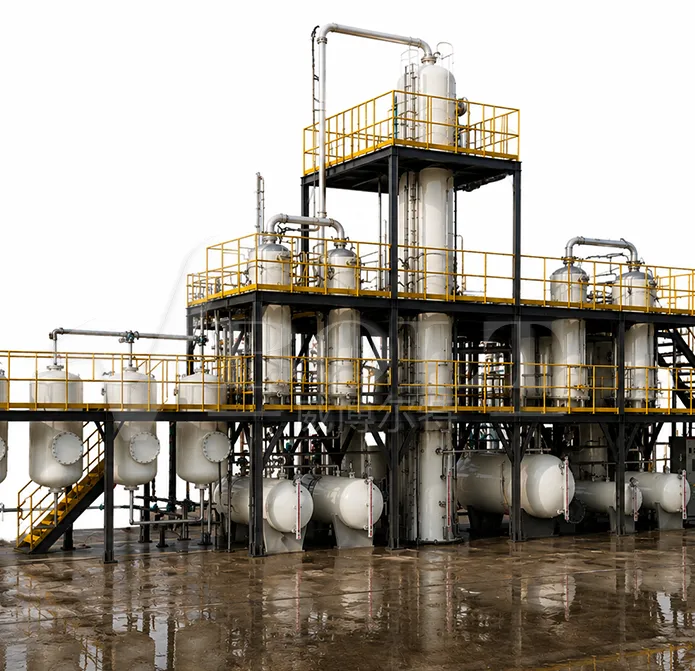


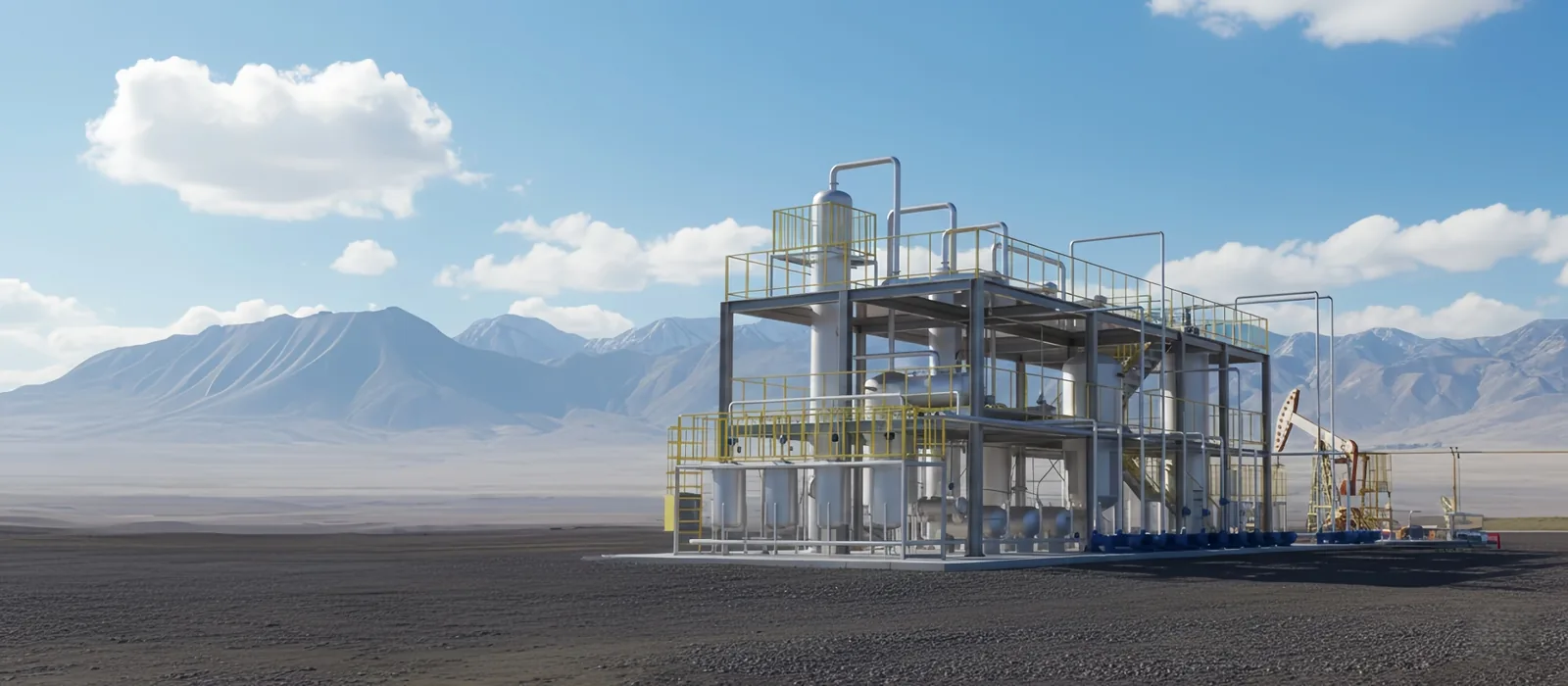
Two proposals can both state 90% recovery and describe different plants. The figure is comparable only when both use the same feed condition, product specification and mass balance. Four numbers are reported as recovery.
Table of Contents ▴
Four Numbers Called Recovery
| Figure | What it measures | What changes it |
|---|---|---|
| Distillate yield | Distillate mass ÷ feed to distillation | Removing water and residue before the figure is taken |
| Recovered lubricant fraction | Target boiling range ÷ prepared feed | Excluding light ends and heavy residue |
| Finished base oil yield | Product meeting specification ÷ feed | Finishing losses and quality adjustment |
| Saleable product yield | Product sold at grade ÷ feed received | Storage losses, blending and rejected batches |
On one plant with one feedstock, the first and the last can differ by ten to twenty percentage points.
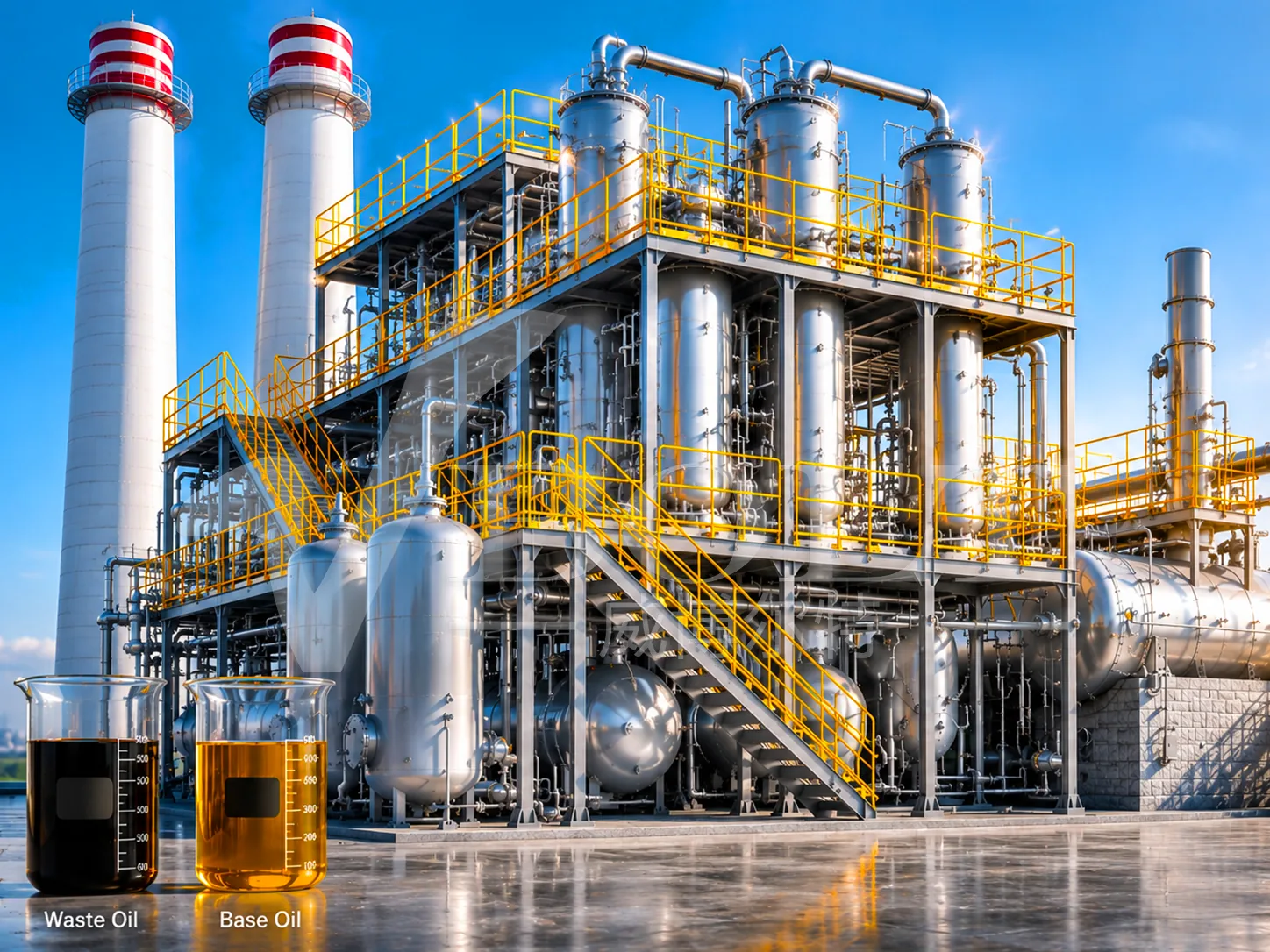
Feedstock Takes Its Share First
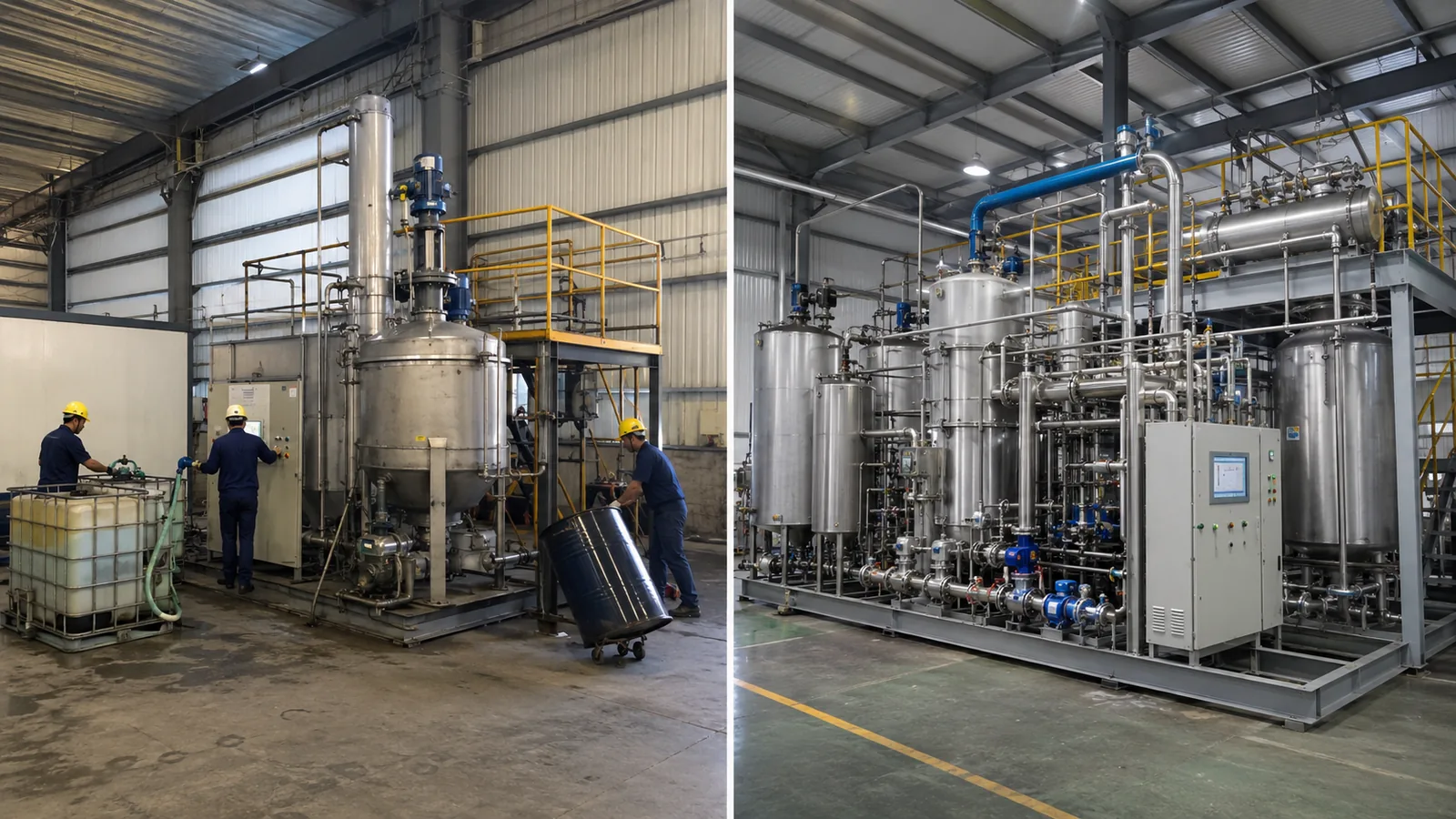
Water, solids, light ends and heavy residue leave the process as separate streams.
Take 100 tonnes of wet feed with 8% water, 2% solids and 5% light ends: about 85 tonnes remain for distillation. At 65% recovery of prepared feed as specification product, finished yield on wet feed is about 55%. Feed properties are covered in used oil testing before re-refining.
Where the Mass Goes
| Stream | Source | Handling |
|---|---|---|
| Water | Free water, emulsion, dissolved moisture | Wastewater treatment, energy load |
| Light ends | Fuel dilution and low-boiling fractions | Recovery or disposal, flash point control |
| Residue | Heavy fractions, additives, solids, oxidation products | Storage, transfer, regulated disposal |
| Finishing rejects | Polar compounds, color bodies, spent media | Consumables, disposal, yield loss |
| Process losses | Venting, sampling, cleaning, spills | Maintenance and operating practice |
A closing mass balance shows where every stream went and which of them the buyer has to handle.
Distillate Is Not Finished Base Oil
Vacuum distillation separates a lubricant-range fraction from water, light ends and residue. It does not remove every polar compound and does not set sulfur, saturates or color.
Solvent extraction, adsorption finishing and hydrotreating each carry a yield loss, so a plant reporting 90% distillate recovery will report less once the product must meet a specification. Ask which number the quotation refers to. Product parameters are in re-refined base oil quality; equipment in used oil re-refining base oil equipment and turnkey used oil re-refining plant.
Write the Basis Into the Contract
A testable recovery commitment needs six items.
- feed envelope, including water, solids and light-end limits;
- whether the figure refers to wet feed, prepared feed or distillate;
- the product specification the recovered material has to meet;
- operating period and feed rate over which it is measured;
- sampling and laboratory methods for each stream;
- the mass-balance method used to close the test.
Batch and continuous plants measure differently, so the configuration belongs in the clause; see batch vs continuous waste oil distillation plant and the 5, 10 or 20 TPD capacity guide. Supplier comparison on the same basis is in waste oil recycling plant supplier.
Testable wording: recovery of at least X% of the target lubricant fraction from prepared feed, within the agreed feed envelope, by mass balance over a stated operating period.

Comparing Recovery Figures?
Send the feed analysis, the product specification and the recovery figure you were quoted. We will check whether the numbers share a basis and what the acceptance test would need to measure.
Order & Project Support
Frequently Asked Questions
Is 90% recovery realistic?
As distillate recovery from prepared feed, often yes. As finished product yield on wet feed, usually lower.
Why do suppliers quote different figures?
They measure at different points: wet feed, prepared feed, distillate or finished product. Feed assumptions and product specifications also differ.
What should be measured to verify the claim?
Feed properties, prepared-feed mass, distillate mass, residue mass, product specification results and the closing mass balance, over a defined operating period.