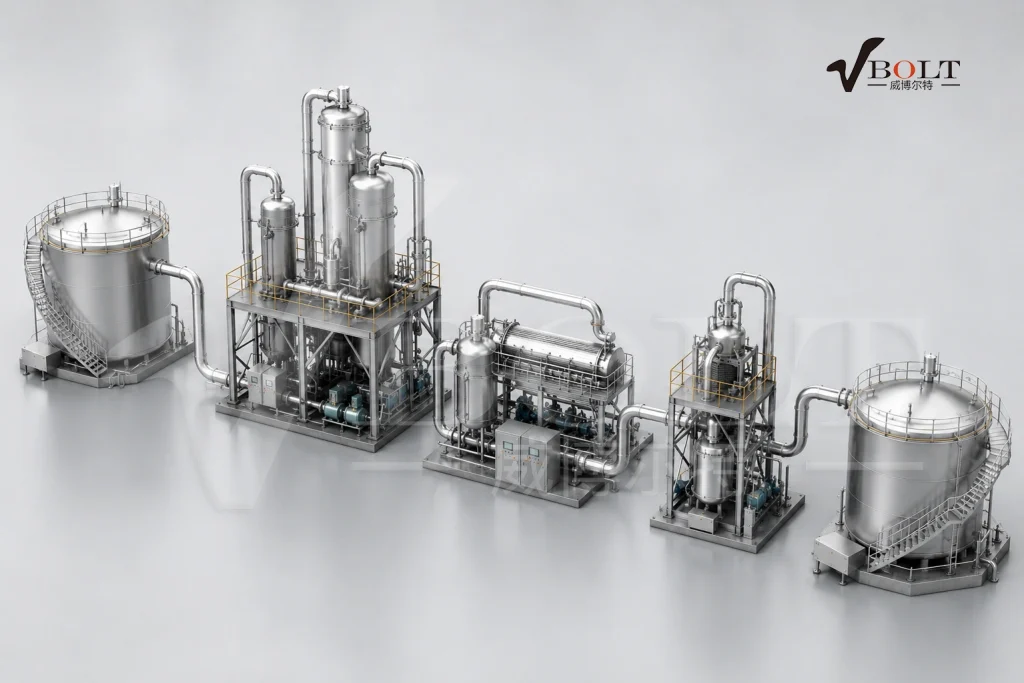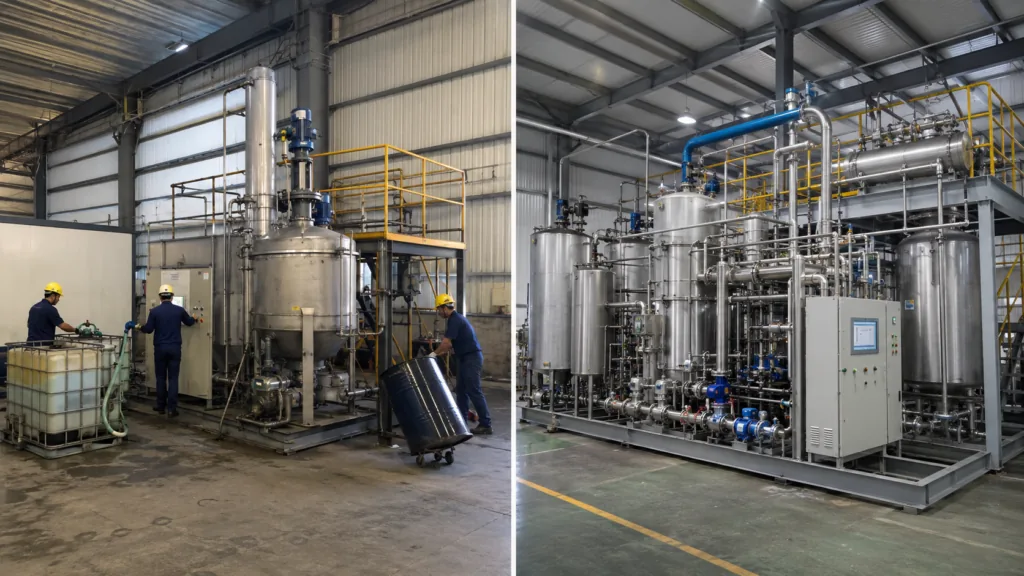






What Affects the Quality of Re-Refined Base Oil? What Buyers Should Confirm Before Choosing Equipment
Two suppliers may both quote a 10 TPD used oil re-refining plant, but the equipment scope and the base oil they are designing for can be very different.
The difference starts with the feedstock, target base oil specification, distillation configuration, fraction control and finishing depth. For buyers, the key question is not simply "Can this plant produce base oil?" but "What feedstock and product specification is this plant actually designed around?"
Define the Base Oil Target Before Selecting Equipment
"High-quality base oil" is too vague for equipment selection. Before comparing quotations, the buyer should first define what the recovered base oil needs to achieve for its intended downstream use.
| Buyer Requirement | What It Changes in the Project |
|---|---|
| Required viscosity range | Influences fraction-cut strategy and product segregation. |
| Flash point requirement | Affects the control and removal of lighter fractions. |
| Color or appearance target | May require additional finishing rather than distillation alone. |
| Sulfur or impurity target | Can change the required refining depth and finishing configuration. |
| Multiple base oil fractions | Requires more precise fraction separation and separate product storage. |
| Downstream lubricant application | Determines which properties need to be confirmed before the final plant design. |
The required parameters should come from the intended downstream market or lubricant-blending specification. A plant should not be configured around a generic promise such as "bright base oil" if the buyer actually requires controlled base oil fractions for a specific application.
It is also important to distinguish re-refined base oil from a finished lubricant. Recovering a base oil fraction does not by itself mean that the finished lubricant automatically meets a specific engine-oil or end-use performance standard.
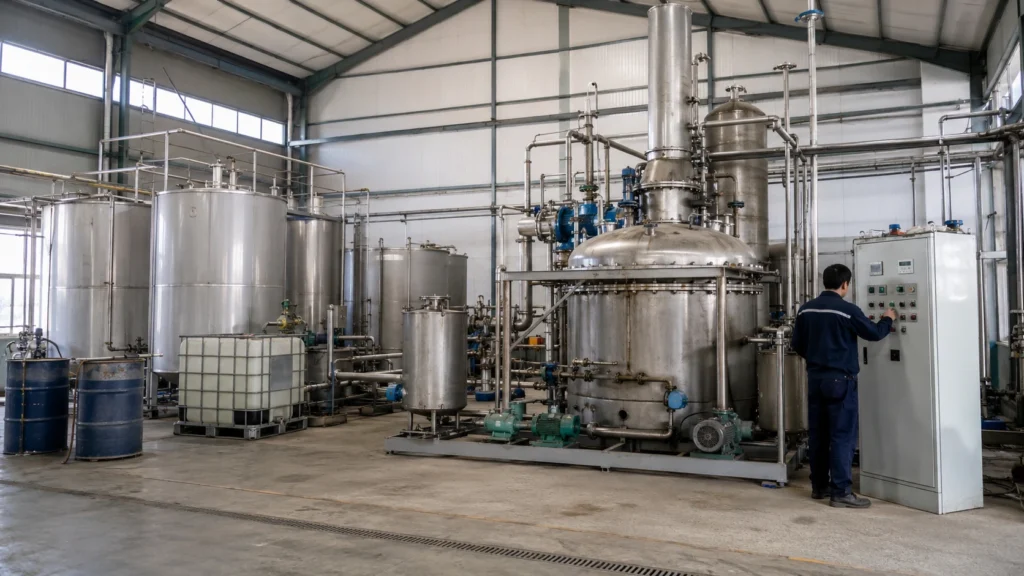

Feedstock Quality Sets the Starting Point
The same re-refining configuration should not be assumed to perform identically with every used oil source.
Relatively consistent used lubricating oil presents a different design basis from feedstock containing high water, sludge, fuel dilution or unknown industrial contamination. These differences affect pretreatment, residue loading, operating stability and the refining steps required after distillation.
For controlled used lubricating oil projects, VBOLT's Used Oil Re-Refining Base Oil Equipment can be configured around pretreatment, distillation, fraction recovery and downstream refining requirements.
For projects based mainly on collected engine oil, the Waste Engine Oil Re-Refining Plant provides a more specific route for evaluating base oil recovery from that feedstock.
Changes in feedstock condition can change the equipment scope:
- Higher water: increases dehydration requirements.
- More sludge and solids: increases filtration and residue-handling requirements.
- Large batch-to-batch variation: makes process control and product consistency more difficult.
- Light fuel contamination: increases the amount of low-boiling material that must be removed.
- Unknown chemical contamination: may require separate analysis before the feedstock is accepted for re-refining.
This is why two plants with the same nominal processing capacity may still require very different pretreatment and refining configurations.
Distillation Configuration Determines Fraction Control
Once the feedstock has been prepared, buyers should look beyond whether the quotation simply includes a "vacuum distillation system."
The more important question is how the system is designed to separate the lubricant fractions required by the project.
A supplier should be able to explain the design basis for:
- Vacuum operating conditions
- Feed temperature and thermal exposure
- Removal of light fractions
- Thin-film or other vacuum separation stages where applicable
- Fraction-cut control
- Heavy-residue separation
- Number of recoverable product fractions
- Separate storage for different base oil cuts
These points matter because a plant designed mainly to recover a broad fuel-range fraction is not the same as a plant designed to separate controlled lubricant base-stock fractions.
A quotation that only states "10 TPD waste oil to base oil plant" is therefore incomplete from a buyer's perspective. It should also define the feedstock basis, pretreatment scope, separation stages and intended product fractions.
Finishing Depth Depends on the Required Product
Distillation separates oil fractions, but it does not automatically solve every product-quality requirement.
Depending on the incoming feedstock and target specification, additional refining or polishing may be required after distillation.
Possible finishing routes can include:
- Solvent extraction
- Adsorption refining
- Polishing filtration
- Clarification or decolorization
- A combination of refining and finishing steps
For projects requiring an additional solvent-refining stage, VBOLT also provides Base Oil Solvent Extraction Equipment .
The purchasing question should therefore not be simply "Does the plant include a polishing machine?" It should be "Which finishing stage is required to reach the agreed product specification from my actual feedstock?"
Adding more finishing equipment does not automatically make a project better. The appropriate refining depth depends on the feedstock condition and the product target.
Color should also not be used as the only definition of base oil quality. A visually bright oil may still require confirmation of viscosity, flash point, sulfur, volatility, stability or other properties relevant to its intended application.
Why Two Re-Refining Plant Quotations Can Be Very Different
This is one of the most important points for buyers comparing suppliers.
Two quotations may show the same nominal processing capacity while covering very different process boundaries.
| What to Compare | Why It Matters |
|---|---|
| Feedstock basis | One supplier may assume relatively dry, controlled used oil while another includes more extensive pretreatment. |
| Pretreatment scope | Water, sludge and solids directly affect the required upstream equipment. |
| Vacuum and distillation configuration | Determines how fractions are separated and controlled. |
| Number of product fractions | A single broad recovered fraction is different from multiple controlled base oil cuts. |
| Finishing system | A distillation-only quotation is not equivalent to one that includes additional refining. |
| Storage scope | Feed, intermediate oil, finished fractions and residue may require separate tanks. |
| Automation and instrumentation | Influences process control, monitoring and overall equipment scope. |
| Utility boundary | Heating, cooling, electricity and vacuum requirements affect installed project cost. |
| Product acceptance basis | Product claims are meaningful only when test methods and feedstock conditions are defined. |
| Installation and commissioning | Equipment supply alone is different from a project that includes installation and commissioning support. |
A lower quotation does not automatically mean a better investment. It may simply include fewer processing stages, less pretreatment or a narrower supply boundary.
Have a Feedstock Report or Target Base Oil Specification?
Send VBOLT your used oil information, required processing capacity and target base oil specification. We will review which pretreatment, distillation and finishing modules should be considered for the project.
What Buyers Should Confirm Before Ordering Re-Refining Equipment
Before placing an order, ask the supplier to answer the following questions clearly.
- What feedstock is the design based on?
Used engine oil, hydraulic oil, gear oil and mixed lubricating oils do not automatically create the same process conditions. - What feedstock limits apply?
Confirm assumptions for water, solids, sludge and known contamination. - What does the quoted TPD capacity mean?
Determine whether it refers to incoming feed, prepared oil or another defined basis. - Which pretreatment equipment is included?
Confirm dehydration, filtration, settling and sludge handling rather than assuming these are part of the main plant. - How are the lubricant fractions separated?
Ask how many product cuts the system is designed to recover and how those fractions are controlled. - What finishing system is included?
Determine whether the quotation includes solvent extraction, adsorption, polishing or distillation only. - Which product parameters are being discussed?
Avoid vague promises such as "high-quality" or "premium" base oil without measurable acceptance criteria. - What feedstock conditions apply to any performance commitment?
Product expectations should always be linked to the material entering the plant. - What utilities are required?
Confirm heating, electrical supply, cooling, vacuum and other supporting requirements. - What is included in installation, commissioning and acceptance?
Equipment delivery, site installation and successful process commissioning are different supply scopes.
A meaningful supplier comparison should place quotations on the same feedstock basis, target product and project boundary. Comparing only the equipment price can be misleading.
What VBOLT Needs Before Preparing a Re-Refining Configuration
A useful equipment proposal starts with actual project information.
Prepare as much of the following as possible:
- Used oil type and source
- Daily or monthly available volume
- Representative feedstock analysis
- Water, sludge and solids condition
- Known fuel or chemical contamination
- Required processing capacity
- Target base oil properties or buyer specification
- Required number of product fractions
- Available heating, electricity and cooling utilities
- Installation country
- Existing tanks or pretreatment equipment
- Planned future expansion
If complete laboratory data are not yet available, preliminary evaluation can begin with the known feedstock source, existing test information and representative sample data.
Final equipment configuration and product expectations should be confirmed against an agreed feedstock and acceptance basis.
Frequently Asked Questions
Does better color mean better re-refined base oil?
No. Color can be commercially important, but it is only one characteristic. The required specification may also include viscosity, flash point, sulfur, volatility, stability and other properties relevant to the intended downstream application.
Can the same re-refining plant produce different base oil fractions?
It may be possible when the distillation and fractionation system is designed for multiple cuts and the feedstock supports them. The number and expected properties of recovered fractions should be confirmed during process design rather than assumed from plant capacity alone.
Does a 10 TPD plant from two suppliers mean the equipment is equivalent?
No. The same nominal capacity can include very different assumptions for feedstock, pretreatment, vacuum distillation, fractionation, finishing, storage, automation and installation scope.
Is solvent extraction required for every used oil re-refining project?
No. The required finishing route depends on the distilled oil condition and the target product specification. Some projects may require deeper refining, while others may use a different finishing configuration.
Can base oil quality be guaranteed before the feedstock is tested?
A meaningful performance commitment requires a defined feedstock and agreed testing basis. Without representative feedstock information, product-quality expectations should remain preliminary.
Review Your Base Oil Re-Refining Project
If you already have a used oil analysis report, target base oil specification or an existing supplier quotation, send the information to VBOLT together with your required capacity and installation country.
We will review the project around the factors that actually affect equipment selection: feedstock, pretreatment, distillation, fraction control, finishing and target product.