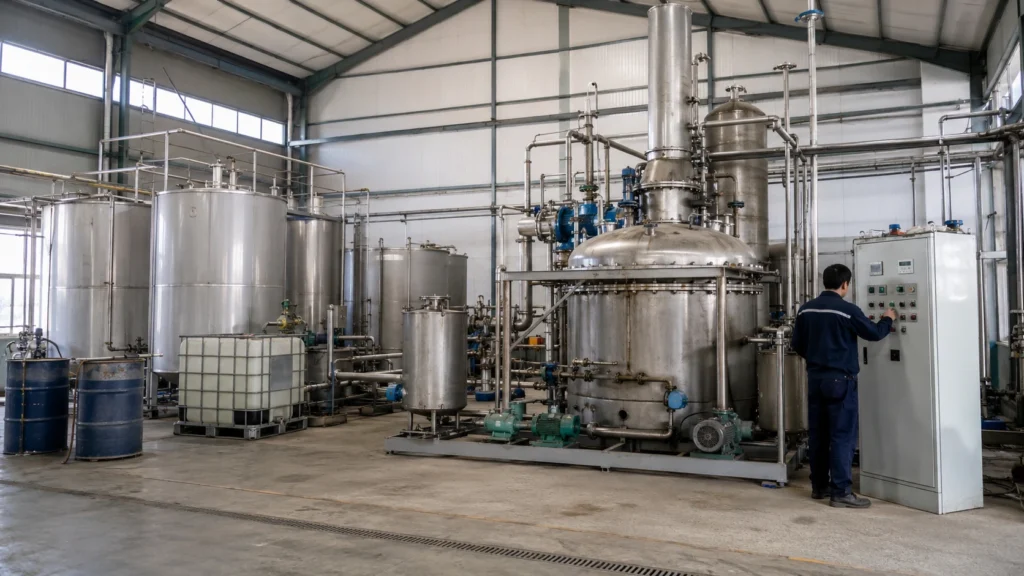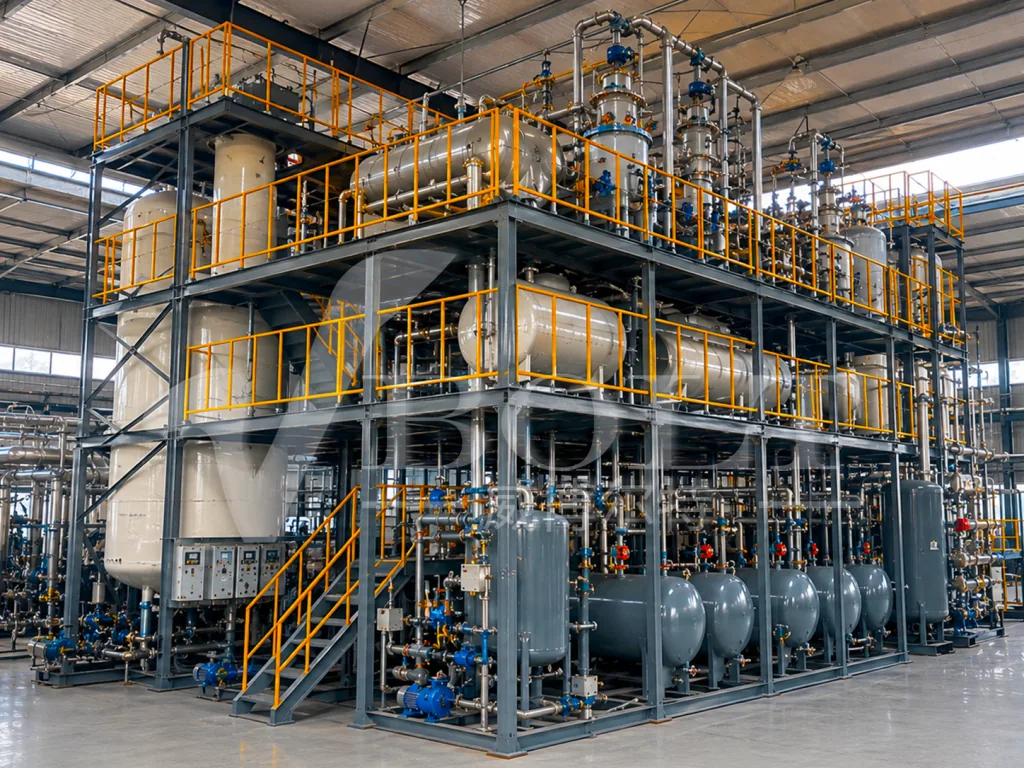






Yes, one recycling plant may be configured to process several compatible lubricant streams—but that does not mean hydraulic oil, gear oil and transmission oil should automatically be mixed into the same tank or the same batch.
For a waste-oil collector or industrial recycling company, the real question is whether the oils you receive fall within a compatible feed specification for the same processing route. Oil type, base-fluid chemistry, water, solids, viscosity, additives, chemical contamination and the required final product all influence that decision.
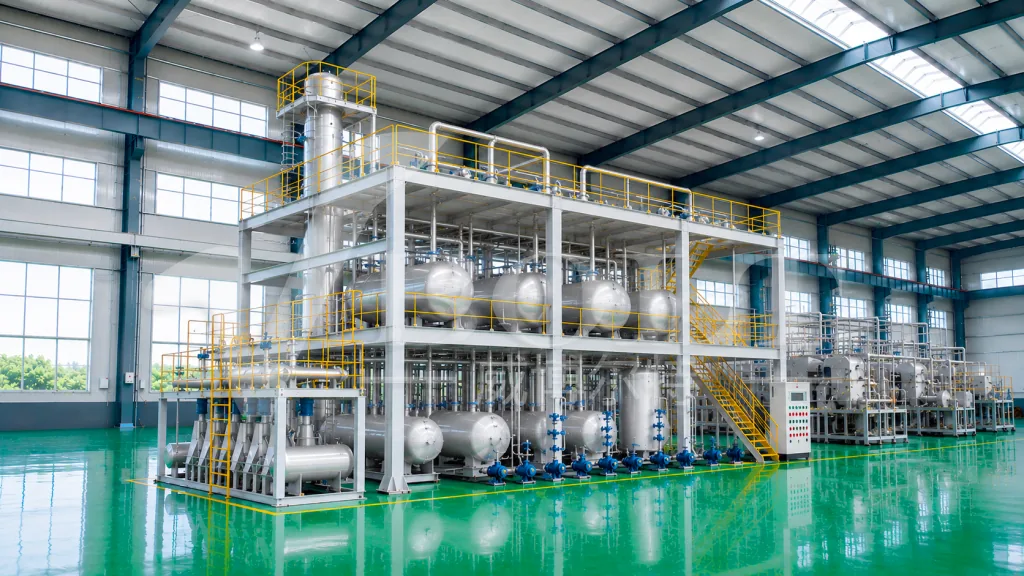
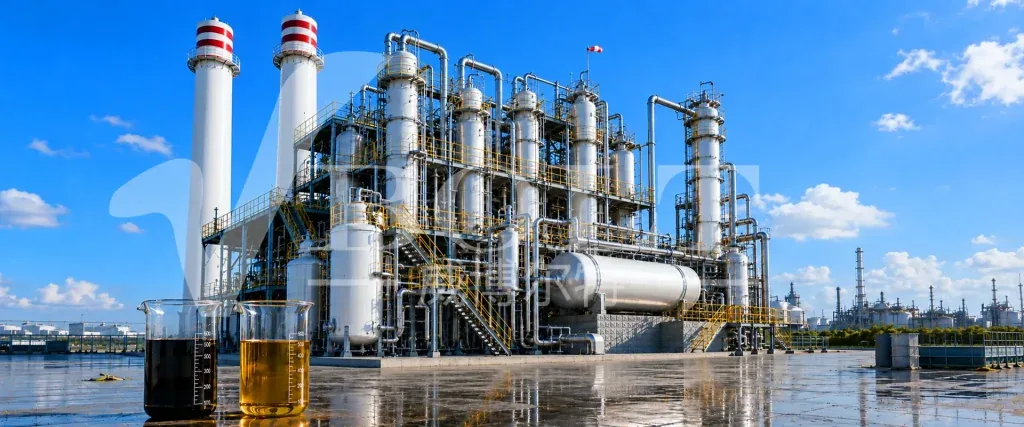
VBOLT's Waste Lubricating Oil to Diesel Plant is designed to evaluate suitable used lubricating, hydraulic, gear and transmission oils for pretreatment, vacuum distillation and controlled fuel-fraction recovery. Final feed acceptance and equipment configuration are based on representative oil information rather than the lubricant name alone.
The Short Answer: Same Plant Can Work, but Feed Acceptance Comes First
A recycling company may use the same main plant for several approved lubricant streams in three different ways:
| Operating Approach | When It May Make Sense | What the Operator Must Control |
|---|---|---|
| Separate campaigns | Different oils can use the same equipment but have noticeably different viscosity, additives or contamination. | Separate storage, feed records, operating settings and product tracking. |
| Approved feed blending | Representative testing confirms that the oil streams are compatible with the same process and target product. | Blend ratio, water, solids, viscosity, light fractions and contamination limits. |
| Separate processing route | An oil contains incompatible fluid chemistry, excessive water, chemical contamination or has a different recovery objective. | Isolation, additional testing and a separate treatment or compliant disposal route. |
This distinction is important: one plant does not have to mean one mixed feed tank.
A company may gain more flexibility by keeping incoming oils segregated until sampling and feed acceptance are complete. This also prevents one unsuitable load from reducing the value of a much larger quantity of recyclable lubricant.
What Actually Determines Whether the Oils Are Compatible?
Before asking whether hydraulic oil and gear oil can be processed together, buyers should check the characteristics that actually affect the plant.
1. Base-Fluid Type
Conventional mineral-based hydraulic, gear and transmission oils may be candidates for the same lubricant-recycling route after evaluation. However, the category name alone is not enough.
Hydraulic-fluid collections, for example, can also contain water-glycol fluids, fire-resistant fluids or special synthetic formulations. These should not automatically be treated as ordinary mineral hydraulic oil.
2. Water and Emulsion Condition
Free water can often be removed during pretreatment, but a stable oil-water emulsion places a different load on the dehydration system.
If one incoming stream contains substantially more water than the others, mixing it before evaluation can increase heating demand, reduce practical throughput and complicate operation.
3. Viscosity Range
Gear oil is often substantially more viscous than hydraulic or transmission fluids. That does not automatically make it unsuitable, but higher viscosity can affect pumping, feed heating and fluid handling.
A plant designed around a mostly low-viscosity lubricant stream should therefore not be assumed to behave identically after a large proportion of heavy gear oil is added.
4. Additives and Service Contamination
Different lubricants use different additive packages and pick up different contaminants in service. Gear oils may carry heavier extreme-pressure additive loading and wear debris, while transmission fluids may contain different friction modifiers and light components.
For equipment selection, the important question is not the brand or original lubricant specification. It is how the used oil behaves as a recycling feedstock after service.
5. Unknown Chemicals
This is where a recycling facility should be conservative.
Brake fluid, coolant, water-glycol fluid, chlorinated solvent, PCB-contaminated oil and unidentified chemical waste should not simply be included in a normal waste-lubricant feed because they arrived from the same workshop or industrial customer.
If feed quality is uncertain, the practical next step is representative sampling. VBOLT's guide to used oil testing before equipment selection explains how water, solids, viscosity, light contamination and other feed properties affect the processing route.
A Practical Workflow for Facilities Collecting Several Oil Types
A company that collects hydraulic oil, gear oil and transmission oil from several customers should design the receiving system around feed control—not around the assumption that everything will eventually be mixed.
Step 1: Record the Source
Record where each load came from and, where possible, what equipment or process produced it. A traceable hydraulic-oil stream from one factory is easier to evaluate than an unidentified mixture collected from several industrial waste tanks.
Step 2: Keep Questionable Loads Separate
Use receiving or holding tanks that allow the facility to isolate unusual loads before they contaminate accepted feedstock.
Receiving tanks, segregated storage and pretreatment should be considered as part of the overall waste oil facility equipment configuration, rather than treating the distillation unit as a standalone machine.
Step 3: Sample Before Blending
For a commercial project, feed acceptance may include checks such as:
- Water content
- Visible sediment and sludge
- Viscosity
- Density
- Flash point where relevant
- Known coolant or solvent contamination
- Sulfur or halogen screening where required by the project
Step 4: Assign the Feed to a Processing Campaign
Once compatibility is confirmed, the oil can be assigned to an approved feed batch or campaign. If different feedstocks require different pretreatment or operating conditions, they can still use the same main system without being processed simultaneously.
Step 5: Track the Output Back to the Feed
Keep records of which incoming streams entered each campaign and how the finished fraction tested. Over time, this gives the operator practical information about which suppliers and oil streams are most suitable for the plant.
For collection companies, this can be more valuable than simply maximizing the number of oil types accepted.
How the Feedstock Mix Changes the Equipment Configuration
Two buyers can both ask for a 10 TPD waste lubricating oil recycling plant and still require different equipment.
| Feedstock Situation | Possible Effect on the Plant |
|---|---|
| Mostly clean mineral hydraulic oil | Relatively moderate pretreatment may be sufficient if water and solids remain controlled. |
| Large share of high-viscosity gear oil | Feed heating, pumping and fluid-handling requirements may increase. |
| Transmission oil with more light components | Light-end separation and the material balance should be reviewed. |
| High water or emulsified feed | Greater dehydration capacity and water handling may be required. |
| High sludge and wear debris | Additional settling, filtration and residue handling may be required. |
| Feedstock varies significantly by supplier | More segregation, sampling and operational flexibility may be needed. |
| Unknown chemical contamination | The load should be isolated and identified before a normal recycling route is selected. |
This is why purchasing a generic hydraulic oil recycling machine based only on capacity can be misleading. The equipment supplier should know what proportion of the feed is hydraulic oil, gear oil, transmission oil and other lubricants, and what contamination levels the plant must handle.
Choose the Processing Route by the Target Product
Feedstock compatibility is only half of the decision. The same collection business may require a different plant configuration depending on what it intends to sell after processing.
Route 1: Controlled Fuel-Fraction Recovery
For suitable used hydraulic, gear, transmission and other lubricant-based mineral oils, pretreatment and vacuum distillation can be used to separate controlled fuel-range fractions.
The output should not automatically be described as road diesel. Final use depends on laboratory results, the required fuel specification, the receiving combustion equipment and local regulations.
For facilities receiving a broader range of evaluated waste-oil streams, VBOLT's Waste Oil to Diesel Distillation Plant provides a project-specific route in which capacity and process configuration are confirmed from feed testing, product requirements and site conditions.
Route 2: Re-Refined Base Oil
A base oil project requires a different level of feedstock control.
If the goal is lubricant base-stock recovery, the project should evaluate whether the collected oil is sufficiently consistent for pretreatment, vacuum distillation, fractionation and the required finishing stages.
For this route, review VBOLT's Used Oil Re-Refining Base Oil Equipment.
This means that the same collected hydraulic or gear oil may lead to a different recommendation depending on whether the buyer wants a controlled fuel fraction or re-refined base oil.
Do You Collect More Than One Type of Used Lubricating Oil?
Send VBOLT the hydraulic, gear, transmission and other lubricant streams you collect, together with the approximate monthly volume of each stream and any available test data.
We will review whether the feedstocks can share the same processing system, should be run in separate campaigns or require different pretreatment.
What Buyers Should Confirm Before Ordering One Plant for Several Oil Streams
Before placing an order, ask the supplier to define the feed acceptance basis clearly.
- Which exact oil streams are included in the design?
Do not accept a generic statement such as "all waste lubricating oils." - Which fluids are specifically excluded?
Confirm how the supplier handles water-glycol fluids, brake fluids, coolant, solvents and unidentified chemical waste. - Can the oils be blended, or should they be processed in separate campaigns?
The answer should be based on feed data, not only lubricant names. - What water and solids levels are included in the design basis?
These values directly affect pretreatment and practical throughput. - How is high-viscosity gear oil handled?
Confirm feed heating, pumps and transfer requirements. - What does the quoted plant capacity refer to?
Capacity should be linked to an agreed feed condition and operating schedule. - What target product is the plant designed to make?
Fuel-fraction recovery and base oil re-refining are different process objectives. - What pretreatment equipment is included?
Confirm storage, settling, dehydration, filtration and sludge handling rather than assuming everything is part of the main distillation unit. - How will the finished product be tested?
Product claims should be tied to measurable release criteria and an agreed feedstock basis.
A useful quotation should therefore describe both the plant and the feed envelope the plant is being designed to accept.
What to Send VBOLT for a Preliminary Equipment Evaluation
The following information allows a much more useful equipment recommendation than a general request for an "oil recycling machine price":
- Oil types currently collected
- Source of each oil stream
- Monthly volume by oil type
- Whether the streams are currently stored separately
- Known water, sludge and contamination condition
- Available laboratory data
- Target product
- Required processing capacity
- Existing storage or pretreatment equipment
- Installation country and available utilities
If your operation is still deciding how receiving, segregation and processing should be arranged, this information can also be used to review the upstream storage and pretreatment requirements before the main plant is sized.
Frequently Asked Questions
Can hydraulic oil and gear oil be recycled in the same plant?
Potentially, yes. Compatible mineral-based hydraulic and gear oils may use the same processing system after feed evaluation. They do not necessarily need to be blended together; separate campaigns may be more practical when viscosity, contamination or additive loading differs significantly.
Can transmission oil be processed together with used hydraulic oil?
Possibly, but the fluid types should be identified first. Transmission fluids may have different base fluids, additives and light-component profiles, so compatibility should be confirmed before blending or selecting a common operating condition.
Should all collected lubricating oils be stored in one tank?
Usually not before feed acceptance. Keeping different or questionable loads separate allows the operator to test compatibility and prevents one contaminated load from affecting a larger quantity of accepted recyclable oil.
Can water-glycol hydraulic fluid enter a normal waste lubricating oil plant?
It should not be treated as ordinary mineral hydraulic oil without separate identification and evaluation. Water-glycol and other special hydraulic fluids have different compositions and may require a different treatment or handling route.
Can the plant produce automotive diesel from hydraulic, gear and transmission oil?
Not automatically. A suitable distillation system may recover controlled fuel-range fractions, but automotive or road-diesel use requires the finished product to meet the applicable specification and local regulatory requirements.
Is the combined monthly oil volume enough to select plant capacity?
Not by itself. Only the portion that is suitable and consistently available for the selected processing route should be used when sizing the plant. Feed segregation, downtime, pretreatment and operating schedule also affect sustainable throughput.
Request a Waste Lubricating Oil Processing Evaluation
If your business collects hydraulic oil, gear oil, transmission oil or other used lubricants, send VBOLT your feedstock list, monthly volumes, target output and available oil data.
We will review the feed acceptance range, pretreatment requirements and suitable equipment configuration before recommending a plant.