




If you are planning to convert used engine oil, waste lubricating oil or selected industrial oils into reusable base oil, one of the first questions is usually: how much does a used oil re-refining plant cost?
The practical answer is that there is no reliable single price based only on plant capacity. A 10 TPD plant designed for relatively consistent used engine oil and basic finishing can be very different from another 10 TPD plant that must process mixed waste oil, produce several base oil fractions, use advanced finishing, operate continuously and include a complete tank farm, utilities and environmental-control systems.
For a serious project in 2026, the cost should therefore be calculated from the feedstock, required product specification, process route, daily capacity, operating mode, automation level, installation country and project supply boundary.
Short answer: Do not ask only, “What is the price of a 10-ton waste oil recycling plant?” Ask, “What process and equipment are required to convert my actual feedstock into my required product at 10 tons per day?” The second question leads to a meaningful quotation.
This guide explains what investors and recycling companies should include when estimating a used oil re-refining project, how plant configuration changes the price, which costs are commonly overlooked, and what information a supplier needs before preparing a technically useful quotation.
Contents
- How much does a used oil re-refining plant cost?
- Equipment price vs. total project cost
- 9 factors that determine plant cost
- How capacity affects investment
- Why the process route changes the price
- What should be included in CAPEX?
- What determines OPEX?
- How to compare supplier quotations
- How to build a preliminary cost estimate
- Information needed for an accurate quotation
- Frequently asked questions
How Much Does a Used Oil Re-Refining Plant Cost?
A used oil re-refining plant should not be priced as a single machine. It is a process system made up of several interconnected sections, and the required configuration depends on what enters the plant and what product must leave it.
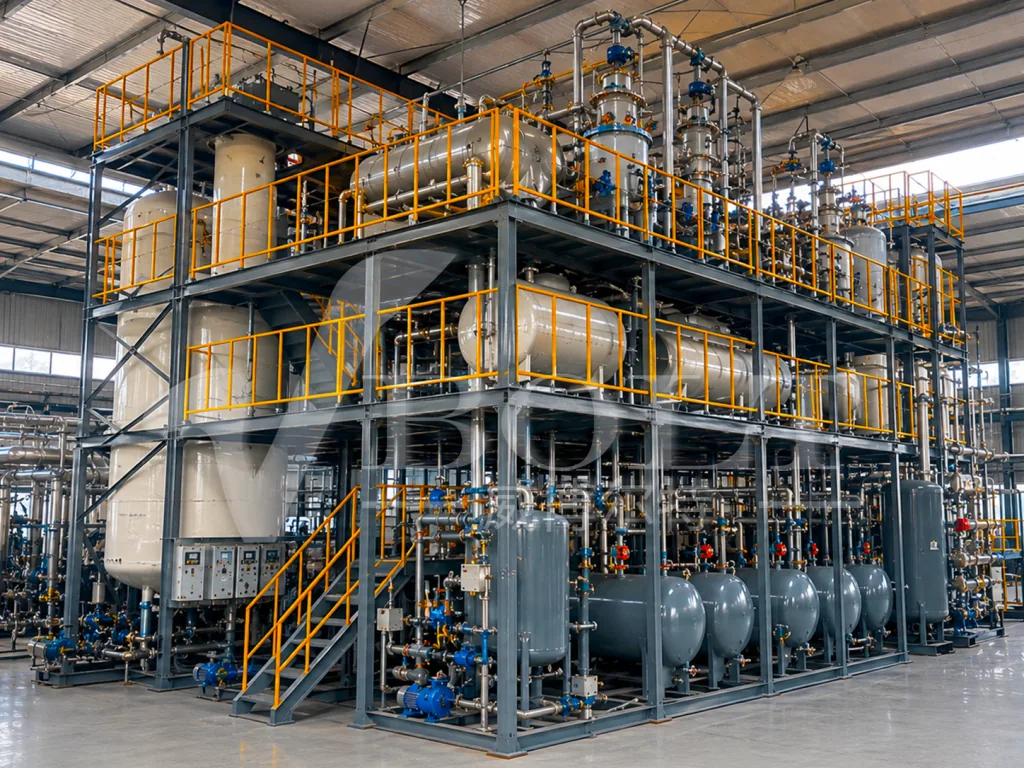
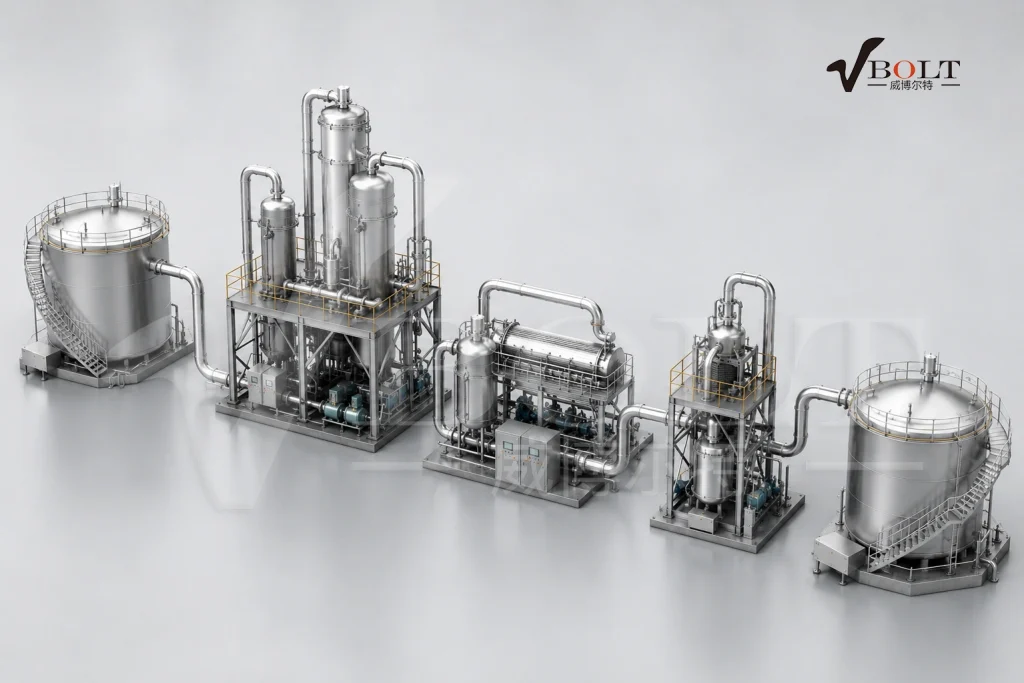
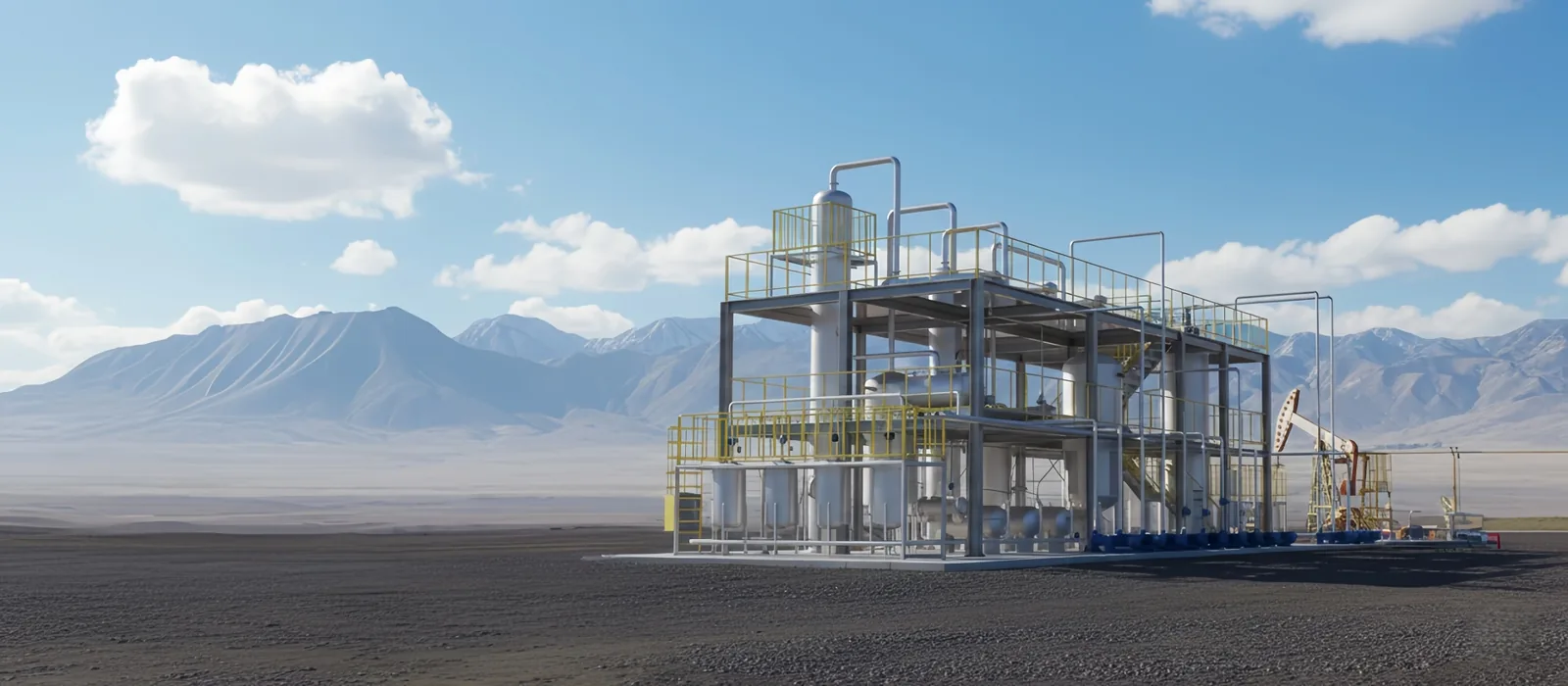
Typical project configurations may include feedstock storage, pretreatment, dehydration, vacuum distillation or thin-film evaporation, fractionation, condensation, vacuum generation, base oil finishing, product storage, residue handling, heating, cooling, electrical control and safety systems.
Some projects require only part of this scope because the customer already has tanks, utilities or downstream refining equipment. Others require a more complete greenfield installation.
That is why an online price without a clearly defined scope can be misleading.
| Question | Why It Matters to Cost |
|---|---|
| What used oil will be processed? | Water, solids, additives, metals and mixed contaminants affect pretreatment and residue handling. |
| What product do you want to sell? | Distilled oil, separated base oil fractions and more deeply finished base oil require different process depths. |
| What is the actual daily feed volume? | Capacity changes vessel sizes, heat-transfer area, pumps, vacuum systems, tanks and utilities. |
| How many hours will the plant operate? | Batch, semi-continuous and continuous production require different equipment and control strategies. |
| What equipment is already available? | Existing storage, boilers, cooling systems, laboratories and buildings can change the supply boundary. |
| Where will the plant be installed? | Electrical standards, environmental requirements, shipping, civil works and site conditions vary by country and project. |
For this reason, the most useful quotation is not simply the lowest number. It is the quotation that clearly defines what feedstock it is based on, what equipment is included, what product target is assumed and what responsibilities remain with the buyer.
Equipment Price Is Not the Same as Total Project Cost
This is one of the most important distinctions for a first-time investor.
A supplier may quote the price of the main processing equipment, while the investor is actually trying to understand the total capital required to start commercial production.
Equipment Supply Price
Depending on the agreed scope, an equipment package may include items such as:
- Feed and pretreatment equipment
- Dehydration system
- Vacuum distillation or evaporation equipment
- Fractionation and condensation system
- Vacuum system
- Heating equipment or thermal-oil interface
- Base oil filtration or finishing equipment
- Pumps and process instrumentation
- PLC and electrical control system
- Skid piping within the equipment boundary
Total Installed Project Cost
A complete project budget may also need to include:
- Raw-oil storage tanks
- Finished-product tanks
- Heavy-residue storage
- Interconnecting piping
- Cooling water system
- Compressed air
- Power distribution
- Boiler, burner or thermal-oil system where required
- Laboratory equipment
- Wastewater and condensate management
- Process-gas or emissions-control equipment
- Fire and safety systems
- Building and civil works
- Freight and local transport
- Import duties and taxes where applicable
- Installation
- Commissioning
- Operator training
- Permits and third-party inspections
- Initial spare parts and consumables
- Working capital for feedstock and plant start-up
When comparing quotations, always ask whether you are comparing equipment price to equipment price or complete project scope to complete project scope.
9 Factors That Determine Used Oil Re-Refining Plant Cost
1. Feedstock Type and Quality
The same nominal capacity does not mean the same process requirement.
Used passenger-car engine oil, heavy-duty diesel engine oil, hydraulic oil, gear oil and mixed industrial waste oils can have different concentrations of water, solids, degraded additives, metals, sulfur compounds and other contaminants.
A relatively consistent, segregated feedstock may require a different pretreatment system from an uncontrolled mixed collection stream.
Before final equipment selection, representative feedstock should therefore be sampled and tested. Useful parameters may include water, sediment, viscosity, flash point, sulfur, metals, ash and other contaminants relevant to the project and local regulation.
Cost implication: More difficult feedstock may require additional storage segregation, filtration, dehydration, evaporation capacity, cleaning provisions and residue-management equipment.
2. Required Product
“Recycled oil” is not a sufficiently precise product specification for engineering or purchasing.
A buyer should first define whether the commercial objective is to recover lubricating-range base oil fractions, produce an intermediate for further refining, or reach a more demanding finished base oil specification after additional treatment.
Base oil is also not the same as finished engine oil. A recovered base oil normally requires specification testing and, when used to manufacture lubricants, appropriate additive formulation and finished-product qualification.
The U.S. Environmental Protection Agency describes re-refining as treating used oil to remove impurities so it can again be used as base stock for lubricating oil. This is different from simply filtering used oil or processing it as a fuel stream.
Reference: U.S. EPA – Managing Used Oil for Businesses
Cost implication: A more demanding product target normally requires more controlled separation, additional finishing, tighter instrumentation and stronger laboratory quality control.
3. Plant Capacity
Capacity influences the size of almost every major component in the process, including feed tanks, heaters, evaporators, distillation equipment, condensers, pumps, vacuum systems, product tanks and utilities.
However, selecting the largest plant your budget allows is not always the best investment decision.
The plant should be sized around the amount of qualified feedstock that can be collected consistently—not around an optimistic future supply assumption.
4. Batch, Semi-Continuous or Continuous Operation
Operating mode changes equipment design, automation requirements, tank configuration, labor planning and production stability.
A smaller batch system may be suitable for process validation or limited feedstock volume. Commercial recycling projects with reliable feedstock supply may benefit from semi-continuous or continuous configurations, depending on the process route and operating plan.
Continuous operation should not be selected only because it sounds more advanced. It must be supported by sufficient feedstock, reliable utilities, suitable storage and a trained operating team.
5. Distillation and Separation Technology
The core separation section is one of the most important cost drivers.
Depending on the feedstock and product objective, a system may use vacuum distillation, thin-film or wiped-film evaporation, fractionation and different condensation arrangements.
Processing under vacuum allows lubricating-range fractions to be separated at lower operating temperatures than atmospheric boiling would require, while process design aims to limit unnecessary thermal degradation.
Cost implication: A more sophisticated separation system usually increases capital cost but may also provide better control of residence time, fraction cuts and product consistency when the feedstock and target justify it.
6. Base Oil Finishing Route
Distillation is only one part of a re-refining process.
Depending on the required product specification, the recovered distillate may need filtration, adsorption polishing, solvent extraction or another approved upgrading route.
For example, adding a solvent-extraction section requires more than one extra vessel. The complete engineering scope can include solvent circulation and recovery, pumps, heat exchange, ventilation, leak control, instrumentation and operator-protection measures.
Cost implication: Always confirm whether the supplier quotation includes only distillation or includes the finishing system required for the proposed product specification.
7. Automation and Instrumentation
Automation can range from relatively simple local control to a more integrated PLC system with temperature, pressure, flow and level monitoring, alarms, interlocks and operating-data recording.
A commercial plant operating long hours normally needs a different control philosophy from a small demonstration unit.
Cost implication: Better automation increases initial investment but can also improve process repeatability, operating visibility and safety when correctly engineered.
8. Utilities and Site Conditions
A re-refining plant cannot operate independently of its site infrastructure.
The project team should confirm:
- Available electrical voltage and frequency
- Heating fuel or thermal-energy source
- Cooling-water availability
- Process and cleaning water
- Compressed air
- Drainage
- Wastewater handling
- Site elevation and ambient conditions where relevant
- Existing tank farm
- Building and structural limitations
A site with suitable existing utilities can have a very different project cost from a greenfield site that must build every auxiliary system from zero.
9. Project Scope and Destination Country
The final investment also depends on what the supplier is contractually responsible for.
An equipment-only export package is different from a project that includes process design, equipment, installation guidance, commissioning, operator training and additional engineering documentation.
Local environmental, fire, electrical, occupational-safety and permitting requirements must also be reviewed for the installation country. A machine that can physically operate is not automatically a complete locally compliant industrial project.
How Does Plant Capacity Affect the Investment?
VBOLT can configure waste oil re-refining systems across different commercial scales. For preliminary project planning, capacity can be considered in broad categories rather than treated as a fixed price list.
| Planning Scale | Indicative Capacity | Typical Project Situation | Main Cost Consideration |
|---|---|---|---|
| Compact | Approx. 0.5–10 TPD | Smaller recycling operation, new project or limited regional feedstock | Lower total throughput means fixed systems can represent a larger cost per ton. |
| Standard Commercial | Approx. 10–50 TPD | Commercial re-refining with established waste-oil supply | Requires a stronger balance between feedstock, storage, utilities, automation and market demand. |
| Large Industrial | Approx. 50–200 TPD | High-volume recycling project with secured collection channels | Higher throughput requires significantly larger process, utility, storage and logistics infrastructure. |
These ranges are useful for planning, but capacity alone is not enough to calculate final cost.
A 20 TPD line processing a controlled used lubricating oil stream may require a different investment from a 20 TPD line receiving mixed waste oils with high water, solids and variable contamination.
The first sizing question should therefore be:
How many tons of acceptable feedstock can the project reliably collect and process every operating day?
Not:
What is the largest plant I can afford?
For more information about VBOLT's re-refining equipment configuration, see the Used Oil Re-Refining Plant.
Why Two 10 TPD Used Oil Plants Can Have Very Different Prices
This is where many buyers make an incorrect comparison.
Imagine three suppliers all quote a “10 TPD waste oil recycling plant.” The capacity is identical on paper, but the process scope may not be.
| Project A | Project B | Project C |
|---|---|---|
| Segregated used engine oil | Variable mixed waste lubricating oil | Commercial multi-source collection |
| Existing feedstock storage | New storage required | Larger dedicated tank farm |
| Basic pretreatment | Enhanced dehydration and solids removal | Feed segregation and controlled pretreatment |
| Vacuum separation | Vacuum separation plus fractionation | Continuous separation and multiple controlled fractions |
| Basic polishing | Additional finishing | Advanced finishing selected against product specification |
| Existing utilities | Some new utilities | New utility infrastructure |
| Moderate automation | PLC automation | Higher automation and data monitoring |
Calling all three systems “10 TPD plants” does not make them technically or commercially equivalent.
This is why price comparison should start with a process flow diagram, equipment list, scope boundary and product basis—not just the capacity written at the top of the quotation.
What Should Be Included in Used Oil Re-Refining Plant CAPEX?
CAPEX means the capital investment required to build and prepare the facility for operation. The exact accounting treatment varies by project and company, but an investor should at least review the following cost groups.
| CAPEX Category | Items to Check |
|---|---|
| Process Equipment | Pretreatment, dehydration, distillation, evaporation, fractionation, condensation and finishing |
| Auxiliary Systems | Vacuum, heating, cooling, air, pumps and process-gas handling |
| Tank Farm | Raw oil, intermediate products, base oil, light fractions and residue storage |
| Electrical & Automation | Control cabinets, PLC, instruments, cables, motors and safety interlocks |
| Civil & Building | Foundations, structures, bunding, drainage, roads and workshop requirements |
| Environmental & Safety | Wastewater, residue containment, ventilation, fire protection and required monitoring |
| Laboratory | Equipment required for feedstock acceptance and finished-product quality control |
| Logistics | Packing, freight, insurance, inland transportation and import-related costs |
| Installation & Start-Up | Erection, installation supervision, commissioning, training and initial consumables |
A quotation that excludes several of these categories may still be valid—but the exclusions must be clear so the buyer can budget for them separately.
What Determines the Operating Cost of a Used Oil Re-Refining Plant?
A lower equipment purchase price does not necessarily mean a lower total cost of ownership.
Operating expenditure, or OPEX, should be considered before selecting the plant configuration.
Major OPEX Items
- Feedstock acquisition: the cost of collecting or purchasing used oil
- Transportation: moving waste oil from collection points to the plant
- Heating energy: fuel, thermal oil, steam or another heat source depending on design
- Electricity: pumps, vacuum systems, cooling equipment, controls and auxiliaries
- Cooling water: consumption and treatment where applicable
- Labor: operators, laboratory personnel, maintenance and management
- Finishing consumables: filters, adsorbents, solvents or other materials where applicable
- Maintenance: seals, pumps, instruments, cleaning and planned replacement parts
- Laboratory testing: feedstock, intermediate and finished-product analysis
- Residue management: storage, testing, authorized reuse or disposal
- Wastewater management: depending on site and process configuration
- Compliance: permits, inspections and environmental or safety monitoring
The actual operating cost per ton should be calculated from local prices and the proposed material and energy balance rather than copied from another country's project.
A Simple Preliminary OPEX Formula
Operating cost per ton = feedstock cost + transportation + energy + labor + process consumables + maintenance + laboratory + residue/waste management + other local operating costs.
This calculation becomes much more useful once a preliminary material balance is available.
Do Not Confuse “Oil Recovery” With “Base Oil Yield”
This distinction can significantly change the economic model of a project.
One ton of incoming used oil does not become one ton of saleable base oil. Incoming material can contain water, light components, solids, degraded additives and heavy residue. The process may also separate several product fractions depending on the selected cut points.
Therefore, terms such as “oil recovery,” “distillate recovery,” and “saleable base oil yield” should not automatically be treated as the same number.
For a bankable calculation, ask the supplier to state:
- The exact feedstock basis
- Feedstock laboratory data
- Water and light-end assumptions
- Expected heavy-residue fraction
- Target base oil cut points
- Finishing losses where applicable
- Product acceptance specification
- Test method used for any performance guarantee
VBOLT recommends developing the preliminary material balance from a representative feedstock sample and a defined product target rather than assuming one universal recovery percentage for every waste oil.
For a feedstock-specific explanation, see the Waste Engine Oil Re-Refining Plant guide.
How to Estimate Whether a Re-Refining Project Can Be Profitable
The plant price is only one variable in an investment decision. A commercially attractive project needs reliable feedstock supply and a realistic market for the recovered products.
A preliminary business model can start with the following structure:
Annual product revenue
+ Value of commercially usable by-products
− Annual feedstock cost
− Transportation cost
− Energy cost
− Labor cost
− Consumables and maintenance
− Laboratory and compliance cost
− Residue and waste-management cost
= Preliminary operating margin before financing, tax and other company-specific expenses
Do not begin with an advertised payback period and work backward. Begin with your actual local data.
For example, the commercial result can change significantly if:
- Used oil must be purchased rather than collected under a service contract
- The feedstock contains high water or non-oil material
- Base oil selling prices differ from the original assumption
- The plant operates below design utilization because feedstock is insufficient
- Residue disposal is expensive
- Finishing consumables are underestimated
- The finished product needs additional treatment before sale
This is why VBOLT recommends evaluating the project from feedstock to final product rather than judging profitability from equipment price alone.
How to Compare Used Oil Re-Refining Plant Quotations
If you receive three quotations from three suppliers, do not immediately compare the final prices.
First normalize the technical scope.
| Quotation Item | Question to Ask |
|---|---|
| Feedstock | What exact raw material and laboratory condition is the design based on? |
| Capacity | Is the stated TPD feed input, distillate output or finished-product output? |
| Operating Hours | How many hours per day and days per year are assumed? |
| Process Route | What steps are included from raw oil intake to product storage? |
| Product | What exact product specification is the system designed to target? |
| Yield | What does the quoted recovery percentage actually represent? |
| Finishing | Is refining/finishing included or only distillation? |
| Utilities | What electricity, heating, water and air are required? |
| Automation | What instruments, controls, alarms and interlocks are included? |
| Tanks | Are feed, intermediate, product and residue tanks included? |
| Emissions/Waste | What systems are included for gas, wastewater, condensate and residue? |
| Installation | Who is responsible for erection, piping and electrical installation? |
| Commissioning | What start-up and operator-training support is included? |
| Acceptance | How will capacity and product performance be verified? |
Warning Signs in a Low-Price Quotation
- No feedstock definition
- No process flow diagram
- No clear equipment list
- No material-balance basis
- A fixed yield promised for every type of waste oil
- No distinction between recovered oil and finished base oil
- No utility-consumption basis
- No explanation of residue or wastewater management
- No product acceptance criteria
- No clear division between supplier and buyer responsibilities
A lower price may be completely reasonable if the scope is smaller. The problem is not a low price by itself; the problem is an undefined scope.
A Practical 2026 Used Oil Re-Refining Project Cost Worksheet
Before requesting quotations, investors can prepare a preliminary worksheet like the one below.
| Project Input | Your Data |
|---|---|
| Project country | ________________ |
| Main feedstock | ________________ |
| Feedstock source | ________________ |
| Available quantity per day | ________________ TPD |
| Available quantity per year | ________________ tons/year |
| Water content | ________________ |
| Solids/sediment | ________________ |
| Other available laboratory data | ________________ |
| Target product | ________________ |
| Required product specification | ________________ |
| Operating hours per day | ________________ |
| Operating days per year | ________________ |
| Electricity supply | ________________ |
| Available heating fuel | ________________ |
| Existing cooling system | Yes / No |
| Existing tank farm | Yes / No |
| Existing building | Yes / No |
| Required automation level | ________________ |
| Expected project scope | Equipment only / Equipment + services / Other |
With these inputs, an equipment manufacturer can prepare a much more relevant preliminary configuration than it can from a message that simply says, “Please send the price of a waste oil plant.”
What Information Does VBOLT Need to Prepare a Plant Quotation?
For a preliminary project review, provide as much of the following information as possible:
- Feedstock type: used engine oil, waste lubricating oil, hydraulic oil, gear oil or other identified oil stream
- Feedstock source: fleets, workshops, industry, collection network or another source
- Recent laboratory report: if available
- Available daily and annual volume
- Target product: including any required base oil properties or buyer specification
- Expected plant capacity
- Operating hours per day and days per year
- Project country and installation location
- Available voltage and frequency
- Available fuel, water, cooling and compressed air
- Existing tanks and buildings
- Required automation level
- Required supplier scope: equipment only, installation guidance, commissioning, training or other services
If a laboratory report is not yet available, the project can still begin with a description of the feedstock source and available quantity. However, representative testing should be completed before final process guarantees and detailed engineering are confirmed.
Recommended message: “We have approximately ___ tons/day of ___ used oil in ___ country. Our target product is ___. Please evaluate a suitable process route and preliminary plant configuration.”
Should You Choose the Cheapest Used Oil Re-Refining Plant?
Not necessarily.
But you should not automatically choose the most expensive proposal either.
The better decision is to identify the configuration that can realistically process your feedstock, meet your commercial product target, comply with the local project requirements and operate at an acceptable total cost.
A technically appropriate plant may cost more than a basic distillation unit because it includes equipment that the project actually requires. On the other hand, adding unnecessary equipment also increases investment without guaranteeing a better business result.
The objective should be fit-for-purpose engineering.
5 Questions to Answer Before You Buy
- Do I have enough reliable feedstock to operate the proposed capacity?
- Have I tested the feedstock instead of assuming all waste oil is the same?
- Do I know exactly what product I plan to sell and its required specification?
- Have I calculated both CAPEX and OPEX?
- Does the quotation clearly define process scope, performance basis and acceptance criteria?
If one of these questions cannot yet be answered, the project may need additional feasibility work before equipment procurement.
Frequently Asked Questions
How much does a used oil re-refining plant cost in 2026?
There is no technically reliable universal price because the cost depends on feedstock quality, capacity, process route, required base oil specification, automation, utilities, destination country and supply scope. The most accurate preliminary price is prepared after these inputs are defined.
Can I get a price based only on tons per day?
A capacity-based price can be used only as a rough early-stage reference. Final equipment selection should also consider feedstock analysis, target product, operating hours, finishing requirements, utilities and installation scope.
Is a 10 TPD plant suitable for a new recycling business?
It can be suitable for some commercial projects, but capacity should be selected from verified feedstock availability, operating schedule and market demand. A smaller plant with high utilization can be a better investment than a larger plant operating far below capacity.
Does a higher-capacity plant always have a better ROI?
No. Higher throughput can improve production scale, but only when the project has sufficient qualified feedstock, product demand, storage, utilities and working capital. Oversizing can reduce utilization and increase financial pressure.
What is the biggest factor affecting waste oil recycling plant price?
There is no single factor, but process depth is particularly important. The feedstock condition and required finished-product specification determine how much pretreatment, separation, fractionation and finishing equipment is necessary.
Is used oil re-refining the same as waste oil distillation?
Not exactly. Distillation can be one stage of a re-refining process. Re-refining is a broader process intended to remove contaminants and recover oil suitable for reuse as base stock, usually requiring controlled pretreatment, separation, quality testing and, depending on the target, additional finishing.
How much base oil can be produced from one ton of used oil?
There is no universal yield for every feedstock. Water, light components, solids, metals, degraded additives, heavy residue, fraction cut points and finishing requirements all affect the amount of saleable base oil. A project-specific material balance should be based on representative feedstock data.
What should be included in a used oil re-refining plant quotation?
A useful quotation should define the feedstock basis, capacity, process flow, equipment list, product target, utilities, automation, tanks and auxiliaries, exclusions, installation responsibilities, commissioning support and acceptance basis.
What Should You Prepare Before Asking for a Final Price?
If you are still at the early planning stage, you do not need to have every technical detail ready before contacting an equipment supplier.
However, a few basic project details can make the first quotation much more useful.
- What type of used oil do you have?
- How many tons are available per day or per month?
- Do you have a recent feedstock analysis?
- What product do you want to produce?
- What plant capacity are you considering?
- Where will the plant be installed?
- Do you already have storage tanks, heating, cooling water or other utilities?
For example, a customer with 300 tons of relatively consistent used engine oil available each month will need a different solution from a collector handling several types of waste lubricating oil from different sources.
The equipment capacity may look similar, but the pretreatment system, storage arrangement, distillation section, finishing process and operating cost can be quite different.
This is also why we prefer to review the feedstock and project conditions before recommending a plant configuration.
If you already have a waste oil analysis report, send it together with your expected processing capacity and target product. If no laboratory report is available yet, tell us where the oil comes from and how much you can collect. That is usually enough to begin a preliminary discussion.
Once the feedstock and project scope are clearer, it becomes much easier to determine which equipment is actually required—and which equipment you do not need to pay for.