





Turn Waste Lubricating Oil Into High-Value Base Oil — Starting Today
Transform used engine oil and waste lubricants into re-refined base oil with the VBOLT-DB Series. From contaminated waste oil to high-quality lubricant base stock through vacuum distillation and refining technology.
Watch the process video to see how waste oil becomes base oil.
👉 Get Your Customized Solution & QuotationWaste Oil to Base Oil Re-Refining Plant
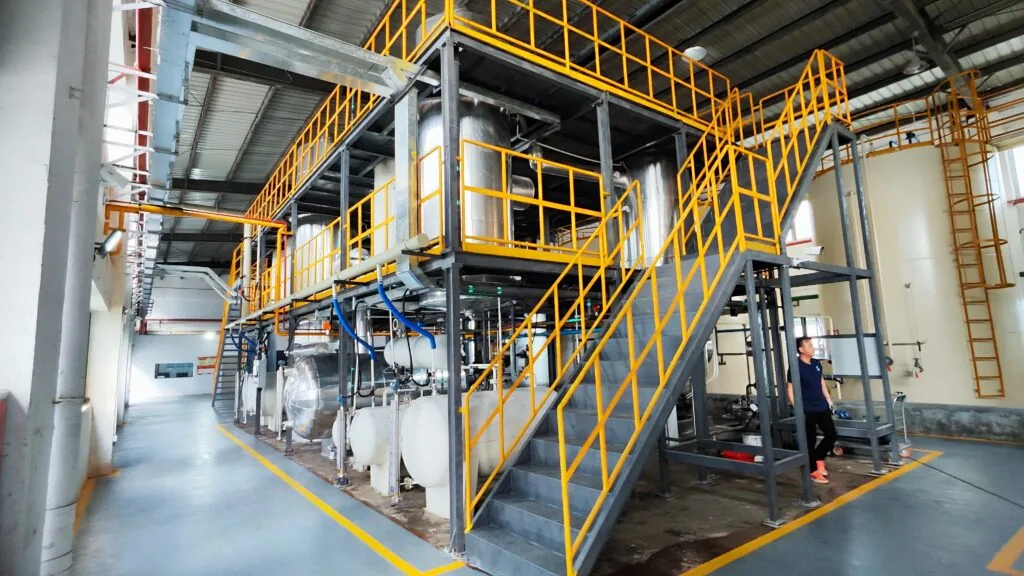
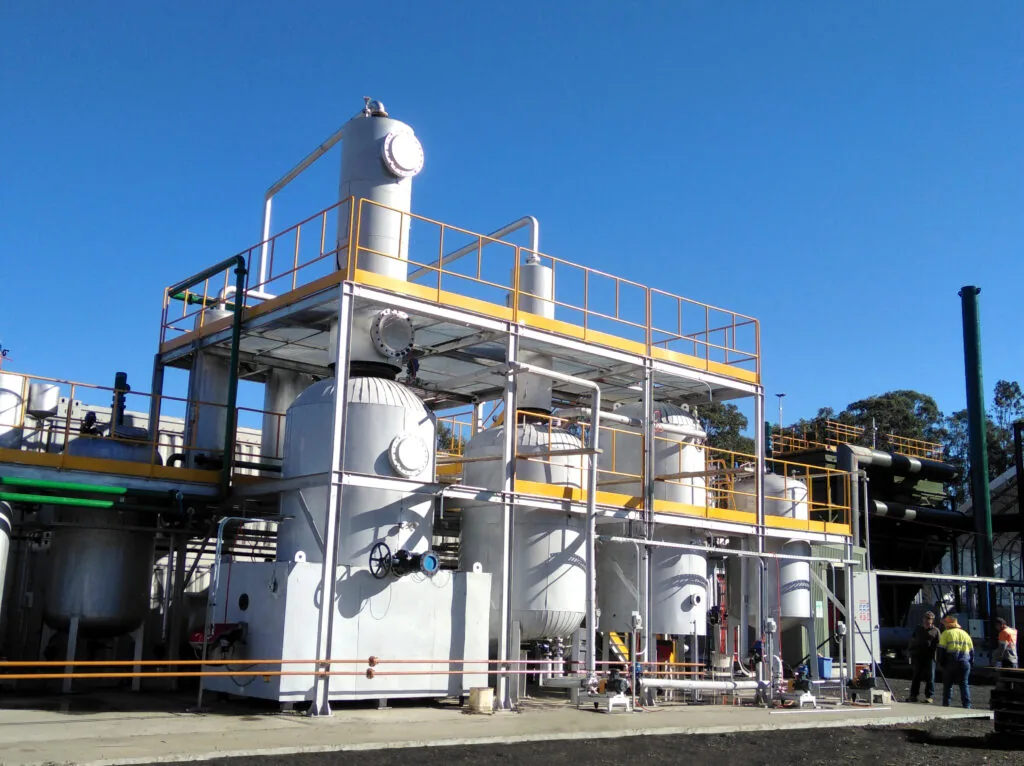
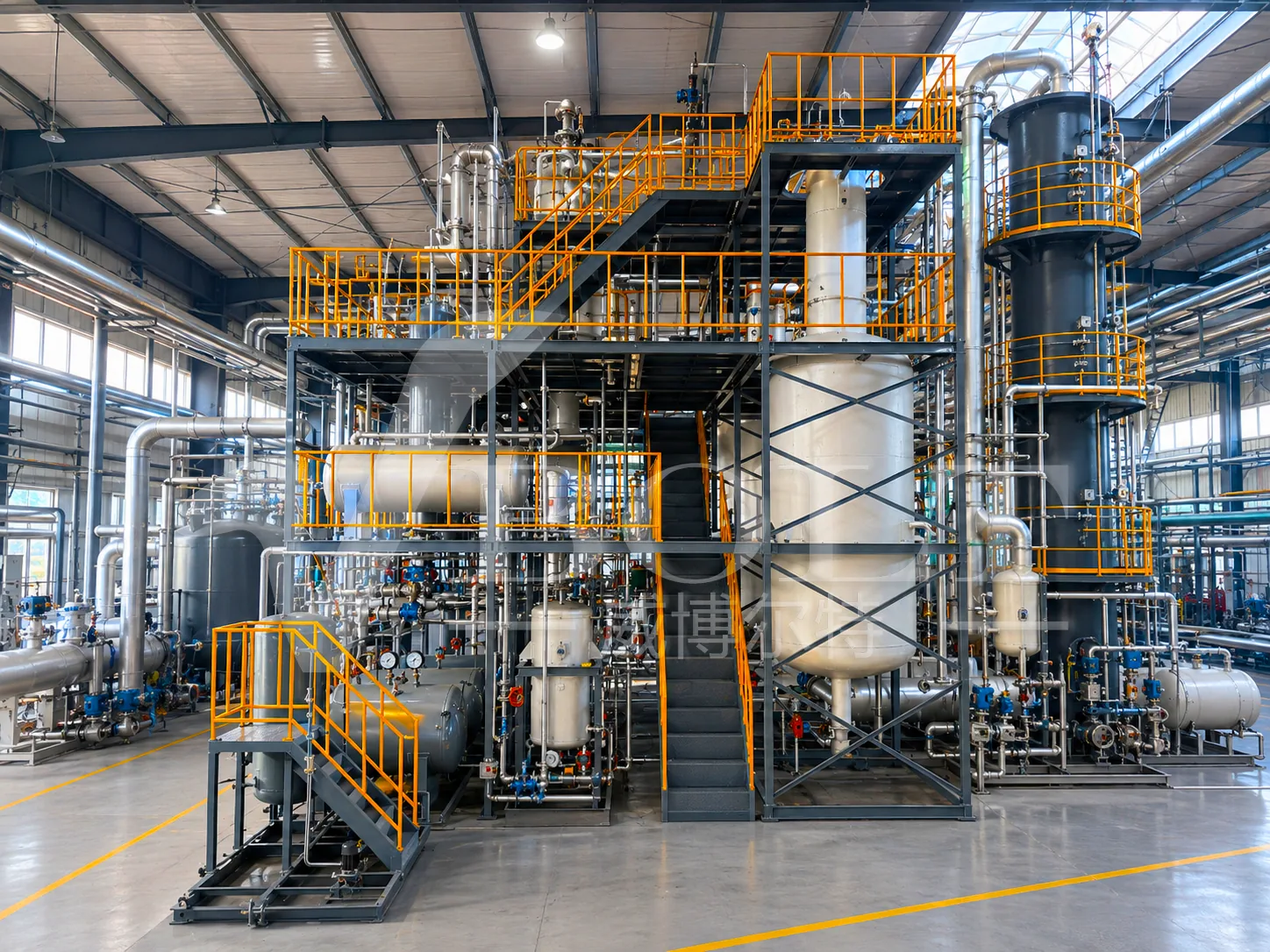
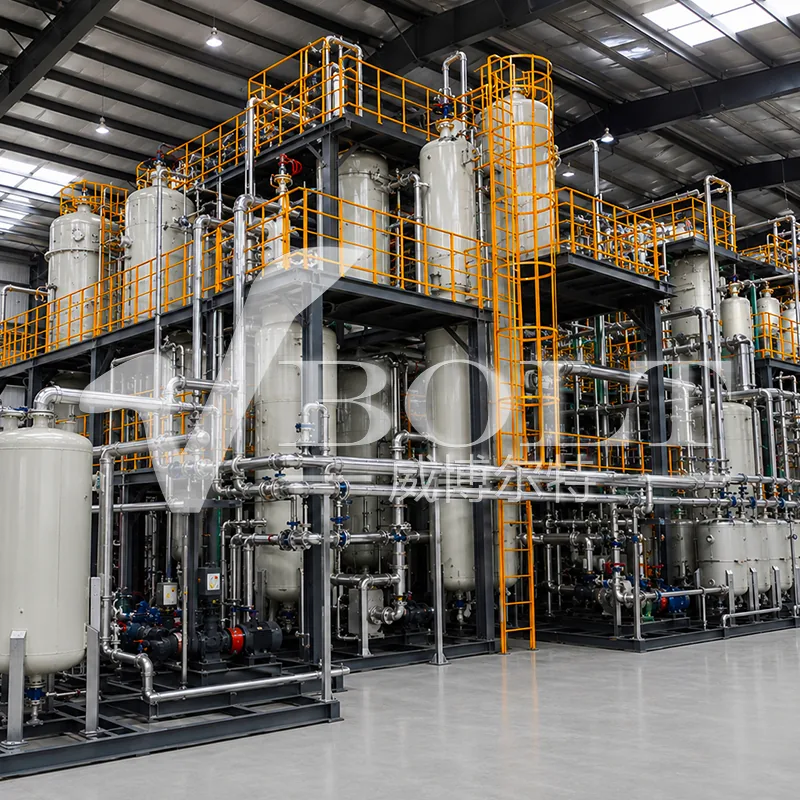
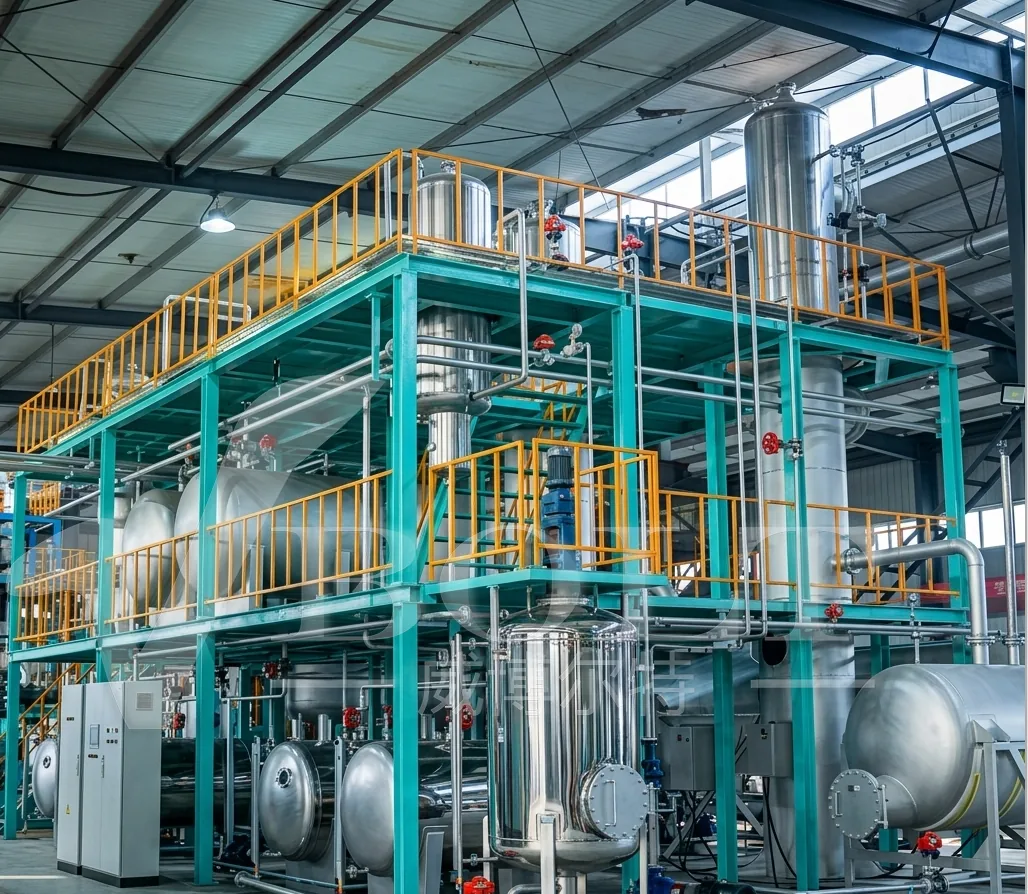
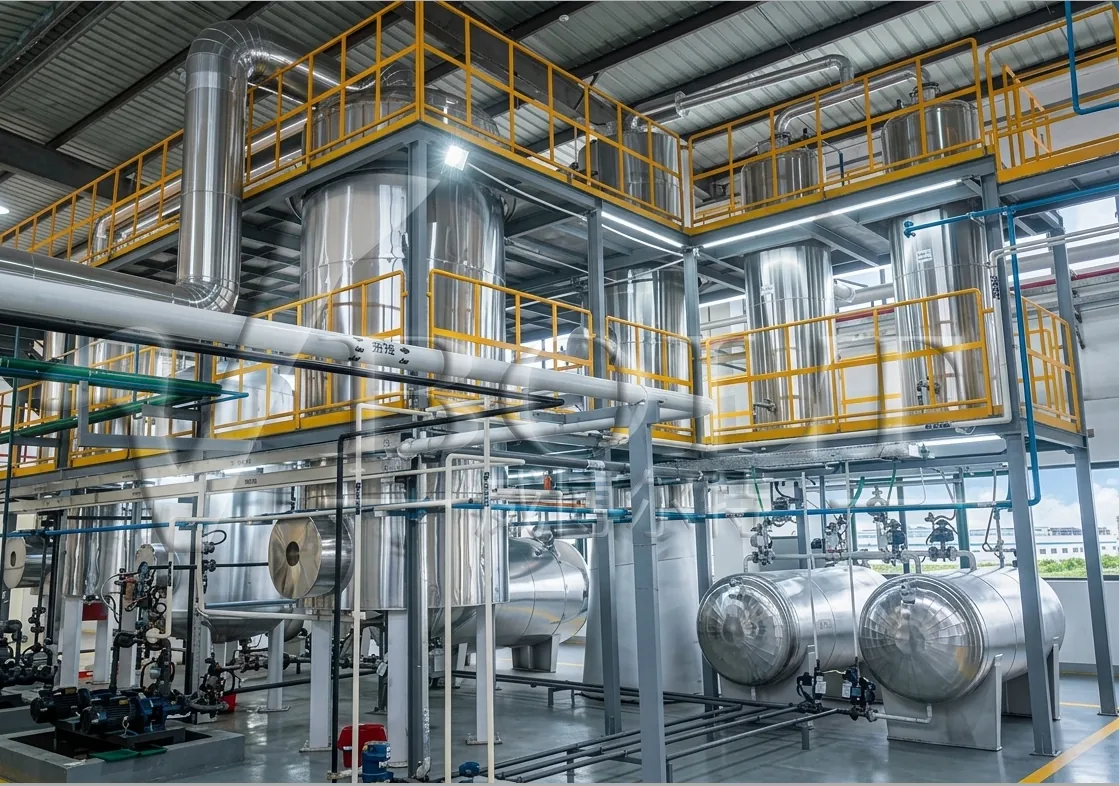
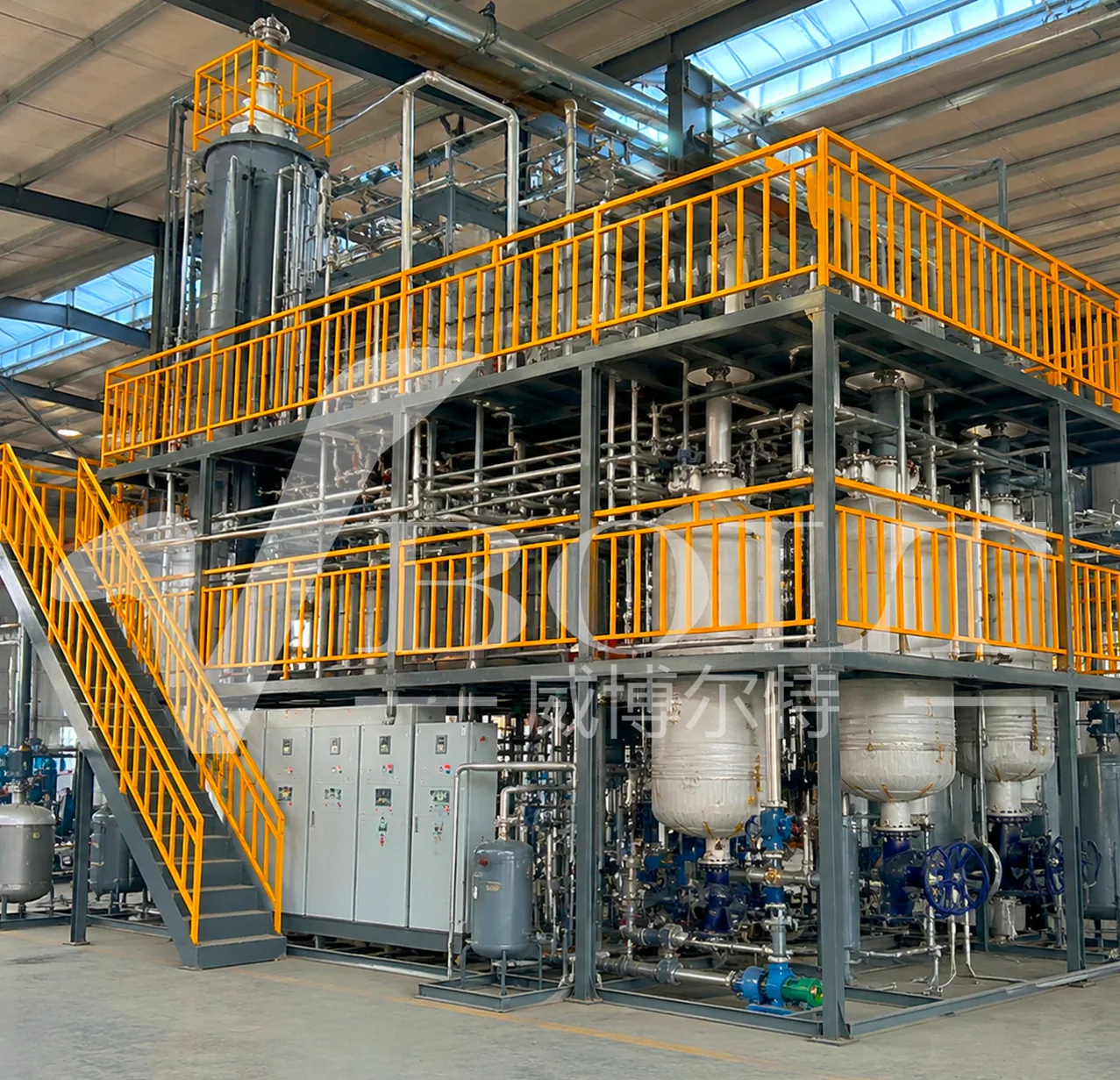
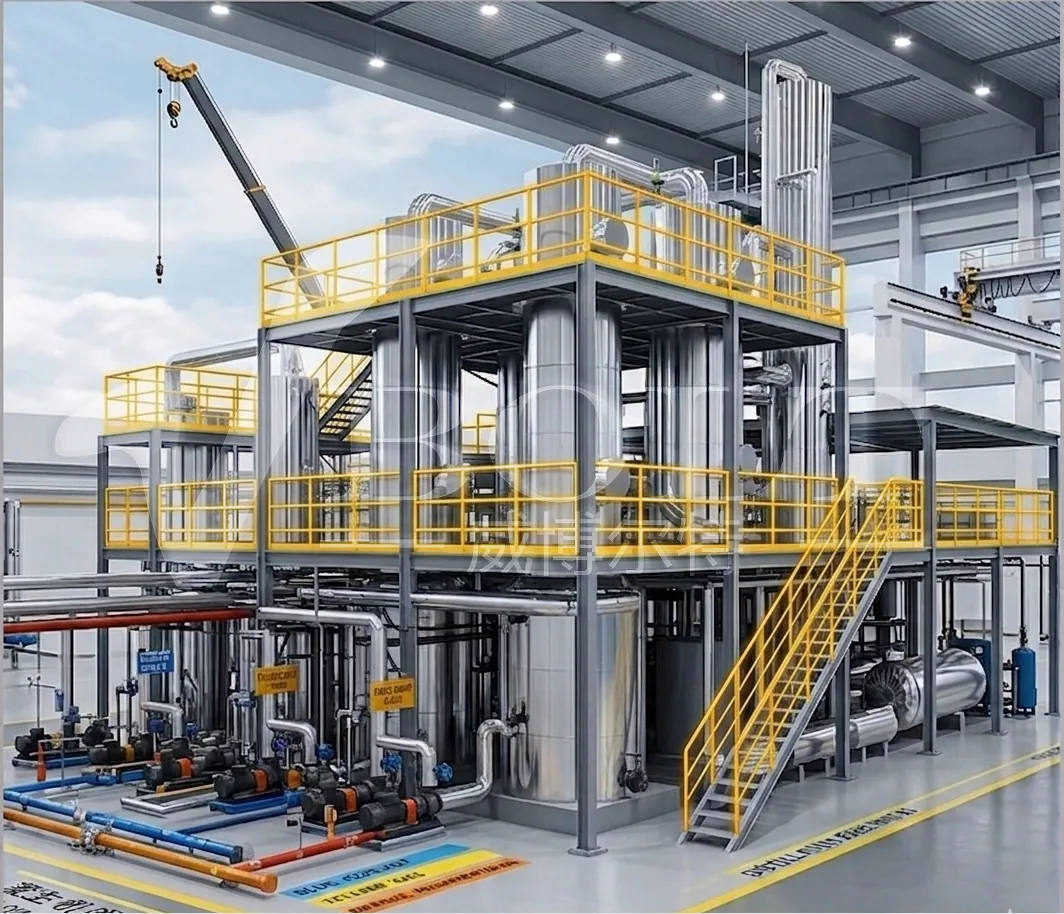
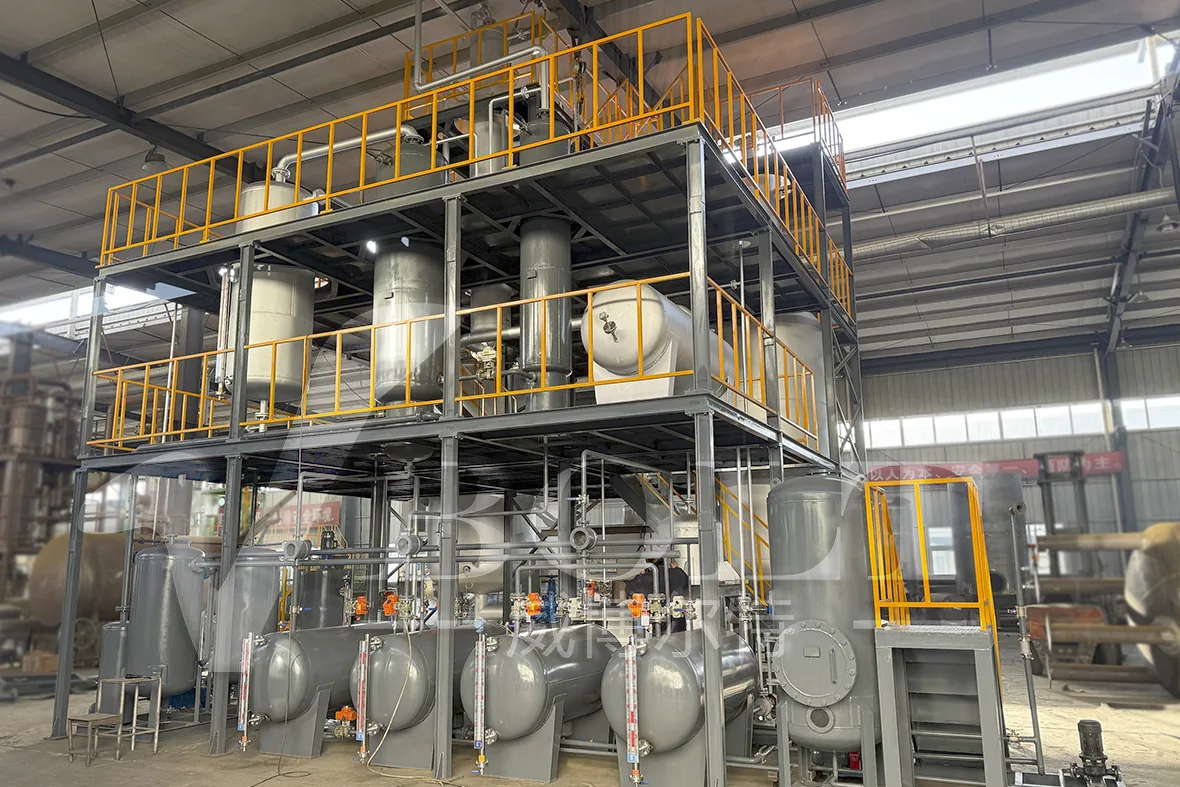
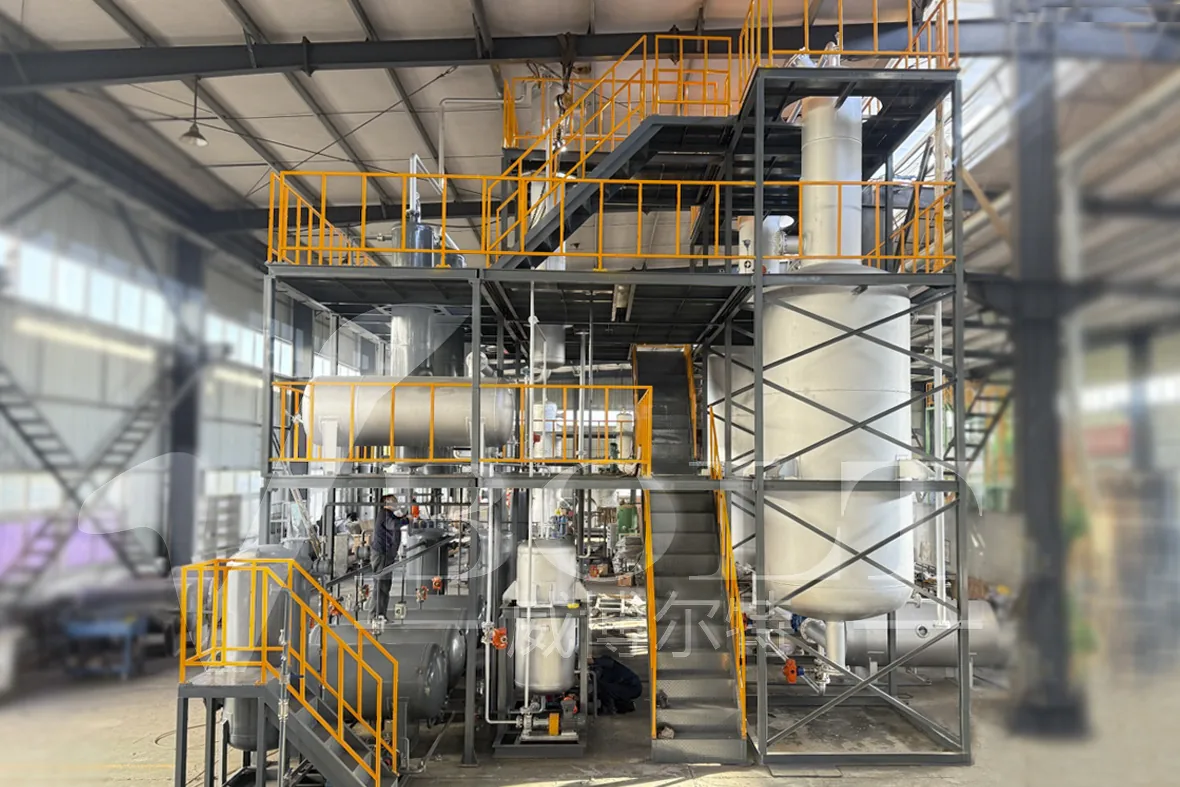
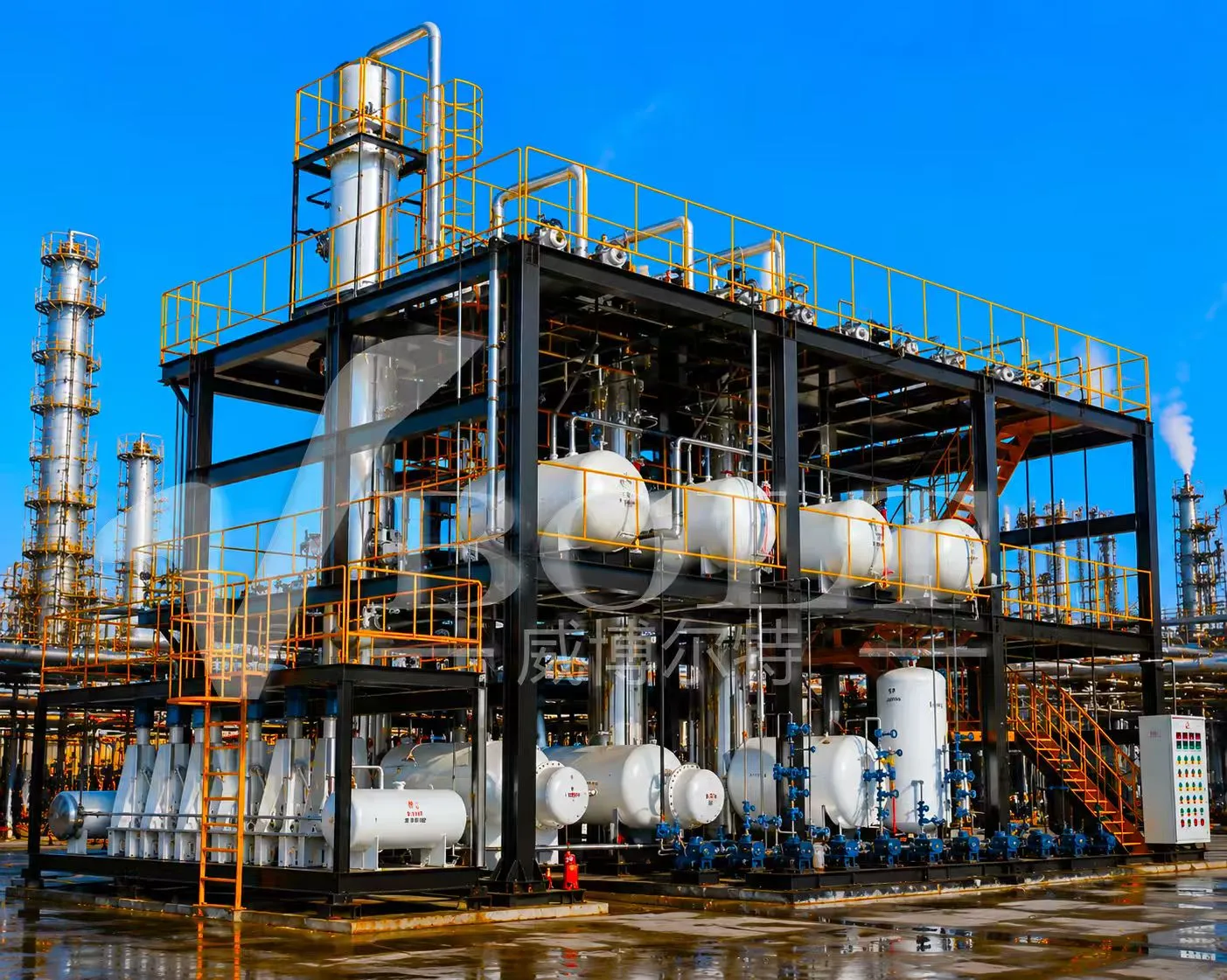
The VBOLT-DB series is an industrial equipment solution developed for converting used lubricating oil, waste engine oil and selected industrial waste oils into high-grade base oil. The plant integrates pretreatment, thin film distillation, fractional distillation and solvent extraction or adsorption refining into a continuous modular production system.
 Plant Product Highlights
- Designed for used lubricants and mixed waste oil feedstocks
- Integrated distillation and refining process modules
- Supports premium base oil production targets
- Optional solvent extraction and adsorption refining routes
Product Highlights
This page presents the waste oil to base oil re-refining plant as an equipment product, focusing on process modules, feedstock adaptability, premium base oil quality and project application value.
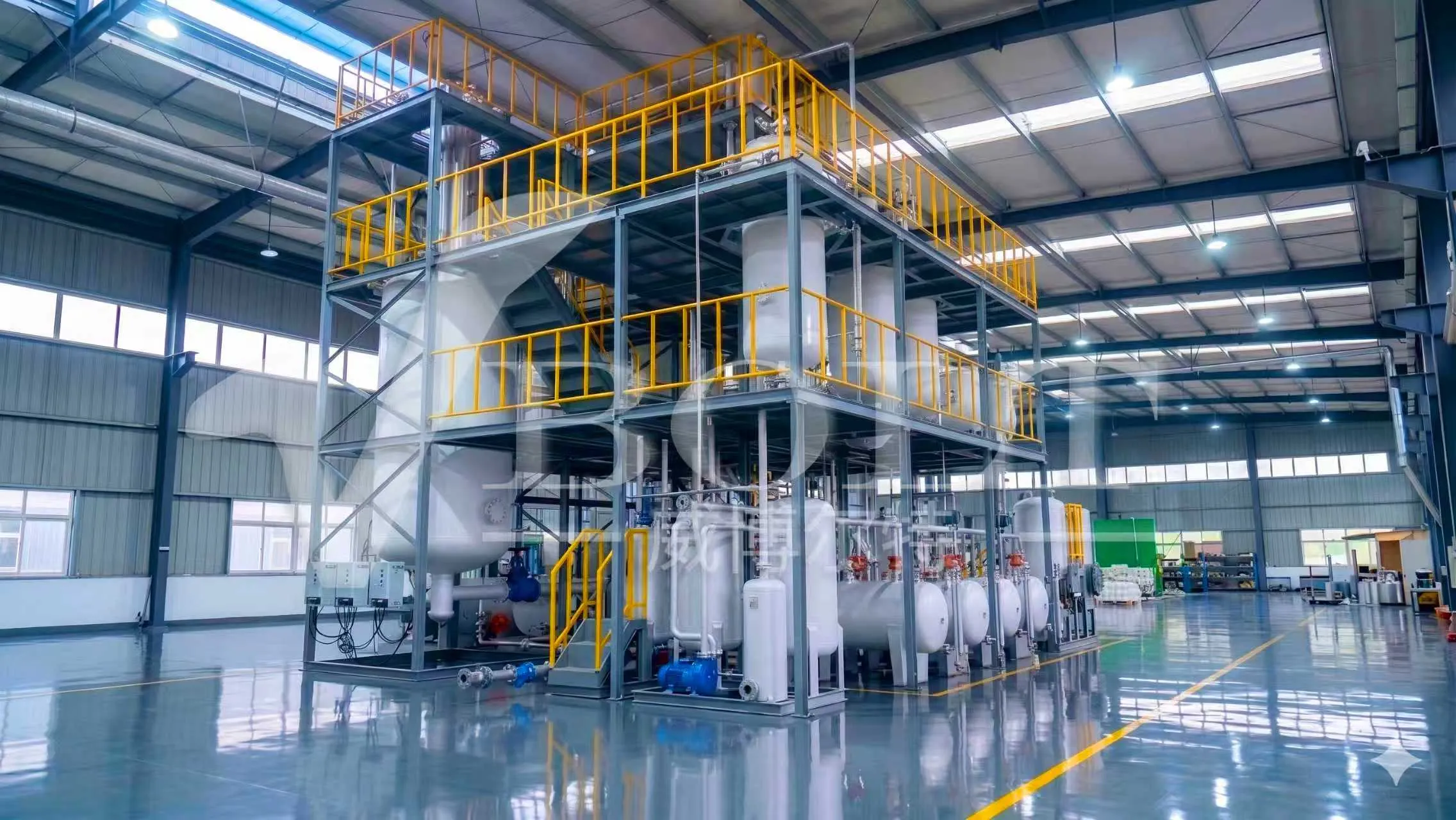
Core Re-Refining Technology
Thin film distillation supports efficient impurity separation under vacuum conditions, helping preserve oil properties and improve the recovery of high-grade base oil fractions.
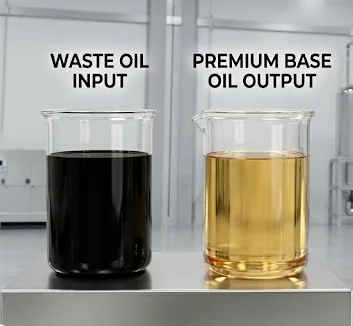
Premium Base Oil Quality
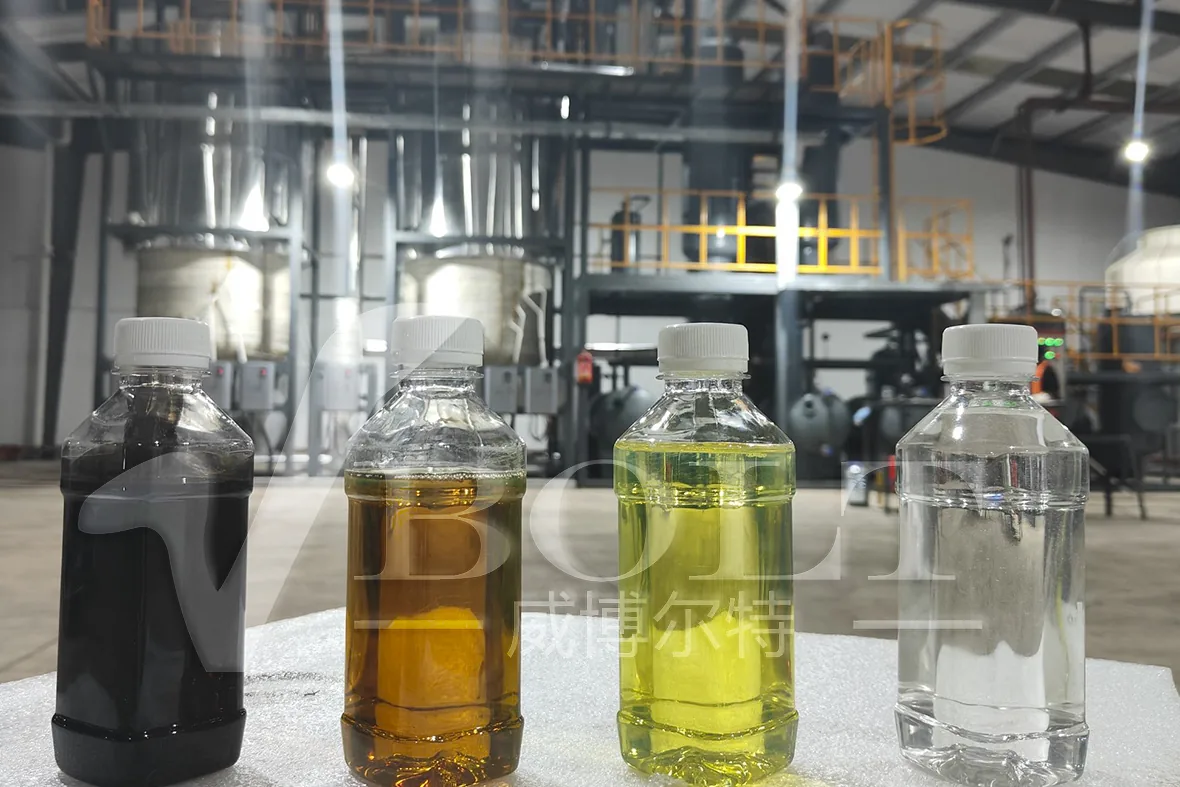
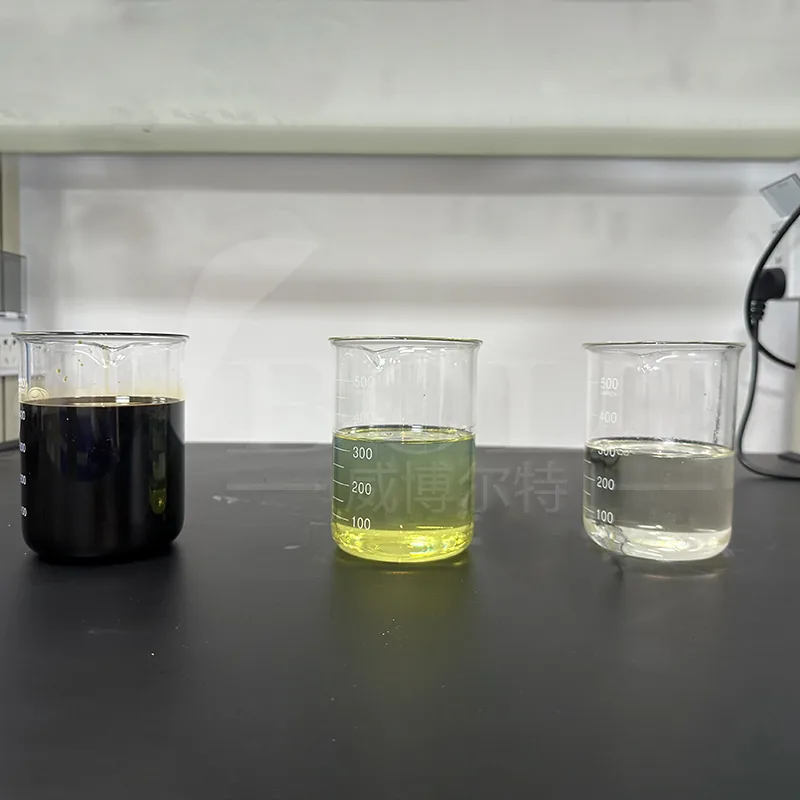
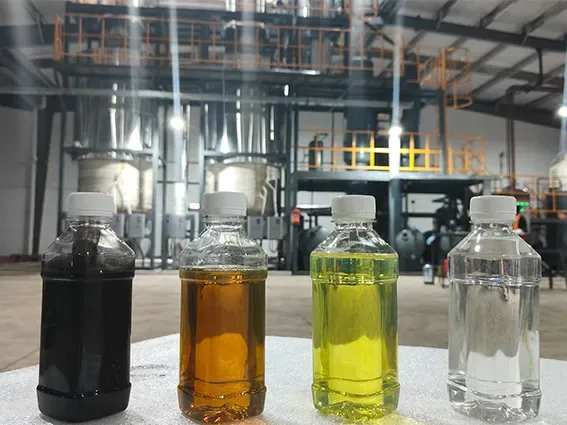
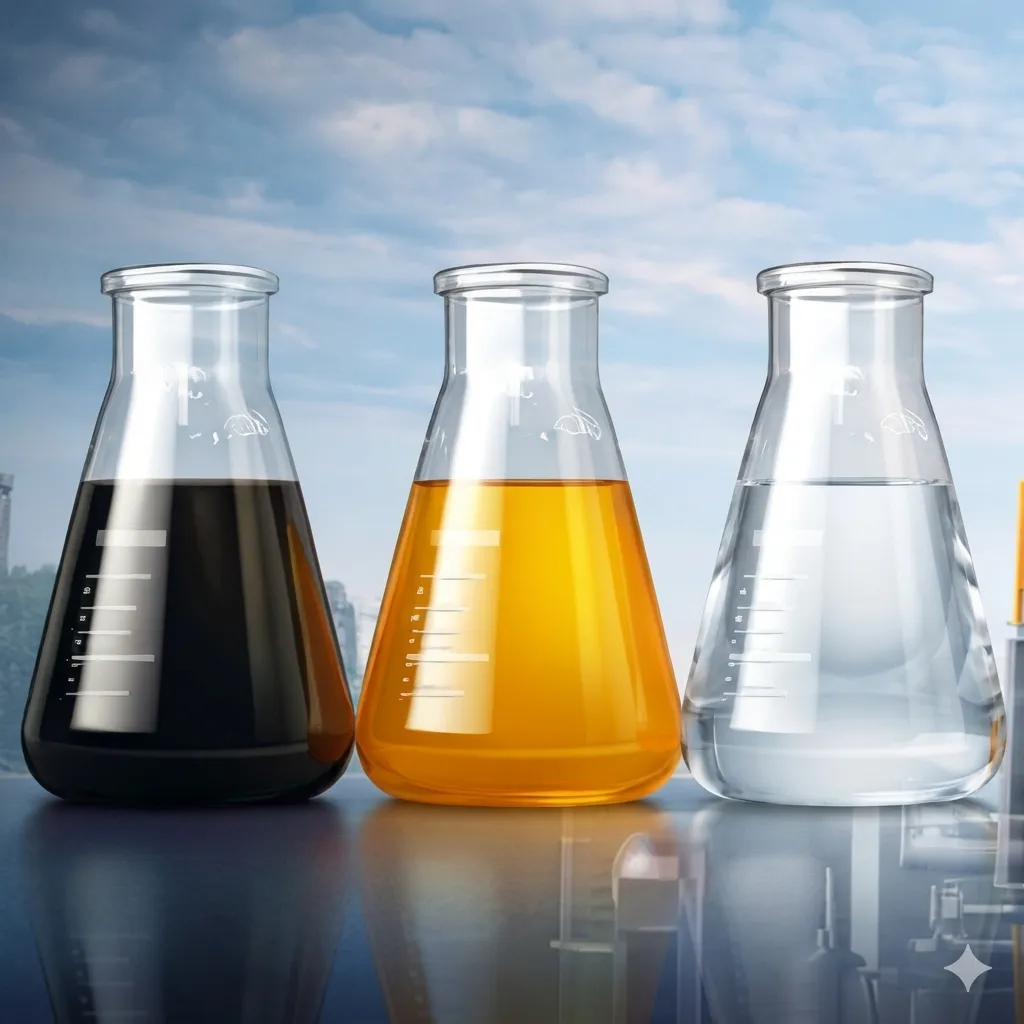
The integrated process can produce bright, stable and low-impurity base oils with improved color, viscosity stability, flash point and sulfur performance.
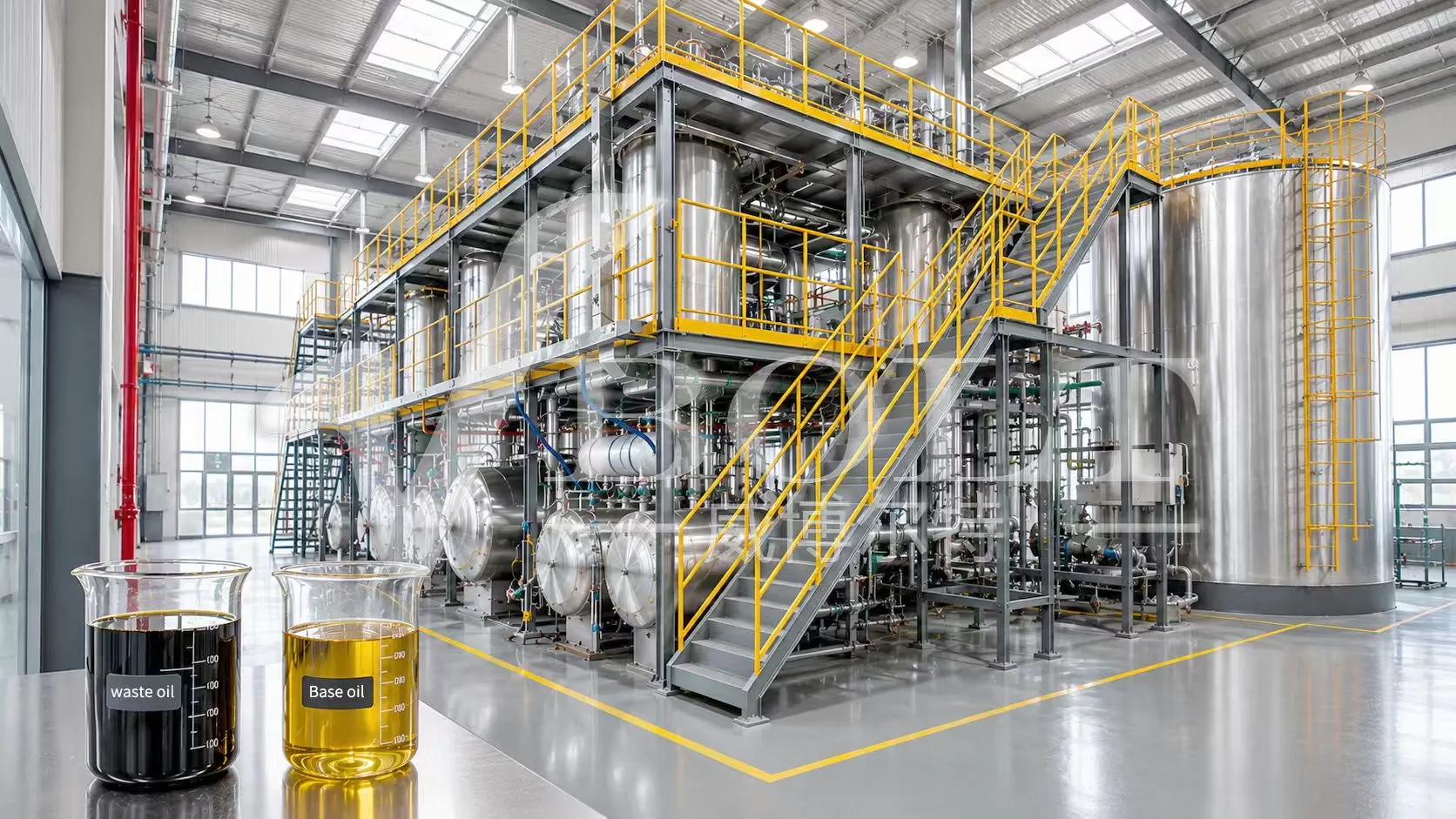
Solvent Extraction / Adsorption Refining
Solvent extraction and adsorption refining help improve clarity, reduce sulfur and acid value, and support higher-grade Group I/ II base oil production targets.
Core Process Technology Modules
From waste oil intake to finished base oil output, the plant adopts a modular re-refining route to achieve continuous and efficient production.
Pretreatment
Remove water, sludge and suspended contaminants from raw feedstock.
Thin Film Distillation
Separate volatile fractions rapidly under vacuum conditions.
Fractionation
Split target boiling ranges such as SN150, SN350 and SN500.
Refining
Apply solvent extraction or adsorption to improve base oil quality.
Base Oil Finishing
Deliver bright, stable and marketable refined base oil products.
Detailed Process Introduction
A detailed display of the main re-refining modules, matching product-level technical presentation needs for industrial buyers and investors.
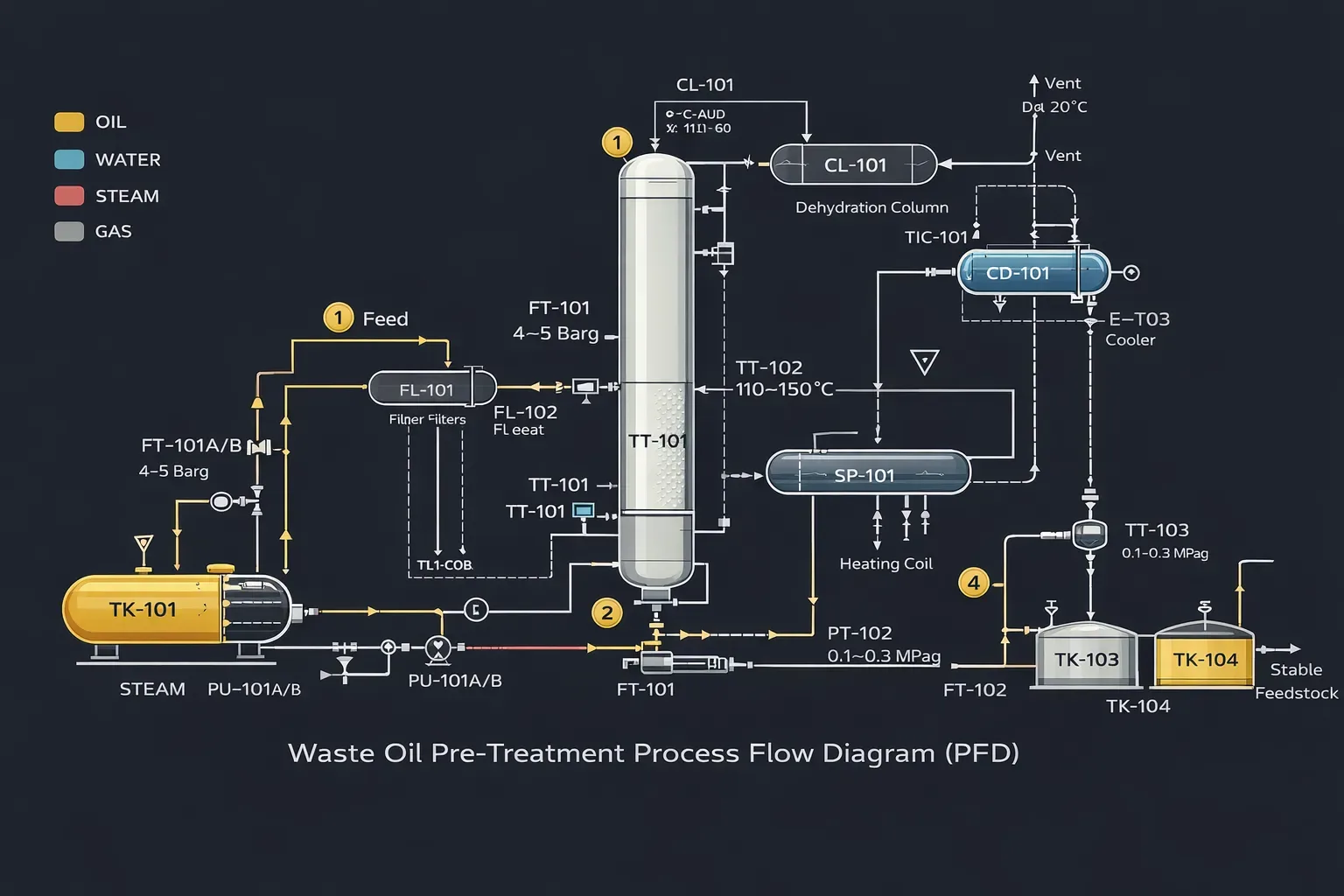
The First Critical Step in Waste Oil Re-Refining
The pretreatment system is the first key stage in the waste oil to base oil process. Its function is to remove water, sludge, metallic particles and unstable contaminants from the raw feed, creating more stable conditions for downstream distillation and refining.
- Filtration: removes suspended solids and particles.
- Dehydration: lowers water content before thermal separation.
- Feed Stabilization: reduces fluctuation in raw material quality.
- Equipment Protection: helps reduce fouling, blockage and corrosion risks.
One of the Core Separation Technologies
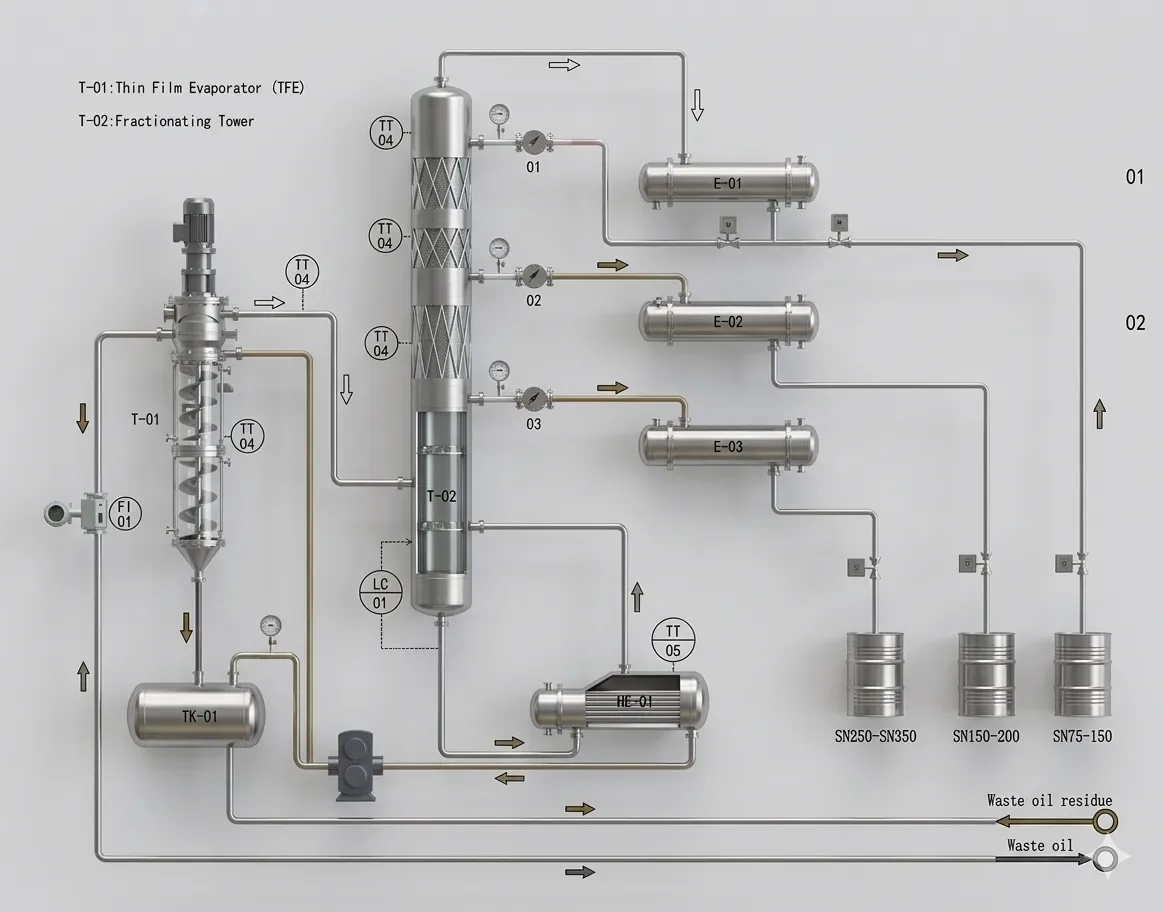
Thin film distillation is one of the core separation technologies in the plant. Under controlled vacuum and temperature conditions, the feed forms a thin liquid film, enabling rapid evaporation and efficient separation while minimizing oxidation and thermal damage.
- High Heat Transfer Efficiency: improves evaporation and separation performance.
- Vacuum Operation: helps reduce thermal stress on recovered oil fractions.
- Short Residence Time: helps preserve valuable oil properties.
- Low Oxidation Risk: supports brighter and more stable base oil output.
- Continuous Processing: suitable for industrial production.
Precise Recovery of Different Base Oil Fractions
The fractionation system allows separation of recovered oil streams according to boiling range, helping produce different base oil grades such as SN150, SN350 and SN500 with improved product consistency and resource utilization.
- Precise Fraction Split: improves control of target base oil ranges.
- Multi-Grade Output: supports production of several base oil classes.
- Better Product Consistency: improves stability for downstream blending use.
- Higher Resource Utilization: increases value recovery from waste oil.
Improving Color, Sulfur and Stability of Base Oil
Solvent extraction refining is an important deep-treatment stage for premium base oil production. It helps remove aromatics, sulfur-containing compounds and unstable materials, improving clarity, oxidation resistance and product value.
- Color Improvement: supports brighter and cleaner finished oil.
- Sulfur Reduction: improves suitability for higher-grade targets.
- Acid Value Control: helps achieve more stable quality results.
- Higher Product Value: supports stronger commercial marketability.
Final Polishing for High-Grade Base Oil Production
Adsorption finishing uses activated clay or molecular sieve media for final purification. It serves as a polishing step to improve appearance, reduce trace impurities and enhance the final market acceptance of regenerated base oil.
- Final Clarification: improves visual brightness and transparency.
- Trace Impurity Removal: helps reduce residual polar compounds.
- Flexible Process Combination: can work together with solvent extraction.
- Market-Oriented Output: supports premium finished base oil positioning.
Premium Output Base Oil Quality
A high-visual business-grade data presentation for product structure, refining performance and overall base oil quality results.
Model Selection Guide
Choose the right waste oil to base oil plant based on raw material supply, target base oil grade, investment budget and long-term profitability strategy.
| Model Type | Capacity | Recommended Application | Investment Level | Key Advantage |
|---|---|---|---|---|
| Pilot Unit | 5–10 L / Batch | Lab testing, feedstock trial and technology validation | Low | Suitable for process verification before commercial deployment |
| Compact Plant | 0.5 – 10 T / Day | Small recyclers, startup investors and regional lubricant recovery projects | Low–Moderate | Compact footprint and lower entry threshold |
| Standard Plant | 10 – 50 T / Day | Commercial re-refining, stable base oil production and regional supply operations | Moderate | Strong balance between investment, product quality, return speed and operating stability |
| Large Scale Plant | 50 – 200 T / Day | Large industrial deployment and high-volume waste oil recovery projects | High | Higher throughput, stronger profit potential and better long-term competitiveness |
Pilot Unit
TestingCompact Plant
EntryStandard Plant
RecommendedLarge Scale Plant
IndustrialBalanced Investment
The 10–50 T / Day range is suitable for customers seeking a practical balance between capital input, product grade and business controllability.
Stable Base Oil Output
This model range is widely preferred because it supports reliable operation and premium regenerated base oil quality under normal raw material supply conditions.
Bigger Scale, Higher Value
For investors with stronger waste oil supply and downstream market access, larger-capacity plants usually create higher total profit and stronger strategic value.
Technical Specifications
Typical reference data for regenerated base oil produced by the waste oil to base oil re-refining plant.
| Parameter | Typical Value / Range | Performance Impact |
|---|---|---|
| Appearance | Bright, clear, transparent | Indicates strong impurity removal and polishing effect |
| Viscosity @ 40°C | 32 – 150 cSt | Supports production of multiple base oil grades |
| Color (ASTM D1500) | L 1.0 – 1.5 | Reflects improved clarity and higher commercial value |
| Flash Point | ≥ 220°C | Improves storage safety and product stability |
| Sulfur Content | < 0.03% | Supports higher-grade product positioning |
| Acid Number | < 0.05 mgKOH/g | Helps improve oxidation stability and usability |
| Oil Recovery | ≥ 90% | Supports strong resource utilization and profitability |
| Target Grade | Group II / III potential | Supports premium lubricant blending applications |
Appearance
Viscosity @ 40°C
Color (ASTM D1500)
Flash Point
Sulfur Content
Acid Number
Oil Recovery
Target Grade
Third-Party Verification
Output base oil quality can be verified by independent laboratory testing to strengthen market trust and technical credibility.
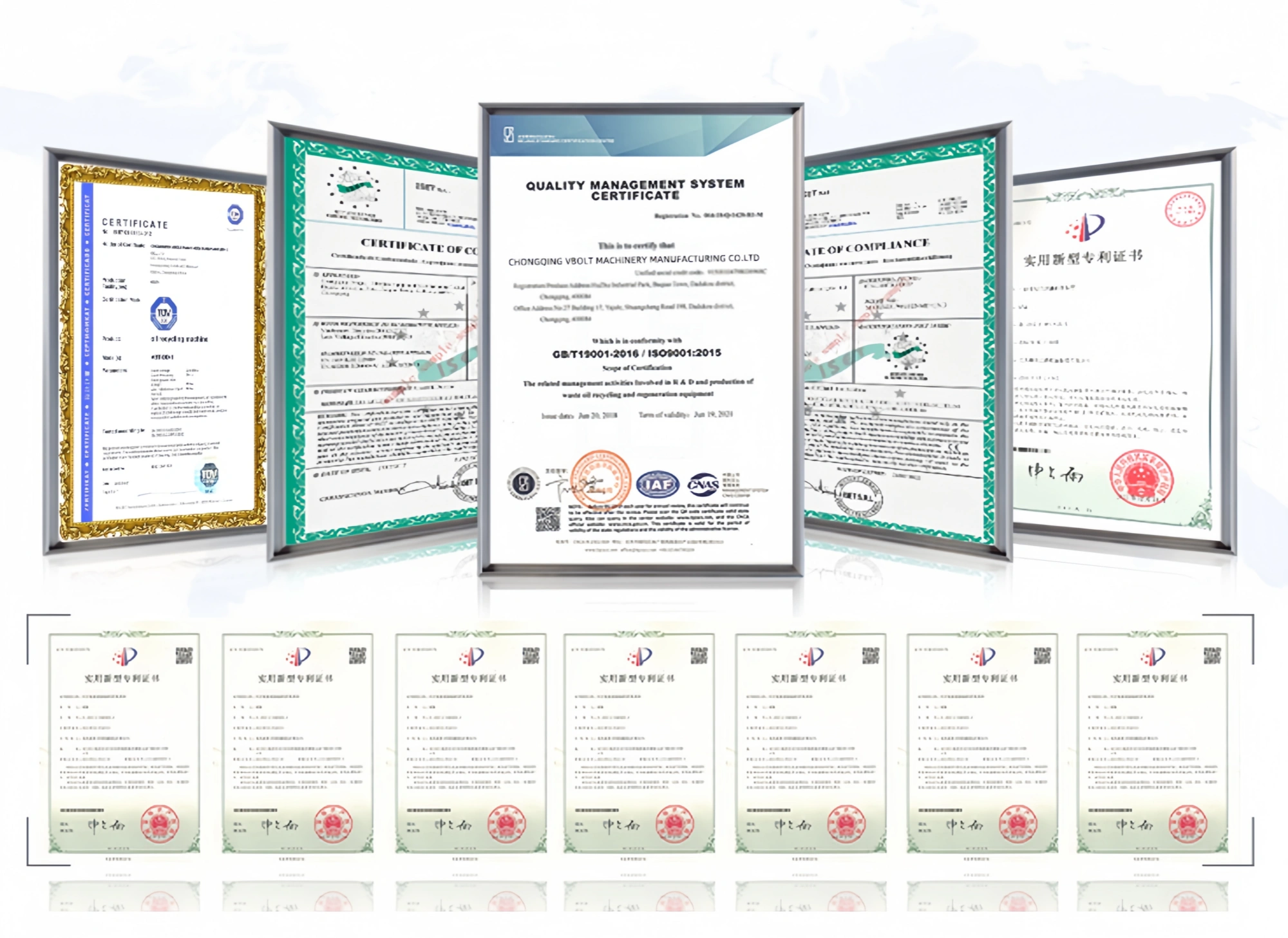
Independently Verified Base Oil Data
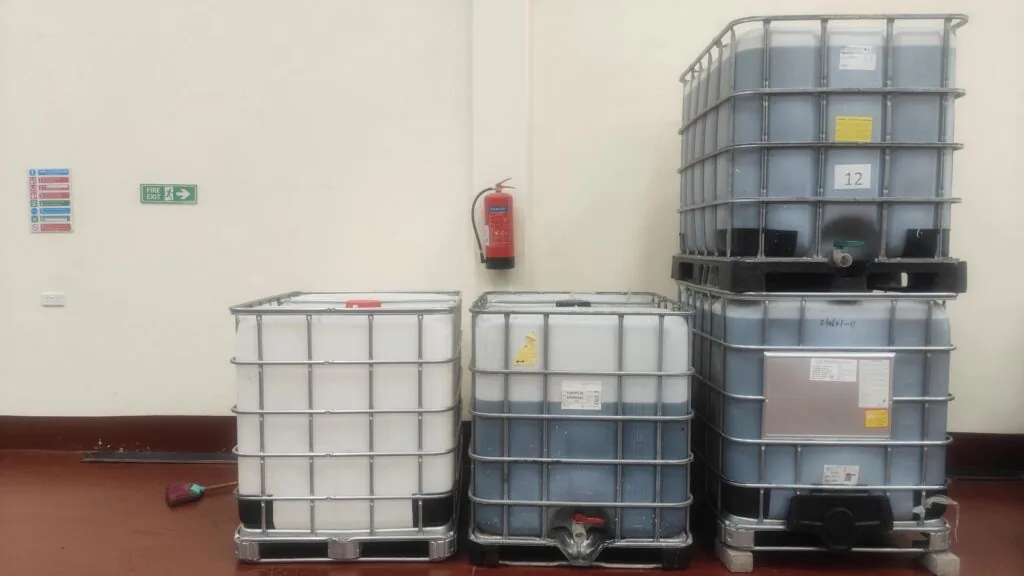
The base oil produced by the plant can be tested by internationally recognized independent laboratories to verify viscosity, water content, impurity control, color, acid number and flash point performance.
- Verified viscosity compliance
- Certified low water and impurity content
- Confirmed high flash point performance
- Suitable for lubricant formulation and blending applications
Applications & Feedstocks
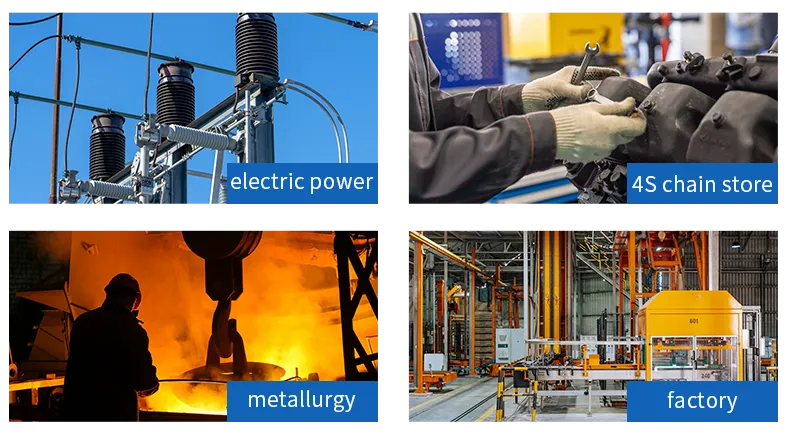
The plant is designed for recyclers, refineries and environmental projects handling a broad spectrum of used lubricating oils and industrial waste oil streams.
Oil Recycling Companies
Professional waste oil recyclers producing commercial regenerated base oil products.
Refineries
Industrial plants upgrading into waste oil re-refining and value-added recovery operations.
Environmental Projects
Circular-economy and sustainable waste management projects seeking higher-value oil regeneration.
Lubricant Recovery Investors
Investors building profitable base oil production lines from waste lubricant streams.
Used Lubricating Oil
Waste lubricating oil from automotive, mechanical and industrial maintenance sectors.
Waste Engine Oil
Used engine oil streams from transport fleets, service stations and maintenance workshops.
Industrial Oils
Hydraulic oil, gear oil and selected industrial mineral oils suitable for re-refining.
Mixed Waste Oils
Adapted mixed waste oil streams depending on contamination level and pretreatment requirements.
Project Cases
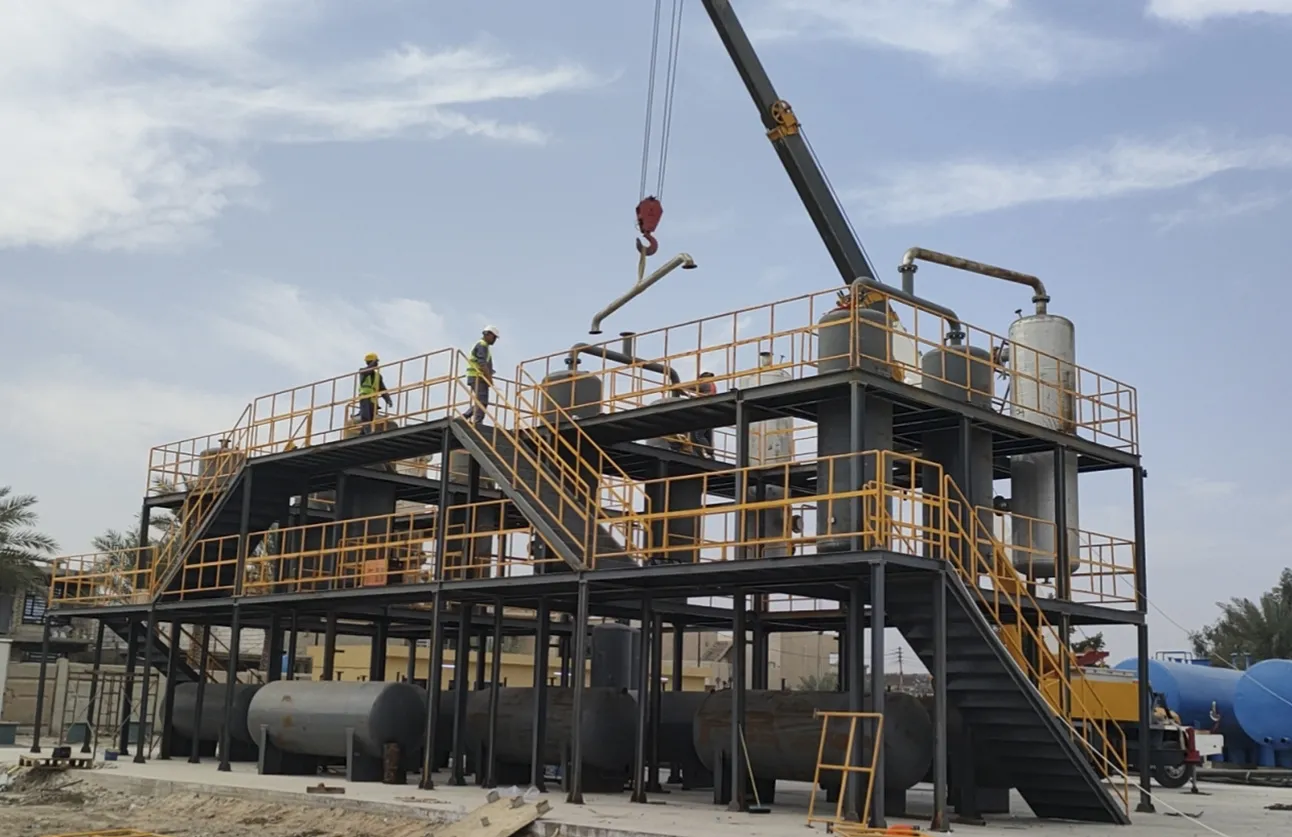
Representative overseas cases showing actual model selection, output quality and investment value in waste oil re-refining projects.
Poland Project
Model: VBOLT-WOBO-30
A European client adopted VBOLT’s waste oil to base oil system integrating thin film distillation and solvent extraction for premium regenerated base oil production.
Commercial Recycling Project
Model: VBOLT-WOBO-20
Suitable for regional recyclers seeking stable premium oil recovery and stronger market competitiveness in used lubricant regeneration.
Industrial Re-Refining Project
Model: VBOLT-WOBO-50
Designed for customers with stronger feedstock channels and higher value-added product targets in lubricant regeneration business.
Frequently Asked Questions
Common questions from customers evaluating this waste oil to base oil re-refining plant as a product purchase.
The plant can be configured for used lubricating oil, waste engine oil, hydraulic oil, gear oil and selected industrial waste oils depending on contamination level and raw material condition.
The main output is regenerated base oil. Depending on process configuration and feedstock quality, the plant can target high-grade commercial base oil products with Group II / III potential.
The core process route includes pretreatment, thin film distillation, fractional distillation and refining by solvent extraction or adsorption finishing.
Yes. Standard industrial configurations are designed for continuous 24-hour operation with PLC-based control and modular process integration.
Yes. Product samples can be tested by recognized laboratories to verify viscosity, color, sulfur content, acid number and flash point performance.
Need a Waste Oil to Base Oil Re-Refining Plant?
Send us your feedstock type, daily capacity target, expected base oil grade and market location. We will recommend a suitable plant configuration and equipment layout for your project.
Request Project Review